Willo’s Third Annual Study
The Hiring Trends Report: 2026
How AI Is Transforming Recruitment
CEO Foreword
Over the past few years, hiring has entered one of the most transformative periods in its history. Artificial intelligence has moved from a distant concept to a practical necessity, reshaping workflows, expectations, and the way organizations identify talent.
As AI and automation reshape hiring, one thing remains true: even the smartest tech won’t deliver results unless you’re clear on what great looks like, and how to identify it. When teams know what “good” looks like, whether that’s a fairer process, stronger signals of capability, or a more consistent candidate experience — they make better decisions and move with confidence. But without that clarity, even the best tools can fall short.
This belief has guided our work from the beginning. It’s why we design experiences that reduce noise, minimize bias, and uncover genuine human potential. It’s why we continue to invest in the intersection of AI efficiency and human insight - not to replace one with the other, but to bring them into better balance.
As AI adoption grows, we’ve seen firsthand that the real challenge for many teams isn’t the technology itself, it’s making sure people feel equipped, supported, and confident using it responsibly. Progress happens when technology supports human judgment rather than competing with it.
That belief shaped the development of Willo Intelligence: tools designed to give hiring teams clearer context, stronger signals, and more consistent insights — while preserving the fairness, empathy, and human presence that great hiring depends on.
This year’s Hiring Trends Report reflects the next step in that evolution. Now in its third edition, it offers a clear look at how hiring teams are adapting — from candidates using AI to complete applications, to employers using AI to bring structure, consistency, and clarity back into the process.
The findings highlight several encouraging trends:
- A renewed focus on authenticity, as teams look for better ways to distinguish human responses from AI-generated content.
- A thoughtful split between human and automated stages, with leaders reserving judgment-heavy tasks for people and using AI to ease early-stage workload.
- A continued shift toward skills-based assessments and a more human-centric approach to hiring, where demonstrated capability and potential outweighs traditional credentials.
- A deeper commitment to fairness through structured interviews, standardized criteria, and bias-reduction strategies.
- A growing emphasis on candidate experience, especially as rising volumes make consistency and transparency more essential.
Taken together, these trends signal a shift in hiring maturity — a recognition that the future won’t be defined by AI tools alone, but by how responsibly we combine them with human insight.
At Willo, we believe hiring can be faster without losing fairness, more efficient without losing empathy, and more data-driven without sacrificing human judgment. Our mission is to help organizations gain clarity in their processes so their people can make confident, inclusive decisions.
I hope this year’s insights offer practical guidance as you shape your hiring strategy, and reinforce a belief we hold strongly – the best hiring happens when technology brings out the best in people.
Euan Cameron
Co-Founder & CEO
Willo

Results at a Glance
AI Adoption & Authenticity
- 76.9% teams encounter AI-generated or AI-assisted applications
- 64.9% increased AI usage (52.1% slightly, 12.8% significantly)
- 5.8% of responses flagged as potentially AI-generated by Willo’s Real Talk feature
- 70% of Willo customers now use Intelligence features regularly
Fairness & Structure
- 72.8% express confidence in their hiring fairness
- 69.6% use structured interviews (highest fairness practice)
- 50% conduct bias awareness training
- 42.4% employ diverse interview panels
Human-Led Decision Making
- 78.7% say final hiring decisions must remain human-led
- 72.3% require humans for salary negotiation
- 69.1% need humans for onboarding and culture integration
- 0% believe automation can handle all hiring stages
Resume Reliance
- 59.6% still rely primarily on resumes
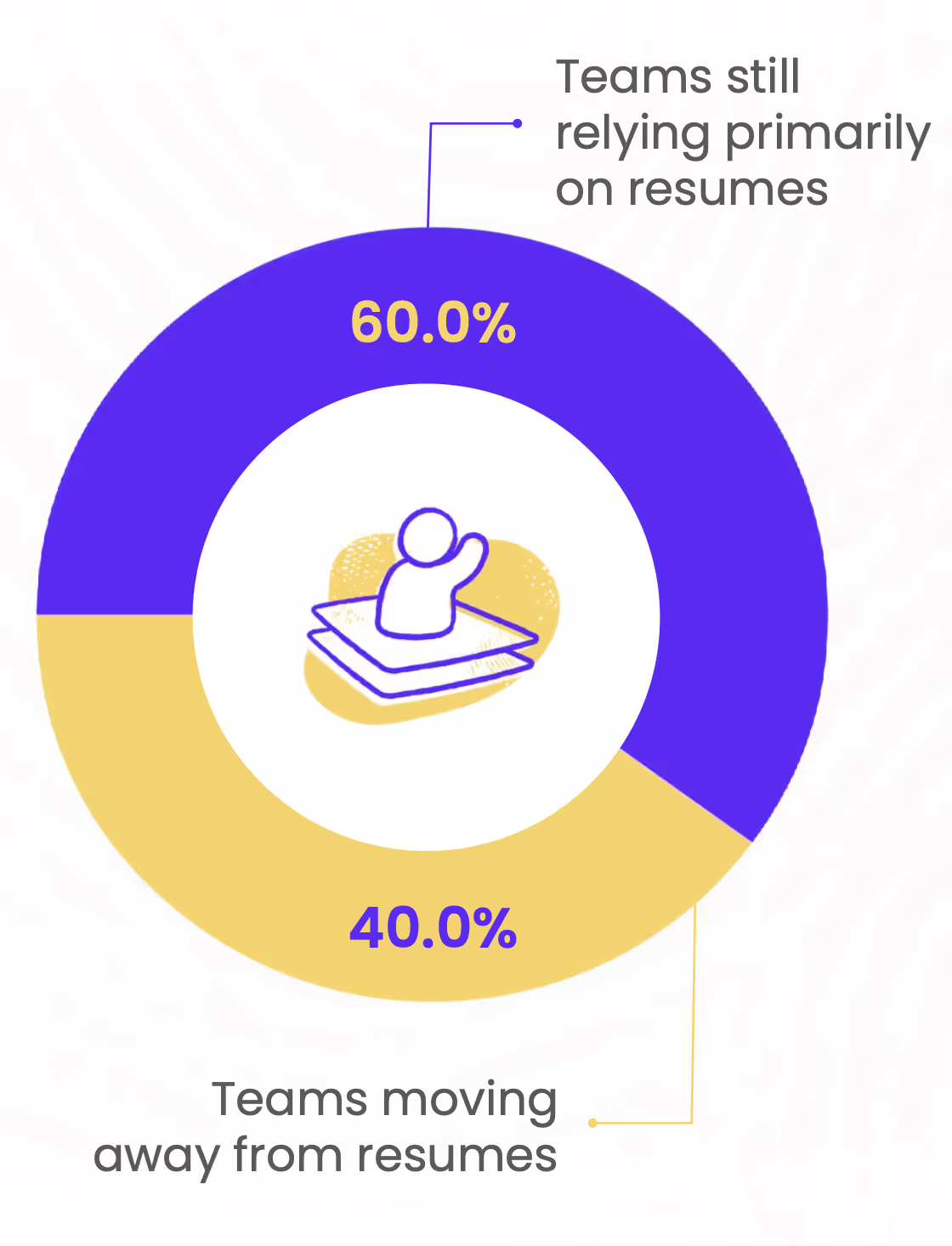
- 40% are actively moving away from resume-first hiring
- 10.1% have largely replaced resumes with alternative methods
Trust & Signal Detection
- 67.7% trust behavioral interviewing with examples most
- 61.3% value cultural alignment and soft skills
- 54.8% prefer hands-on skills demonstrations
- 21.5% trust portfolios or work samples
ZERO
PERCENT
PERCENT
believe automation can handle all hiring stages
40%
are actively moving away from resume-first hiring
YEAR-OVER-YEAR KEY TRENDS:
What’s Changed Since 2024
AI Adoption Acceleration
2024
An emerging trend with high intent but unconfirmed usage with 79.4% expected to use AI either moderately or significantly in the coming year.
2025
The intention-action gap widens. While 80% intended to use AI, only 65% actually adopted it, revealing significant adoption hesitation.
2026
Regular use has become the standard with 76.9% using AI, but not for full decisions.
THE SHIFT
From aspirational to operational, AI has transitioned from “nice to have” to embedded workflow tool, even as decision authority remains firmly human.
Fairness in Hiring
2024
Fairness is implied, tied to a strong employer brand (83.6% say it’s very or extremely important), good process, transparency, and candidate experience.
2025
Fairness is discussed indirectly through DE&I initiatives and flexibility, with 50% of companies increasing investment in programs that support inclusion.
2026
Fairness becomes operationalized as 69.6% use structured interviews, 50% conduct bias training, and 42.4% employ diverse panels.
THE SHIFT
Fairness shifts from assumption to design. No longer ambient, it’s defined, deliberate, and built through processes that move beyond intention to outcomes.
Resume Reliance Decline
2024
Unquestioned default as resumes remain the universal starting point for candidate evaluation.
2025
Default under siege. Focus shifts to AI-enhanced CVs and “AI-proof” screening tools as the traditional resume’s credibility erodes.
2026
The fracture point. 59.6% still lead with resumes, but 40% are actively moving away, and 10.1% have largely replaced them with alternative assessment methods.
THE SHIFT
From universal standard to contested practice, resumes lose dominance as they reflect AI access more than ability. The question isn’t if we move beyond them, but how fast.
Introduction: What Emerged From the 2026 Data
Hiring in 2026 sits at a defining moment: AI has arrived at scale, and teams are responding with thoughtfulness about what should remain human.
Three-quarters of teams now encounter AI-generated applications, and they're responding with smarter, more human-centered evaluation methods. AI in hiring has moved from experimental to essential. Resumes are still dominant, but 40% of teams are actively building better alternatives. And while adoption is accelerating, hiring professionals are drawing clear, confident lines: not a single respondent believes automation should make final decisions.
This year's Hiring Trends Report draws on hiring statistics 2026 from 100+ hiring professionals and insights from 2.5 million candidate interviews. We set out to explore several critical questions: How are AI-generated applications affecting hiring workflows? Where does AI in hiring actually belong in the process? Are teams truly moving away from resumes? How is fairness being operationalized beyond good intentions? And what signals do teams trust most when evaluating talent?
Once we analyzed the responses, a very clear and at times unexpected set of patterns emerged: themes that cut across multiple questions and reflected the real experiences of hiring teams in 2026. These emergent themes form the backbone of this report and paint an encouraging picture of how teams are balancing automation with human judgment:
Authenticity is a growing pressure point, but responses remain uneven: Most hiring teams now encounter AI-generated or AI-assisted applications; some are adapting with deeper questioning, skills tests, and video, while a significant minority have not yet taken concrete steps.
AI is being adopted steadily as assistive infrastructure, not as a decision-maker: A majority of teams increased their use of AI, but in modest, targeted ways: summarization, organization, screening support — not automated selection.
Hiring teams draw very clear lines: some stages must remain human-led: There is overwhelming consensus that interviews, relationship-building, negotiation, onboarding, and final decisions cannot be automated.
Behavioral & skills-based signals now outrank traditional proxies: Teams trust real examples, soft skills, problem-solving, and hands-on demonstrations more than credentials or work history alone.
Fairness is being operationalized through structure and process: Structured interviews, consistent criteria, diverse panels, and skills-based workflows are driving fairness improvements, not passive intent.
Skills-based hiring is emerging within a still resume-dominant environment: Resumes remain widely used, but movement toward scenario-based and skills-based hiring is unmistakably taking hold.
The sections that follow are organized around these organically emerging themes.

Section 1: How Are Teams Handling AI-Assisted Job Applications — A Growing Pressure Point
AI-assisted applications are now part of the fabric of modern hiring. 76.6% of teams encounter AI-assisted applications at least occasionally.
What was once an occasional anomaly has become a regular occurrence that hiring teams must actively navigate. The prevalence of AI-assisted applications isn’t inherently problematic. It simply requires teams to evolve their evaluation methods to ensure they’re still surfacing genuine human capability.
Rather than treating this as a threat, hiring teams appear to be adjusting their processes to restore authenticity and surface genuine human signal. The most common responses include:
- Updating interview techniques to probe more deeply
- Adding skills-based assessments
- Revising questions to be more personal, situational, or role-specific
- Training teams to recognize AI-generated content
- Increasing use of video assessments
- Implementing early AI-detection tools
76.6% of hiring teams now regularly encounter AI-generated or AI-assisted candidate applications, what was once an anomaly is now the new normal.
When asked how often teams are encountering obviously AI-generated candidate responses:

What's notable is the diversity of approaches. Teams are layering multiple strategies to create "authenticity checkpoints" throughout their process. These adjustments are not about catching candidates out. They are about creating hiring moments where real human responses emerge naturally.

When asked what steps organizations have taken to address AI-generated or inauthentic applications:

Section 2: Where Hiring Teams Are Actually Using AI in Hiring in 2026
AI adoption is rising, but not explosively. Instead, it is steady, practical, and highly intentional.
When asked how AI usage changed:
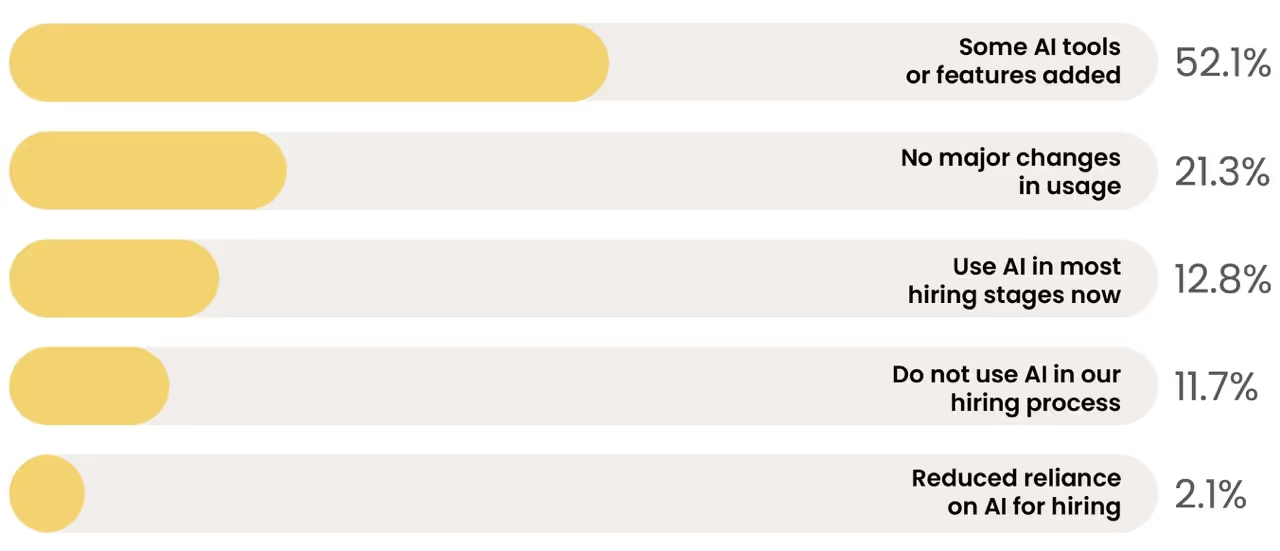
The data reveals a pragmatic adoption pattern. Nearly two-thirds of teams (64.9%) are increasing their AI usage, but the majority are doing so incrementally. This reflects a thoughtful approach where teams are testing, learning, and scaling based on real results rather than rushing to automate everything at once.
Teams are using AI where it solves tangible problems:
- managing volume
- summarizing long responses
- standardizing early-stage screening
- reducing repetitive tasks
- improving overall process consistency
AI candidate screening tools are central to this shift. What's clear is that teams are using AI to create better conditions for human judgment, not to replace it.
Section 3: Which Hiring Decisions Should Never Be Automated
When identifying the stages best handled by humans, the hierarchy is unmistakable:
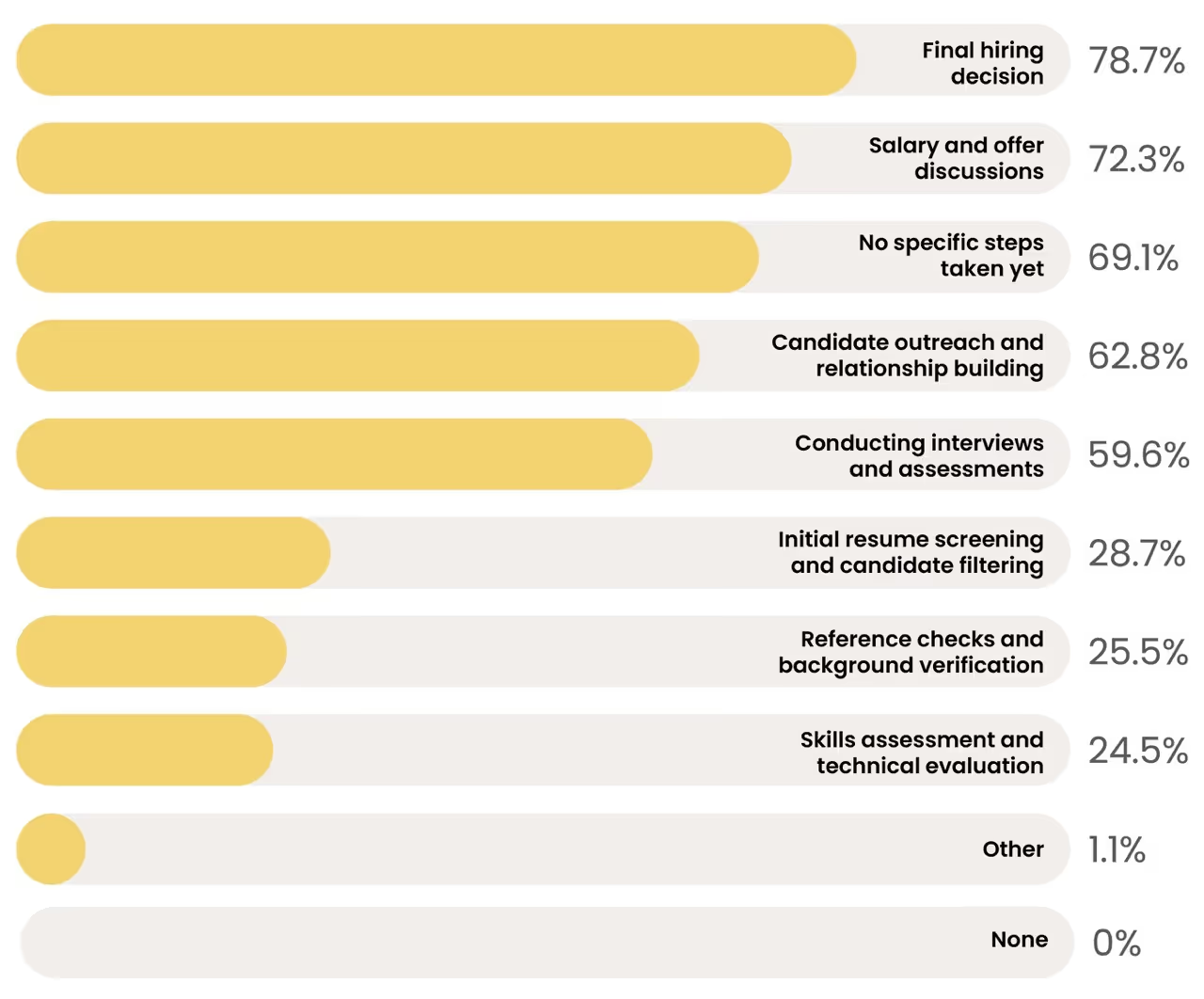
These results reveal clear consensus about where human judgment is non-negotiable. The highest-ranking stages all require empathy, nuance, and complex decision-making that balances multiple variables simultaneously.
Conversely, early-stage filtering, reference checks, and administrative workflows are viewed as ideal for automation.
Not a single respondent believes automation can effectively handle all hiring stages.
Section 4: What are the most reliable indicators of candidate quality
Teams increasingly trust what candidates show, not what they say.
When asked what the most reliable indicators of talent are:
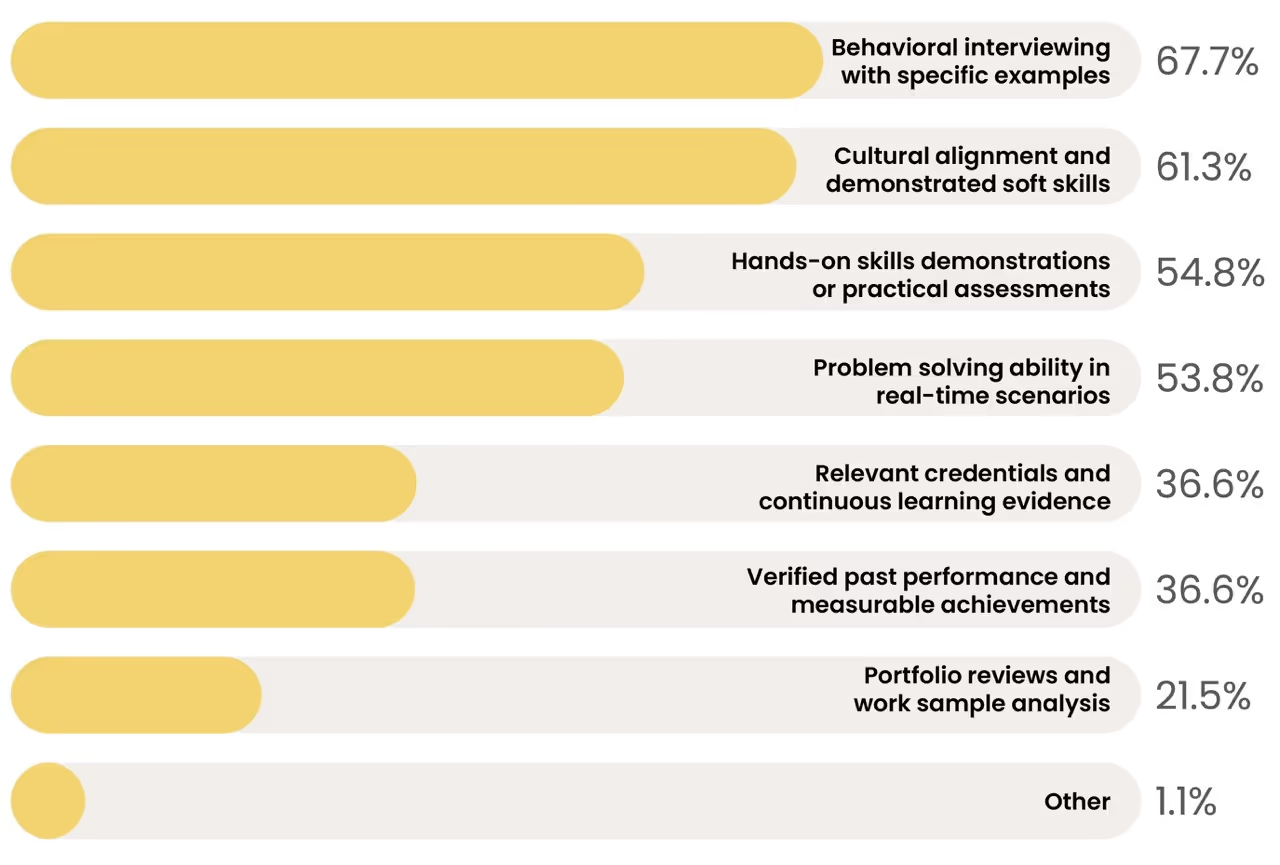
This reflects a global shift in signaling power: demonstrated capability now outweighs historical credentials.
At Willo, we embrace the skills-based hiring movement, which recognizes that traditional credentials have limited predictive validity compared to actual demonstrations of competency. But our data reveals an important nuance: live demonstration trumps static evidence.
While portfolios ranked lowest (21.5%), behavioral interviewing with examples topped the list at 67.7%, followed by hands-on demonstrations (54.8%) and real-time problem solving (53.8%).
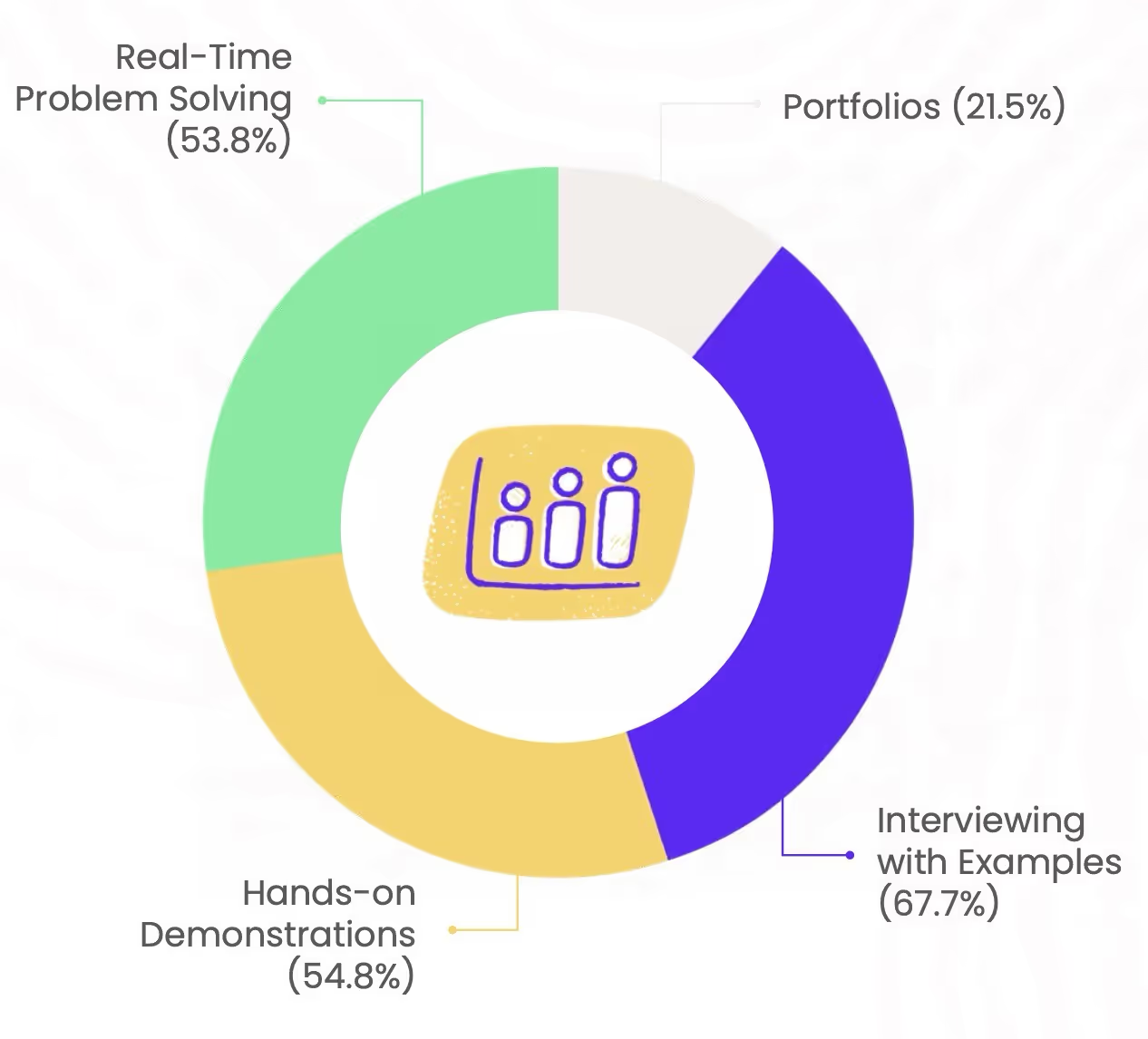
Hiring teams don't just want proof of past work, they want to see candidates think, adapt, and perform in the moment.
A portfolio shows what someone has done under unknown conditions. Live assessments show what someone can do when facing novel challenges. In an era of AI-assisted work, real-time demonstration has become the most trusted signal of true capability.

Section 5: How can hiring teams operationalize fairness and reduce bias
When asked how confident teams are that their hiring process is fair and inclusive:
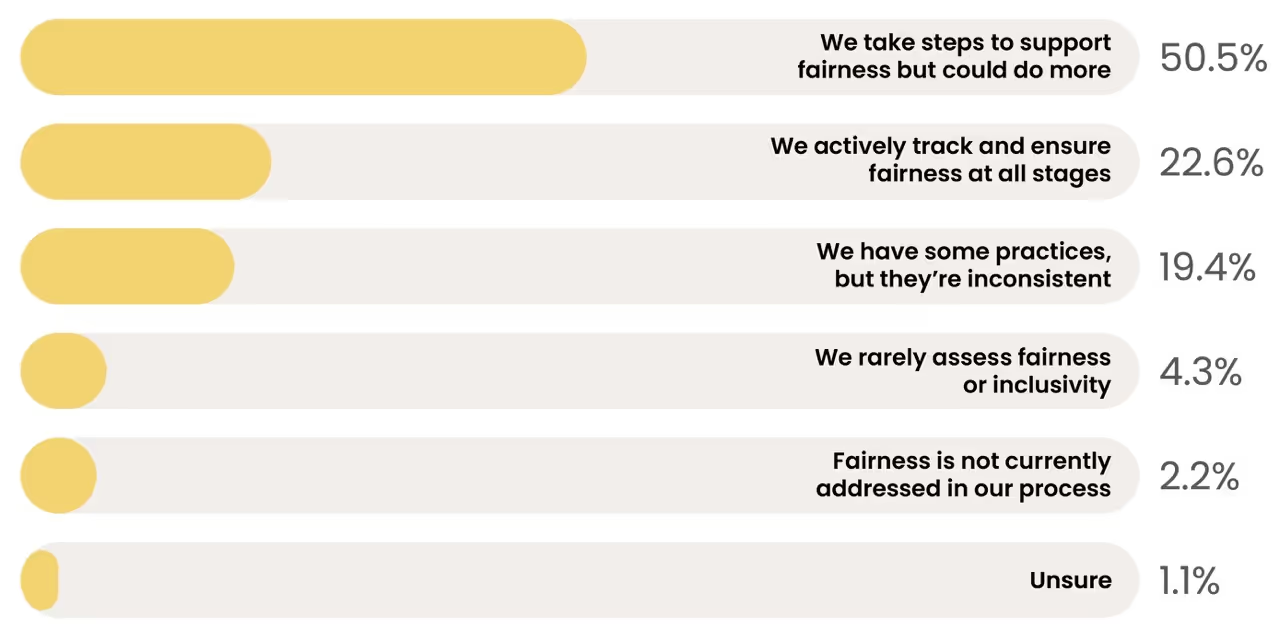
The fact that over 70% of teams express some level of confidence in their fairness is encouraging, but the largest segment acknowledges room to improve.
This self-awareness is critical. It suggests teams understand that fairness isn't a binary achievement but an ongoing commitment that requires constant refinement.
When asked which practices teams have adopted to reduce bias:
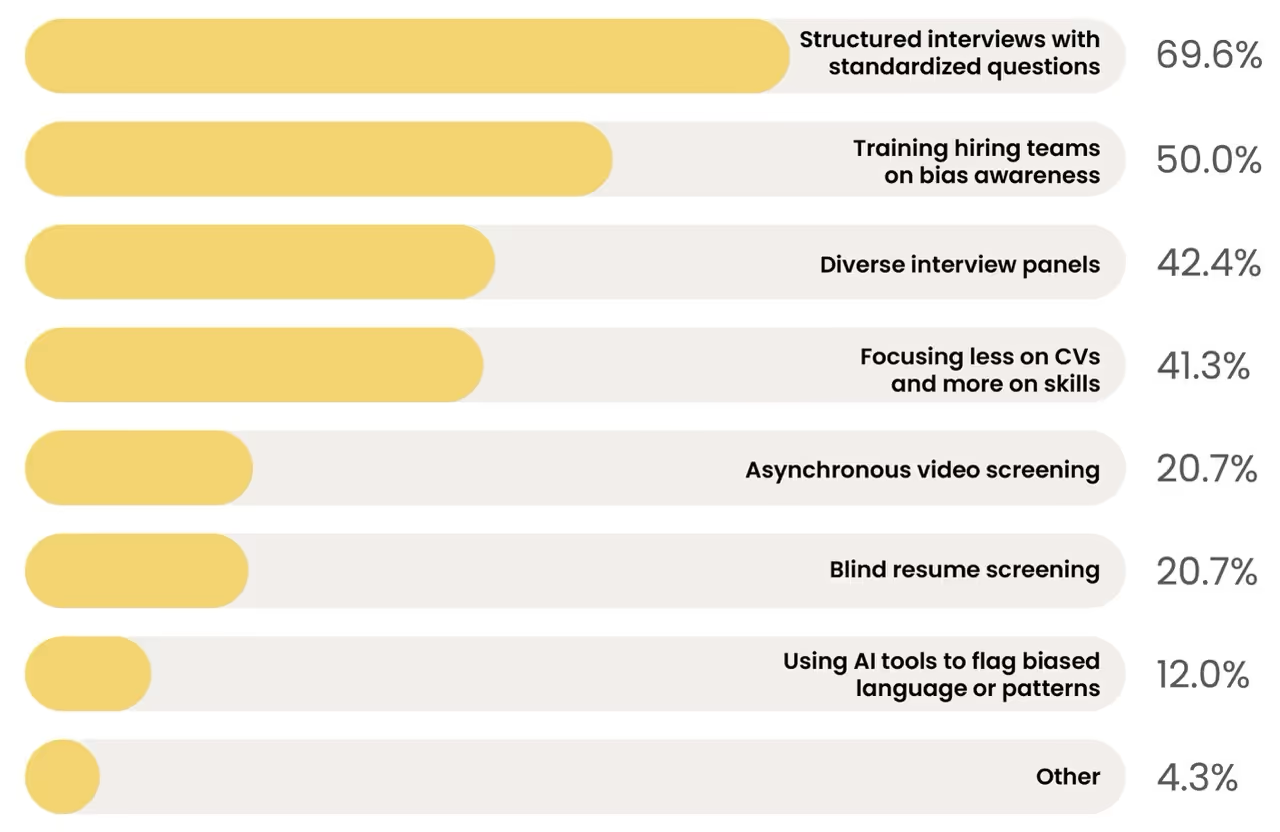
Structured interviews rank highest by a significant margin, reinforcing that fairness is increasingly being operationalized through repeatable, consistent processes rather than relying solely on training or awareness.
When every candidate faces the same questions, evaluated against the same criteria, by diverse panels using skills-based assessments, bias has fewer opportunities to influence decisions.
This represents a maturation in how teams approach equity. Fairness isn't just an aspiration or a value statement. It's being built into the infrastructure of hiring itself.
Section 6: Human-Based Hiring in a Resume-First World
When asked whether teams are actively moving away from resumes as their primary screening tool:
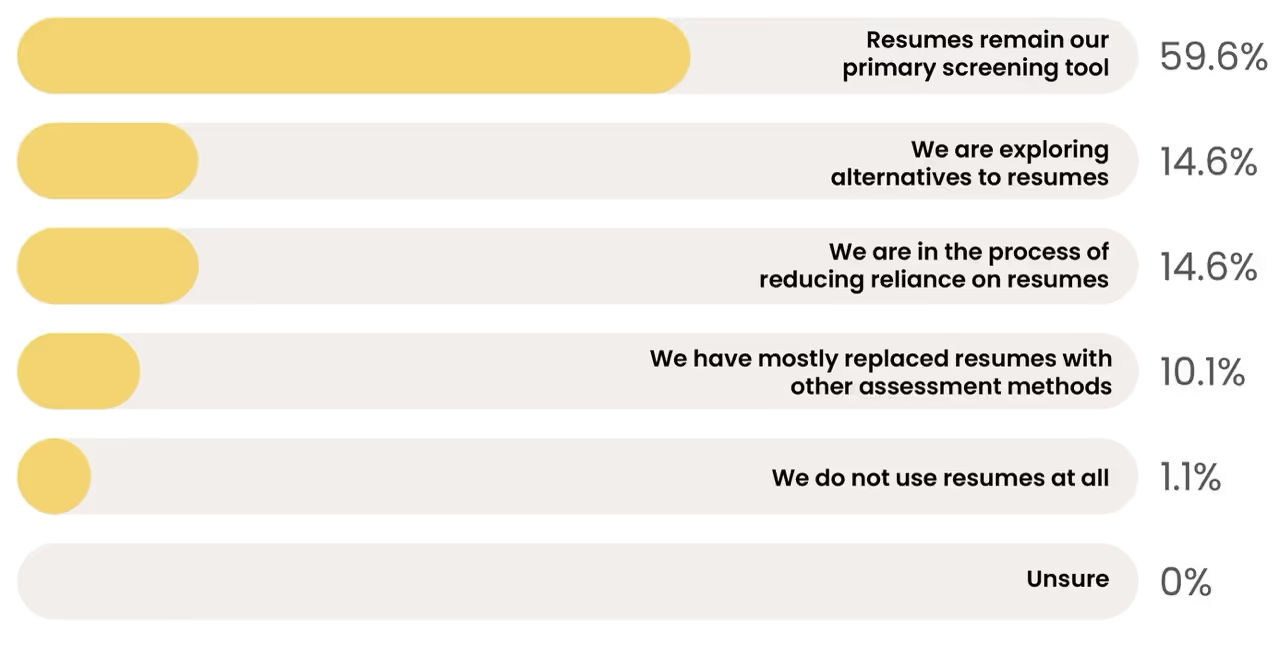
While nearly 60% of teams still rely primarily on resumes, almost 40% are actively moving away from them.
This represents meaningful directional change, with the 10.1% who have largely replaced resumes proving that full transition is possible.
The shift reflects a fundamental rethinking of what hiring should measure. Resumes offer a narrow view: credentials earned, titles held, years logged. They document the past but struggle to predict the future. They reveal what someone has done but tell us little about how they think under pressure, adapt to challenges, or collaborate across differences.
Teams are turning toward more human-centered, holistic evaluation methods:
- scenario-based assessments that reveal problem-solving approaches
- one-way video that captures communication style and authenticity
- structured question sets that probe real experiences
- hands-on tasks that demonstrate actual capability
These methods prioritize the whole person over a curated summary. They create space for candidates to show how they work, not just what they've done. And critically, they level the playing field for candidates whose potential exceeds their pedigree or whose non-linear paths don't fit traditional resume templates.
This is not a sudden shift, but a steady evolution toward richer, fairer evaluation methods.
Section 7: Candidate Experience at Scale
While not directly asked in the survey, the findings across all sections point to significant improvements in candidate experience as an indirect outcome of the changes teams are making.
The shift toward processes that increase fairness, AI-assisted efficiency, and human-based evaluation creates conditions for better candidate experiences.
Teams are recognizing that candidate experience isn't just a human issue but an efficiency issue. Poor experiences slow hiring, damage employer brand, and cause top candidates to drop out. Structure solves both problems simultaneously, creating better experiences while improving outcomes.
As hiring volumes increase, maintaining quality candidate experience becomes harder without the right infrastructure.
The teams adopting AI-assisted tools and structured processes are proving it's possible to scale hiring without sacrificing the human elements that matter most to candidates.

Conclusion: The Human-Centered Intelligence Era
The 2026 hiring landscape reveals an encouraging story: AI adoption is happening thoughtfully and strategically. Teams are moving deliberately, taking the time to understand where AI adds the most value while preserving what makes hiring truly work.
The 2026 hiring landscape reveals an encouraging story: AI in hiring is being adopted thoughtfully and strategically. The data reveals smart, measured integration. 52.1% of teams increased AI usage slightly, with another 12.8% increasing significantly.
This growth is targeted and purposeful. Teams are embracing AI for summarization, volume management, and early-stage screening while keeping the judgment-heavy stages where they belong: interviews, final decisions, relationship-building, and onboarding remain confidently human-led.
The thoughtful pace of adoption reflects teams seeking clarity on trusted tools, the right integration points, and how to maintain fairness. This isn't hesitation. It's wisdom in action.
This is where purposeful AI tools are making a real difference.
At Willo, we’re increasingly seeing our customers use AI enhanced features to efficiently handle high-volume applications, detect AI-generated submissions, surface behavioral signals, and generate structured summaries that give recruiters their time back without replacing their judgment. They're integrating AI at the stages where it solves real problems while keeping human decision-making exactly where it shines.
Willo Intelligence Adoption & Impact:
- 70% of active customers now use Intelligence features regularly (up from 40% in previous period)
Real Talk for Authenticity Detection
- 99.9% of customers have activated Real Talk to detect scripted or AI-generated responses
The path forward is clear and promising.
Teams can feel increasingly confident about where and how AI fits in their hiring processes. Purpose-built tools are emerging that enhance human judgment, restore authenticity at scale, and embed fairness into every stage, giving teams the clarity they've been seeking.
The teams that contributed to shaping this report are already building the future: hiring systems where AI handles what it does best so humans can focus on what they do best. This isn't a compromise. It's an evolution that makes hiring better for everyone.
At Willo, this is the future we are building toward: hiring that is fair, transparent, efficient, and unmistakably human. We leverage AI not to automate away human connection, but to surface the insights that help teams make better, more equitable decisions. We believe the best hiring happens when technology brings out the best in people.
The era of human-centered intelligence is here, and it's full of opportunity. The teams that thrive will be those who integrate AI with clarity and confidence.

Frequently Asked Questions
What percentage of companies use AI in hiring?
64.9% of companies increased their AI in hiring practices, with 76.6% of teams now encountering AI-generated applications. However, usage remains targeted: AI handles screening, summarization, and administrative tasks while humans retain control over interviews, final decisions, and relationship-building.
How are companies using AI in hiring in 2026?
Teams are using AI in hiring primarily for volume management, application summarization, early-stage screening, and standardizing workflows. 64.9% of teams increased their AI usage, but maintain human control over final decisions, interviews, and relationship-building.
What percentage of hiring teams encounter AI-generated applications?
76.6% of hiring teams encounter AI-generated or AI-assisted candidate applications at least occasionally in 2026.
How can hiring teams detect AI-generated job applications?
Teams use multiple verification methods to identify AI-generated applications: behavioral interviewing with specific examples (67.7%), hands-on skills demonstrations (54.8%), video assessments, and situational questions requiring personal context. The most effective approach combines several authenticity checkpoints throughout the hiring process.
Should final hiring decisions be automated?
78.7% of hiring professionals believe final hiring decisions must remain human-led. Not a single respondent believes automation can effectively handle all hiring stages.
What is the most reliable indicator of candidate quality?
According to our research, 67.7% of hiring teams trust behavioral interviewing with real examples more than any other assessment method, followed by cultural alignment and soft skills at 61.3%.
How many teams are moving away from resumes?
While 59.6% still rely primarily on resumes, 40% are actively exploring alternatives or reducing reliance, with 10.1% having largely replaced resumes entirely.
What is the most effective bias-reduction practice?
Structured interviews are the most widely adopted fairness practice at 69.6%, significantly outperforming other methods like bias awareness training (50%) and diverse interview panels (42.4%).
What hiring tasks can never be automated?
According to our research, several critical hiring stages must remain human-led. Final hiring decisions top the list at 78.7%, followed by salary negotiation (72.3%), and onboarding and culture integration (69.1%). Interviews, relationship-building with candidates, and any stage requiring empathy, nuance, or complex judgment cannot be effectively automated.
Not a single respondent believes automation can handle all hiring stages. The consensus is clear: tasks involving human connection, cultural assessment, negotiation, and final decision-making require the irreplaceable qualities of human judgment and emotional intelligence.

Survey Design & Distribution
Survey Overview
- Survey Period: September 8 - October 31, 2025
- Responses: 100+ hiring professionals
- Distribution: LinkedIn, email outreach, and in-app survey
- Format: 8 multiple-choice questions
Additional Data Sources
Survey insights are complemented by aggregated usage data from Willo's platform, representing patterns observed across 2.5 million candidate interviews.
Access Our Previous Research
Learn More About Willo
Looks Good on Paper: A weekly podcast challenging outdated hiring norms and exploring what really matters in today's talent landscape—skills, potential, and lived experience.
Customer Success Stories: See how teams like yours are transforming their hiring practices.
Willo Intelligence: AI and automation tools designed to make hiring faster, fairer, and easier to manage—while keeping every decision in human hands.
Happy Hiring Newsletter: Bi-weekly insights and practical guidance to help you build a smarter, fairer, and faster hiring process.
About Willo
Willo is a human-first candidate screening platform powering high-volume hiring for thousands of organizations worldwide. We provide flexible, AI-supported tools that help teams evaluate talent efficiently while maintaining authenticity, fairness, and an exceptional candidate experience. With structured workflows, one-way video, skills assessments, and Willo Intelligence for rapid summarization and signal detection, we help organizations hire better, without compromising what makes hiring human.