Campus recruiting helps high-growth organizations build talent pipelines shaped by the right culture, values, and long-term goals. But hiring early-career talent isn't easy.
Most graduates have little work experience and similar-looking CVs. Cast too wide a net and you're flooded with low-quality applications. Too narrow, and you miss high-potential candidates.
Campus recruitment software promises to solve that problem by helping teams identify talents with ambition, creativity, adaptability, and trustworthiness; even before they have a track record.
But to make the right choice, you need to consider which category of campus recruiting software you need and how they fit your needs.
In this guide, we'll cover:
- The two categories of campus recruitment software (event and career fair platforms vs. candidate screening tools)
- What to look for when choosing the right solution
- Nine of the best campus recruitment software platforms to consider.
The two categories of campus recruitment software
When it comes to campus recruitment, the tools to use depend on what you’re trying to achieve and at what stage.
Event and career fair platforms like Yello, Remo, GoodTime, vFairs, Handshake, and Rakuna are helpful for sourcing entry-level talent. They help get your organization in front of more students and graduates, drum up interest, and fill up the hiring pipeline. These campus recruiting platforms also offer analytics on event ROI and top sources.
Candidate screening software such as Willo, HireVue, Talview, TestGorilla, and Spark Hire enables effective applicant evaluation, shortlisting, and final hiring decisions. They use structured interviews, diverse hiring panels, and multimodal application formats, such as resumes, async video interviews, and MCQs, to assess candidate proficiency and whether to advance them.
This article focuses on candidate screening software for campus recruitment, but if you’re looking for in-person or virtual event and career fair platforms, this shortlist from Remo is a good starting point.
What To Look For In A Candidate Screening Software That Enables Campus Recruitment
Check for features that allow you to quickly and confidently hire graduate trainees while prioritizing their comfort and minimizing bias. These include the college recruiting platform’s:
- Ability to handle seasonal hiring volume: You may not need to hire new graduates year-round. Look for a platform with flexible pricing and scalability so you don’t get locked into a rigid annual contract just to hire in short bursts or for months at a time as needed.
- ATS integrations: Some tools boast multiple native and API-driven integrations with existing tech stacks, most importantly ATS tools. Look beyond the surface-level claim to see whether these connections are truly two-way and whether they support syncs with the candidate engagement, career fair, HR, or productivity platforms you already use.
- Candidate experience: Consider how flexible and accessible the platform is. Does it support asynchronous tests candidates can complete on their own schedule? What assessment formats does it offer (e.g., one-way video interviews, work samples, skills tests, or MCQs)? Is it available on both mobile and web? Strong accessibility and responsive support can reduce drop-offs and improve completion rates, especially among final-year students and recent graduates juggling relocations and multiple applications.
- Authenticity detection capabilities: Look at how the platform identifies scripted or AI-generated responses and how reliable those methods are. Since graduates can easily use AI to strengthen their applications, the best tools flag suspicious responses for human review instead of automatically rejecting candidates.
- Review workload for a lean team: High-volume graduate recruitment can quickly overwhelm small early talent acquisition teams. Choose a platform that combines AI summaries with structured scorecards and predefined role criteria to make reviews faster, more consistent, and less susceptible to bias.
9 Best Candidate Screening Software for Graduate Hiring
If you want a quick side-by-side overview of the top candidate screening campus recruiting software in 2026, this table highlights what each platform does best and how much it costs to get started.
1. Willo
We start with Willo, an intelligent candidate screening platform. Usually, when you’re hiring graduates, your biggest challenge is not how to attract applicants; it is how to know which of the hundreds (or sometimes thousands) similar-looking applications deserve a closer look.
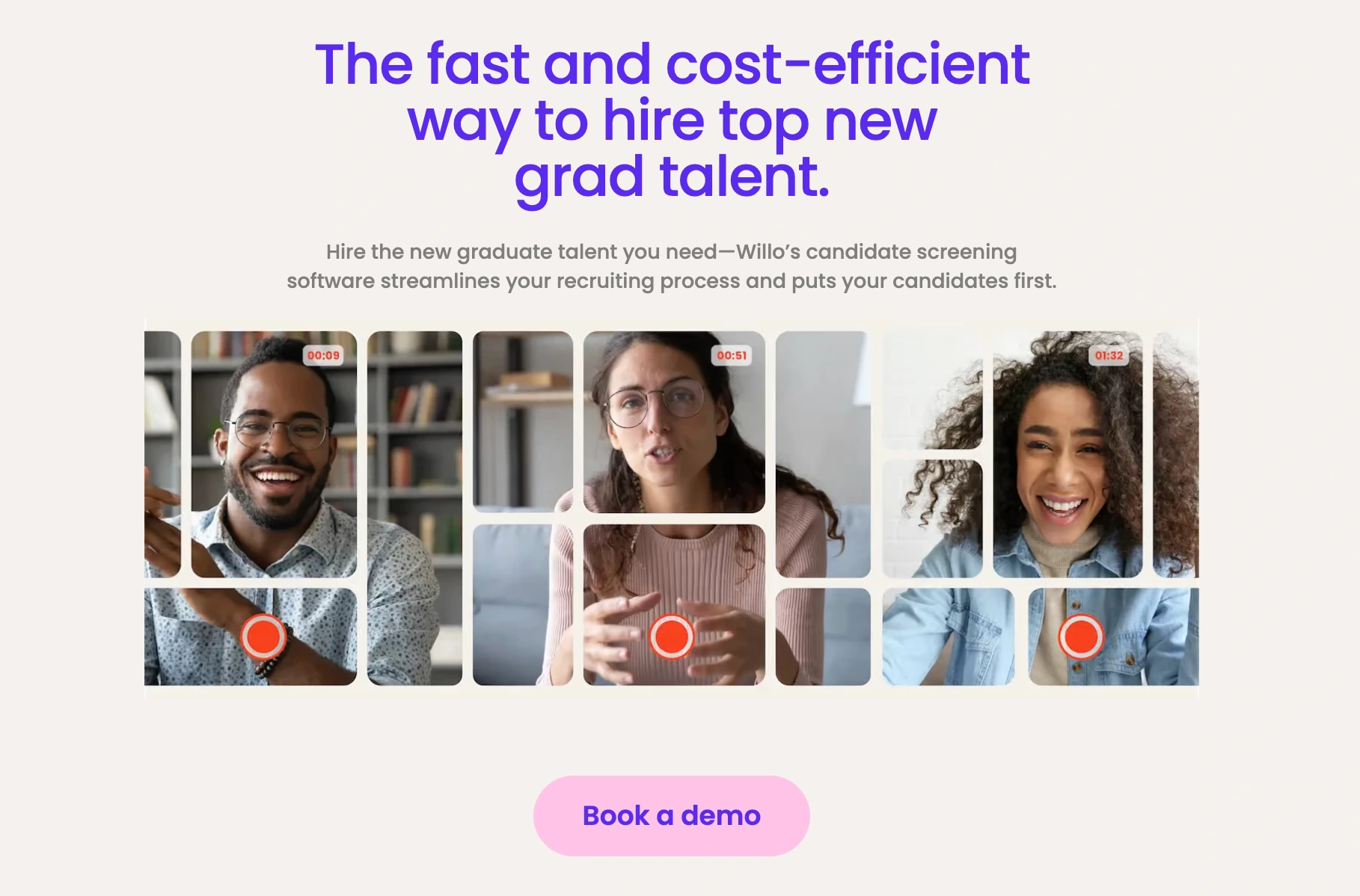
That's what Willo is built for. From the moment candidates apply, it provides a structured, consistent experience while giving recruiters evidence they can compare across all applicants.
Rather than relying on CVs alone or letting AI make hiring decisions, candidates complete assessments in different formats, AI summarizes and organizes the results, and hiring teams make the final decisions using shared scorecards.
Here’s what you get with Willo:
Increase hiring success by expanding your talent pool with multiple sourcing techniques
The quality of your applicant pool determines the quality of your hires. But casting a wider net usually means more admin work. Willo tries to kill two birds with one stone so recruiters don't have to choose between reaching more students and keeping the hiring process manageable.
Applications are not limited to a career page, for example. You can share job links anywhere graduates are already looking for – like university career boards, niche communities and social platforms.
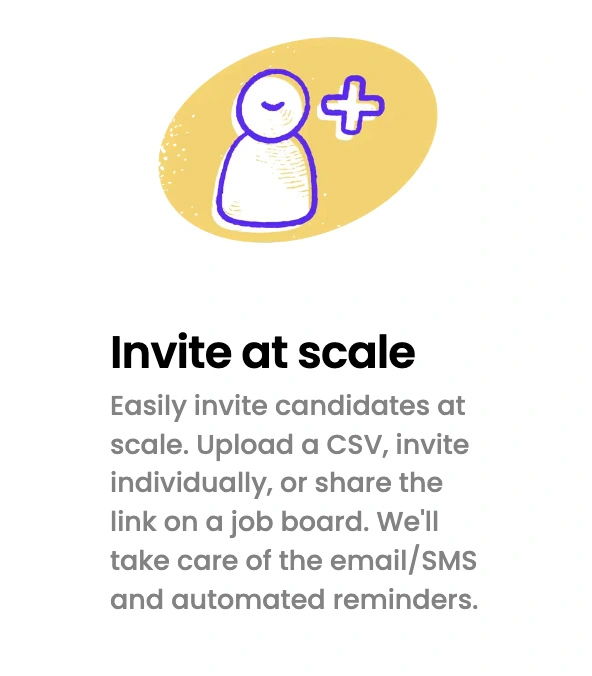
What’s more, if you're recruiting across several campuses, you can also invite up to 20,000 applicants at once, using a spreadsheet upload. With this, you reach more applicants and still save hours of repetitive administrative work.
Discover emerging talent through assessments that reveal true potential
Most graduates don't have years of experience that set them apart. So, after the first few hundred applications, the resumes begin to look the same.
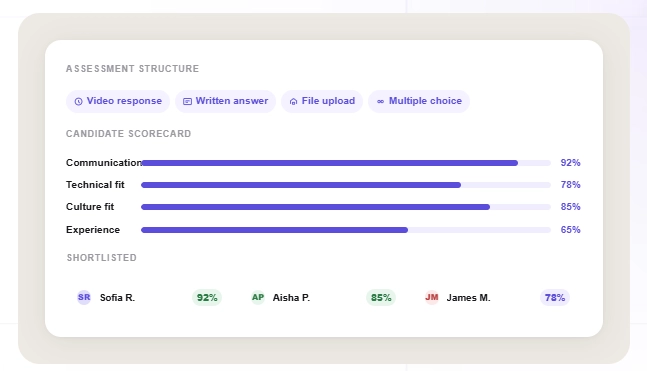
As a recruiter, Willo helps you build a fuller picture by letting applicants demonstrate their abilities in different ways:
- Use multiple candidate response formats: Combine one-way video interviews, written responses, multiple-choice questions, and document uploads to assess communication skills, critical thinking, and problem-solving skills.
- Capture experiences a CV might miss: Let candidates upload portfolios, project work, certifications, or other supporting documents that showcase achievement beyond traditional resumes.
- Protect assessment integrity: Anti-cheat guardrails flag potentially AI-generated or scripted responses for human review instead of automatically rejecting candidates.
- Reduce drop-offs: A simple mobile-friendly application experience makes it easier for students to complete assessments, even during busy recruitment seasons.
Blend AI efficiency with human judgment to screen faster, without bias
AI can save a lot of time, but in graduate hiring, speed isn't the only thing you’re looking for. When most applicants have similar qualifications, you still need human judgment to spot potential. Willo uses AI to make the review process more efficient without putting it in charge.
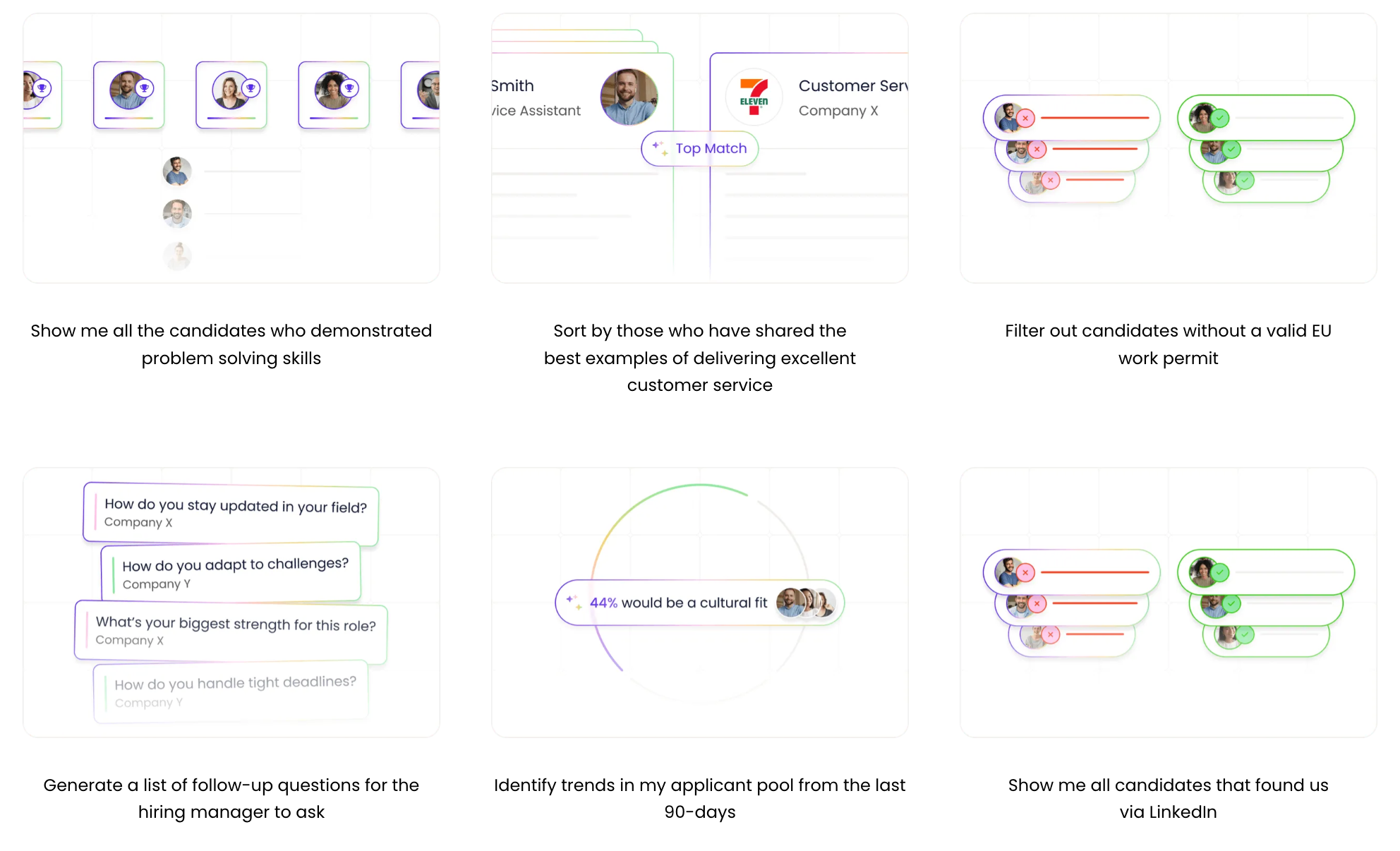
With Willo, you can:
- Get AI-generated summaries to understand candidates before reviewing the full application.
- Use AI prompts to surface qualified candidates who best match the role requirements.
- Generate defensible shortlists with AI-assisted scoring that compares interviews against predefined hiring criteria to reduce repetitive admin during high-volume hiring.
That balance between automation and human oversight is part of what attracted WillowTree. The company switched from a larger enterprise recruiting platform after finding it slow to implement and frustrating for candidates. Today, it uses Willo to support hiring across four North American offices, processing more than 17,000 applications per recruitment cycle spanning university interns, new graduates, and experienced hires.
Eliminate screening bias with collaborative scorecards
Even the best recruiters and hiring managers can struggle with consistency. Give the same graduate application to three recruiters, and you'll probably get three slightly different opinions. That may not look like a problem initially, until those differences start influencing who moves forward.
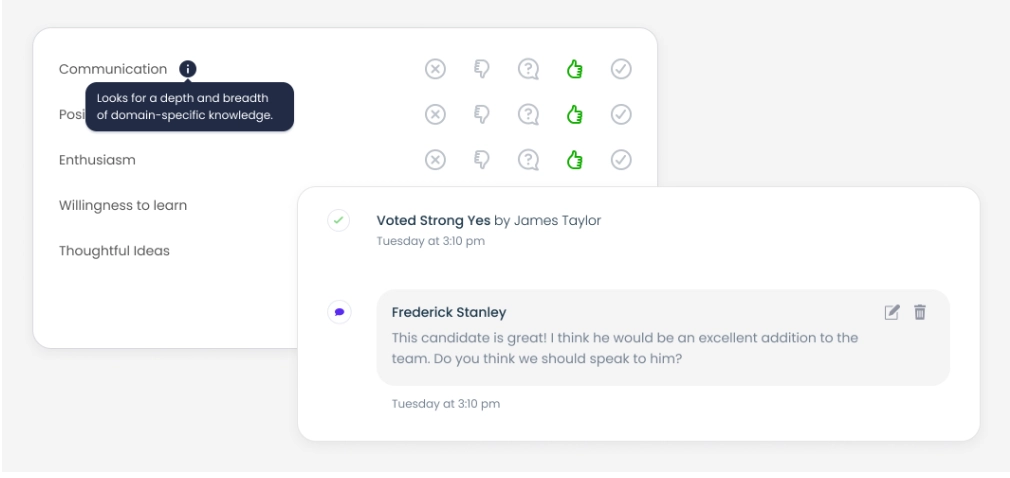
Willo's collaborative scorecards give everyone the same role-specific criteria to work from. Recruiters still make the final call, but they're evaluating candidates against a shared framework instead of personal preferences, making decisions easier to compare and defend.
Endava put that approach to the test during a busy intern recruitment campaign. Using Willo, the team reviewed 400 applications, hired 60 interns in a month, and saved recruiters more than 100 hours. It's a good example of how structured hiring can hold up under pressure, even when applications are piling up and decisions need to be made quickly.
Pricing
Willo offers a 14-day free trial and two paid plans. Willo Lite starts at $59 per live role with no annual contract, making it well suited to occasional or seasonal hiring.
If you're running larger or ongoing university recruitment programs, Willo Enterprise starts at $3,799 per year and includes advanced features such as custom scorecards, branding, anti-cheat, ATS integrations, and reporting.
Pros
- Designed specifically for structured candidate screening at scale
- Multiple assessment formats help identify potential beyond CVs
- AI speeds up reviews while keeping humans in control of hiring decisions
- Bulk invitations and candidate actions support high-volume recruitment
- Collaborative scorecards improve consistency across candidates
- Flexible pricing works well for seasonal graduate hiring
Cons
- Doesn't include campus program or career fair management
2. HireVue
HireVue is built for organizations where graduate recruitment is a constant, not a seasonal activity. If you're hiring across multiple campuses, regions, or business units, you may find it challenging to keep everything organized.
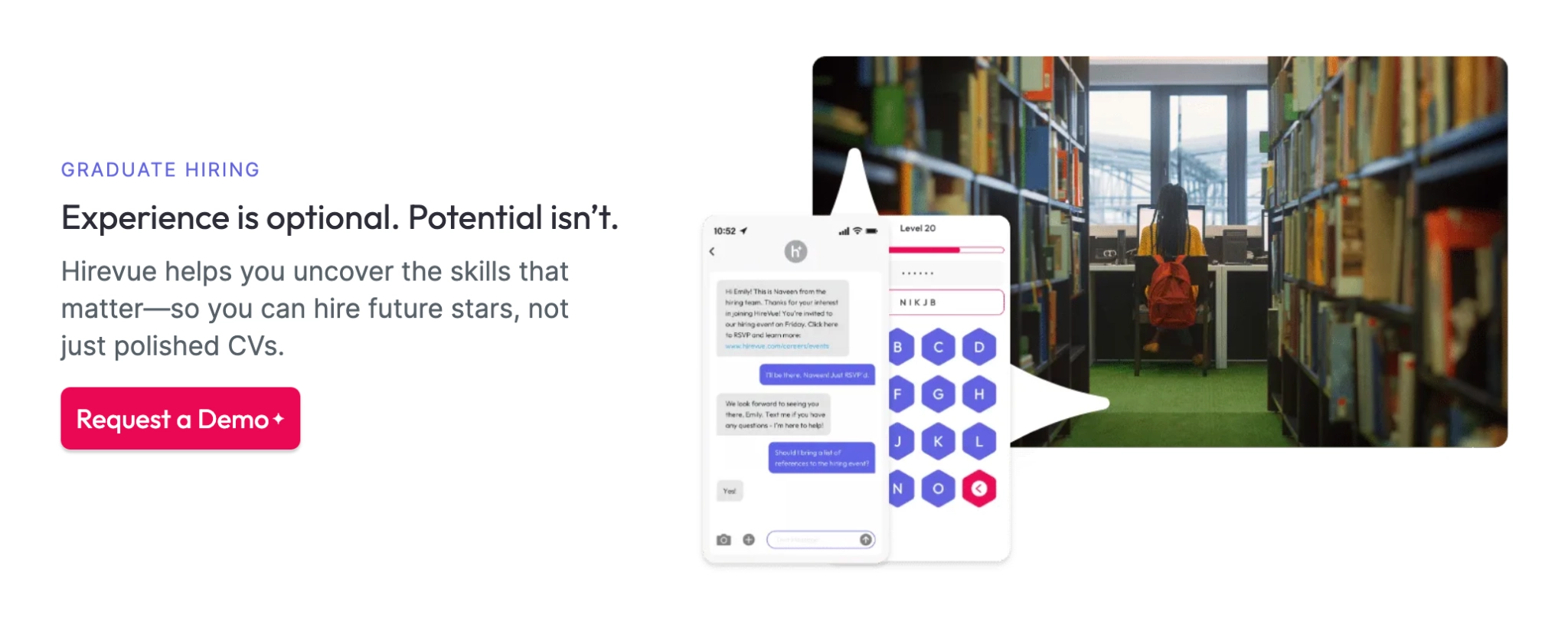
That's where the platform stands out. It brings together one-way and live video interviews, assessments, interview scheduling, and AI-powered insights in a single workflow, so recruiters spend less time switching between tools and more time evaluating candidates.
Of course, that level of functionality comes with a trade-off. HireVue is more than a candidate screening tool; it's a full enterprise hiring platform. If you're running large graduate programs year-round, that makes sense. But if you only recruit interns or graduates once or twice a year, you may end up paying for capabilities your team rarely uses.
Pricing
HireVue doesn't publicly disclose its pricing, so you'll need to contact the sales team for a quote. G2 reports that pricing starts at around $35,000 per year for organizations with more than 2,000 employees, though the final cost depends on factors such as hiring volume and the modules you need.
Pros
- Comprehensive platform covering interviews, assessments, scheduling, and workflow automation
- Well suited to large, multi-campus graduate recruitment programs
- Strong integrations with enterprise ATS and HR systems
Cons
- Enterprise pricing makes it difficult to justify for smaller recruiting teams
- Broader platform can require longer implementation and onboarding than dedicated screening tools
- Best suited to organizations running year-round hiring rather than occasional graduate recruitment campaigns
3. Talview
Talview makes the most sense if assessments are a big part of how you hire graduates. Instead of asking candidates to jump between different platforms, you can run video interviews, coding tests, aptitude assessments, identity checks, and even proctored exams in one place.
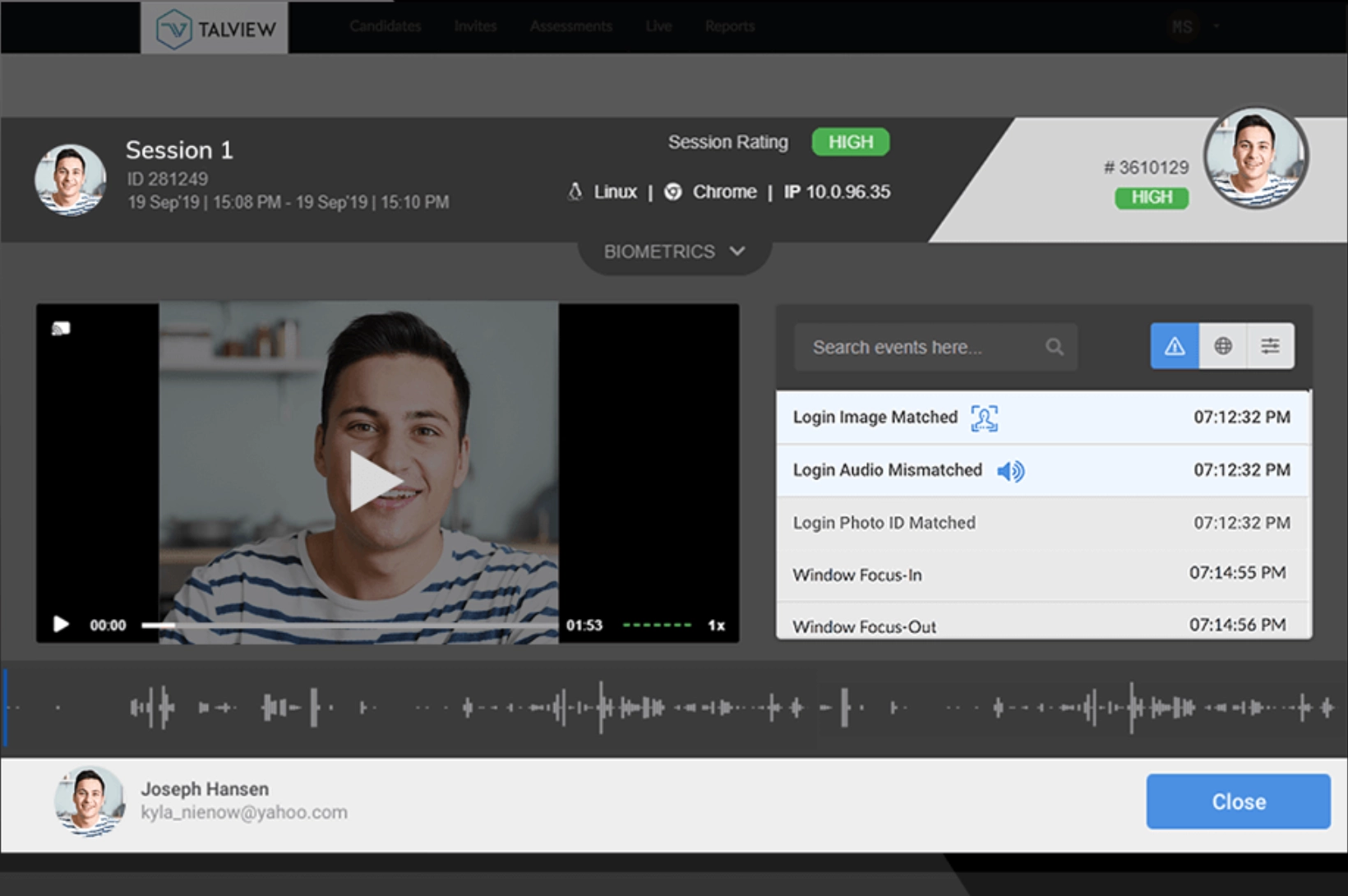
For technical graduate programs, that's a plus. Beyond just judging how well someone interviews, you can see how they perform across different stages before making a data-driven hiring decision.
It's probably more platform than many hiring teams need, though. If your process is mostly about reviewing applications and interviewing candidates, you'll end up paying for capabilities you may rarely use. Talview is a top choice when assessments sit at the heart of your recruitment process, rather than supporting it.
Pricing
Talview doesn't publish its pricing publicly. However, Capterra mentions a basic plan priced at $25,000 per year.
Pros
- Combines video interviews, skills tests, and remote proctoring in one platform
- Well suited to technical graduate recruitment and assessment-driven hiring
- Integrates with enterprise ATS and HR systems
Cons
- Better suited to enterprise hiring than occasional graduate recruitment
- Advanced assessment features may go unused for non-technical roles
- Custom pricing makes it harder for smaller organizations to budget upfront
4. TestGorilla
If you believe skills should matter more than polished CVs, TestGorilla takes that idea seriously. The platform helps recruiters evaluate candidates through pre-employment tests for areas like cognitive ability, technical knowledge, language proficiency, personality, and situational judgment before inviting them to interview.
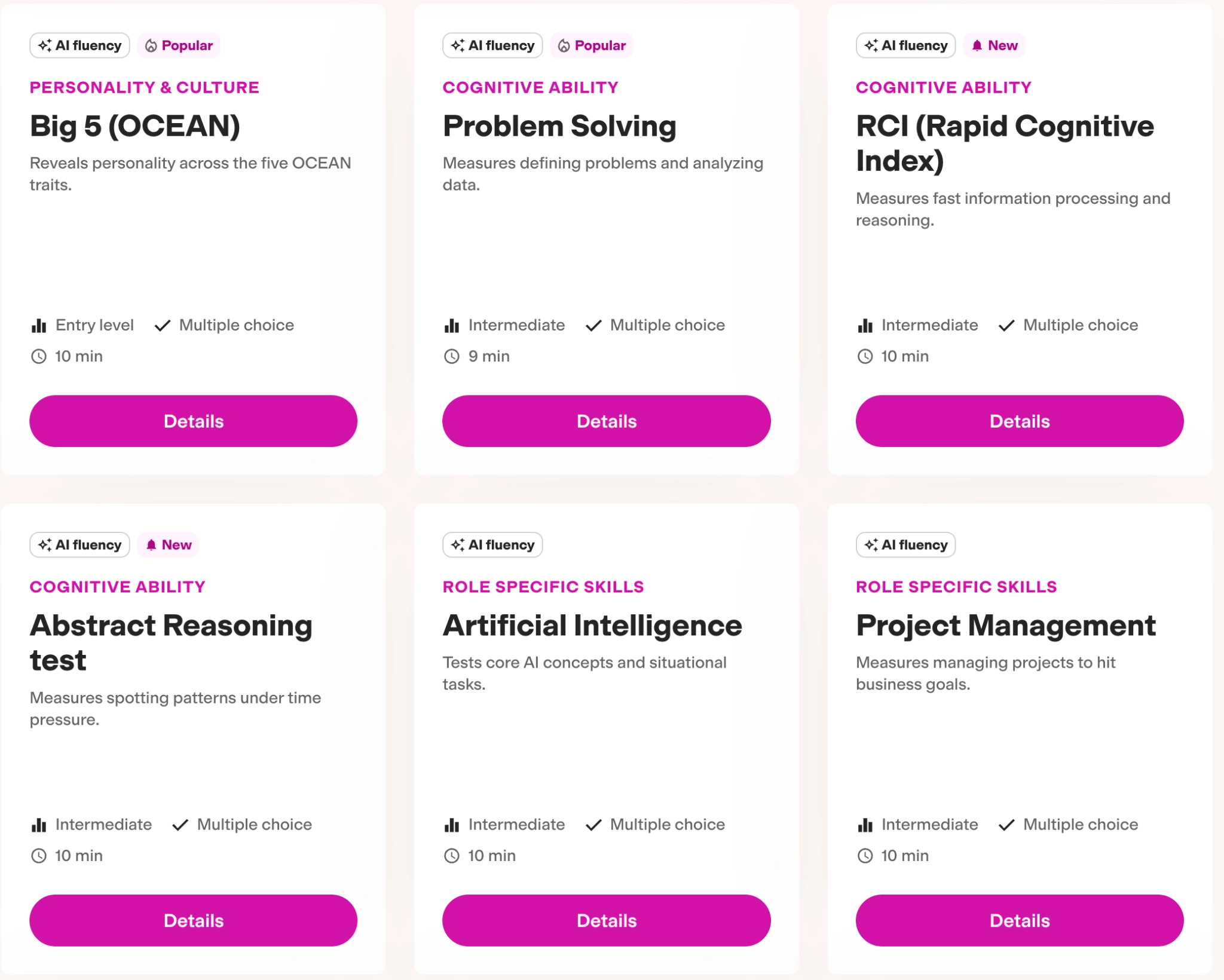
That approach works well for graduate recruitment, where most applicants have limited work experience and similar educational backgrounds. Instead of relying on resumes alone, hiring teams can identify candidates who demonstrate the skills and potential needed for the role.
Where TestGorilla feels more limited is after the assessment stage. While it recently introduced one-way video interviews, the platform is still built primarily around skills testing rather than end-to-end candidate screening. If your recruitment process relies heavily on structured interviews and collaborative evaluation, you may need to pair it with another hiring tool.
Pricing
TestGorilla has a limited free plan if you want to try the platform before committing. Paid plans start at $135 (1,620 per year with mandatory annual contracts). More assessments, integrations, and collaboration features attract higher quotes.
Pros
- Excellent library of pre-employment and cognitive assessments
- Helps identify promising graduates beyond what's written on a CV
- Integrates with popular ATS platforms
Cons
- Better suited to assessment-led hiring than interview-led recruitment
- One-way video interviewing is less developed than dedicated interview platforms
- Some advanced assessments and integrations are only available on higher-tier plans
5. Spark Hire
Not every graduate recruitment program needs an all-in-one hiring suite. Sometimes, all you need is a straightforward way to screen large numbers of candidates. That's where Spark Hire stands out.
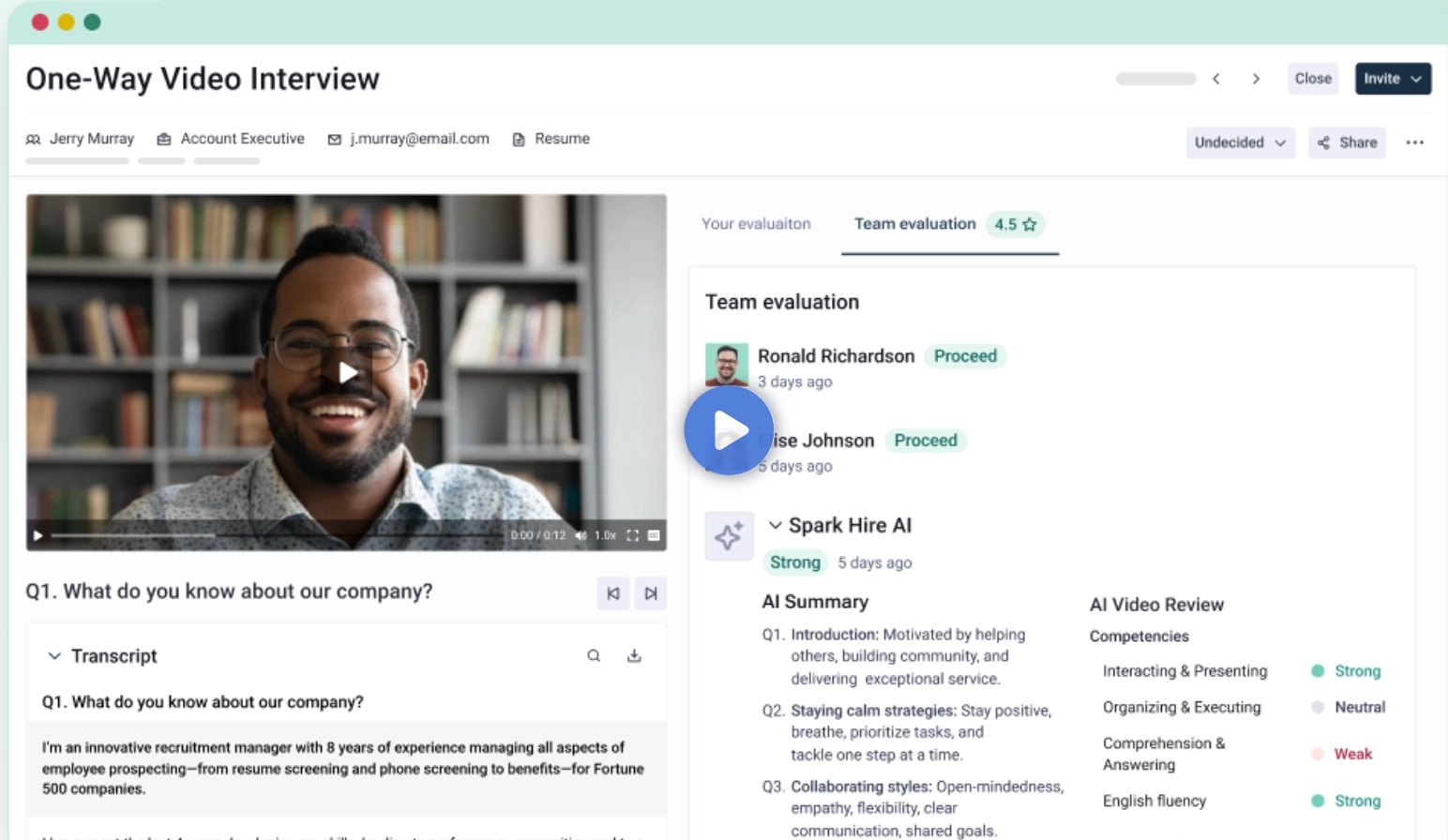
Its focus is video interviewing. You can run both one-way and live interviews, schedule interviews, and evaluate candidates from the same platform. If you're recruiting across several campuses or locations, having everything in one place makes it much easier to compare applicants fairly.
That said, Spark Hire is built around interviews, not assessments. So if your graduate recruitment process depends on coding tests, aptitude assessments, or more advanced AI-assisted screening, you'll probably need to pair it with another tool.
Pricing
Spark Hire offers separate pricing for its products. Video Interviews (Meet) starts at $249/month when billed annually or $299/month on a monthly plan. If you also need an applicant tracking system, Recruit plans start at $335/month, with higher-tier plans available for larger hiring teams.
Pros
- Easy to set up and use
- Supports both one-way and live video interviews
- Suitable for high-volume graduate screening
Cons
- Limited built-in skills assessment capabilities
- Fewer AI-assisted screening features than some competitors
- Best suited to interview-led recruitment rather than assessment-heavy hiring
6. VidCruiter
VidCruiter makes the most sense when consistency isn't optional. If you're recruiting graduates for government, healthcare, higher education, or other regulated industries, every candidate needs to follow the same process, and you need to be able to show that they did.
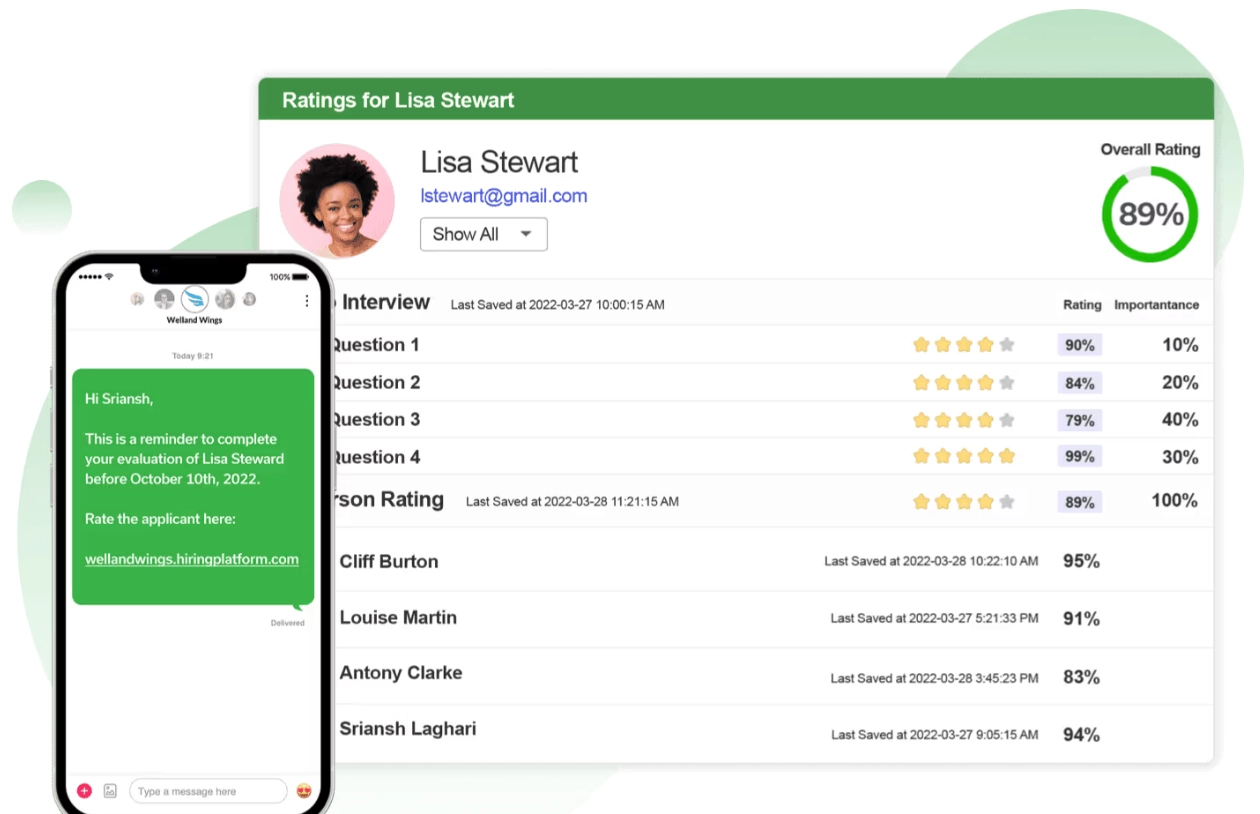
This is where VidCruiter comes in. Interviews, assessments, scheduling, and evaluations all follow a structured workflow, helping hiring teams apply the same standards from the first applicant to the last. When you're reviewing hundreds of graduates, that kind of consistency can be just as important as speed.
But VidCruiter is probably more structured than some organizations need. If you only run a small graduate intake each year or your hiring process is fairly straightforward, much of what VidCruiter offers may go unused. The platform is at its best when governance, documentation, and standardized hiring are priorities.
Pricing
VidCruiter doesn't list its pricing publicly, so you'll need to contact the sales team for a quote. Capterra quotes a usage-based annual price of $ 5,000, but the company’s official pricing page indicates that costs vary based on your hiring volume and the features you need.
Pros
- Built for structured and standardized hiring
- Supports video interviews, scheduling, assessments, and interview guides
- Strong option for organizations with compliance or governance requirements
Cons
- Better suited to enterprise and regulated hiring environments
- Implementation can take longer than lighter-weight screening tools
- Pricing is available by quote only, making it harder to compare upfront
7. Criteria Corp
When you're hiring graduates, everyone's CV starts to look a little alike. Similar degrees, limited work experience, and not much to separate one candidate from the next. That's where Criteria Corp can help.
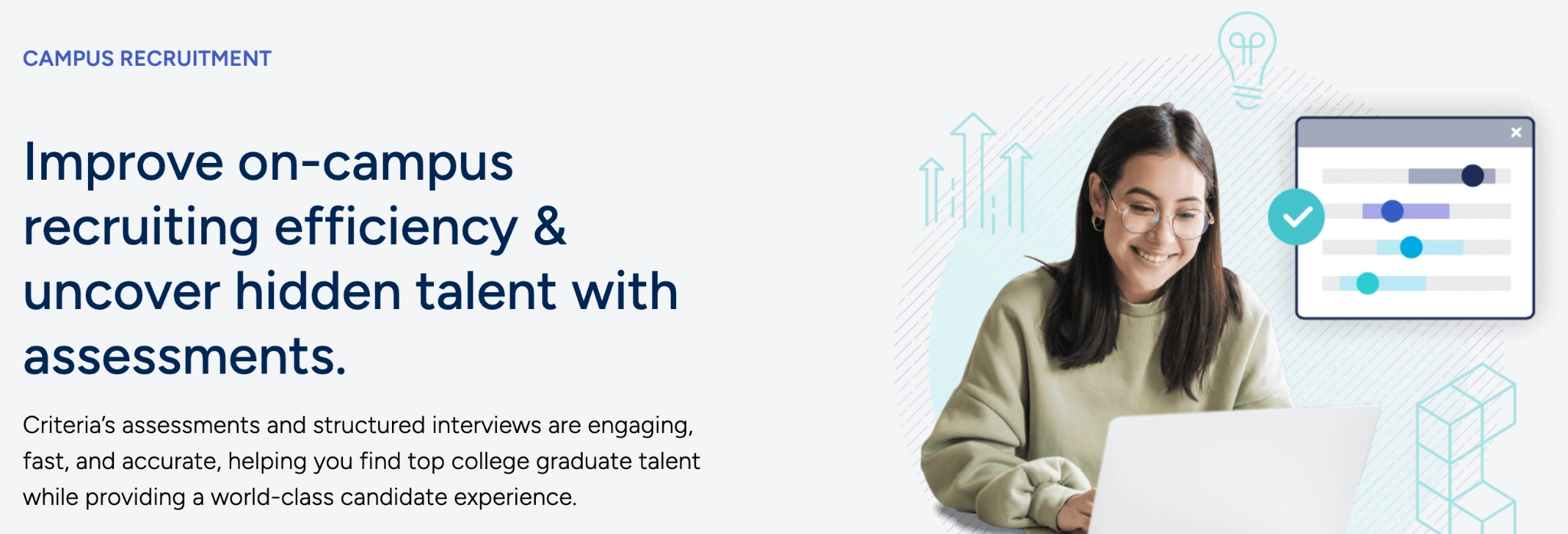
Instead of trying to manage your entire recruitment process, it focuses on one thing: helping you understand whether a candidate can succeed in the role. Recruiters can use cognitive aptitude, personality, emotional intelligence, and skills assessments to build a clearer picture before interviews begin. It gives you another way to spot potential when a CV doesn't tell you much.
But that's also where its focus ends. Criteria Corp is built for assessments, not end-to-end hiring. So if you want to schedule interviews, communicate with candidates, and manage hiring decisions from the same platform, you'll need to pair it with an ATS or another recruitment tool. For some teams, that's a perfectly reasonable trade-off. Others may prefer a platform that brings everything together.
Pricing
Criteria Corp doesn't publish its pricing, so you'll need to request a quote. SelectHub reports that pricing starts at $ 1,200 per year.
Pros
- Strong selection of cognitive, personality, and skills assessments
- Helps identify graduate potential beyond academic results
- Scientifically validated assessments
Cons
- Focuses on assessments rather than the full recruitment workflow
- No built-in one-way video interviewing
- Custom pricing makes it harder to estimate costs upfront
8. Workable
Workable takes a broader approach to hiring than most of the platforms on this list. Rather than focusing only on candidate screening, it brings together applicant tracking, job posting, sourcing, interview scheduling, and AI-assisted screening in one place.
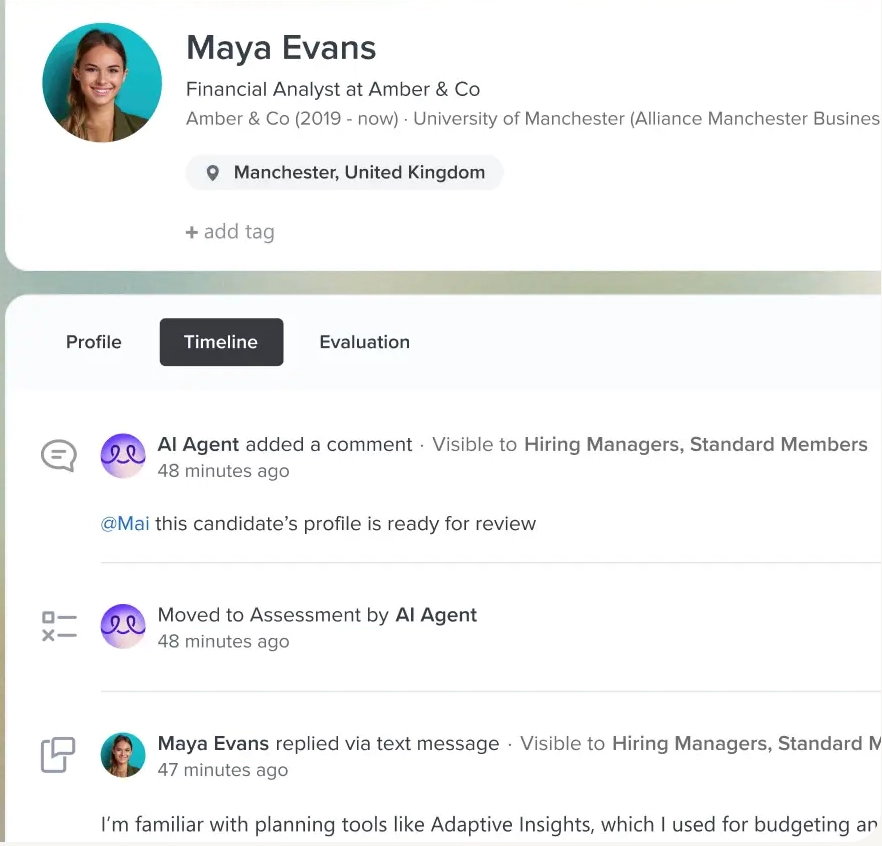
That makes it a good fit for teams that want to manage the entire recruitment process without stitching together multiple tools. For graduate hiring, you can advertise roles, manage applications, and move candidates through each stage of the process from a single dashboard, which is especially useful for smaller or growing teams.
Campus recruitment, however, isn't its primary focus. Workable handles screening and interviews well, but organizations running large graduate programs may miss some assessment tools and high-volume hiring features that dedicated university recruiting platforms offer.
Pricing
Workable offers a 15-day free trial. Paid plans start at $299/month for the Standard plan, with Premier starting at $599/month and Enterprise at $719/month.
Pros
- Combines applicant tracking and candidate screening in one platform
- Easy to post jobs and manage applications from a single dashboard
- AI-assisted sourcing and screening features
Cons
- Not purpose-built for campus recruitment
- Limited assessment capabilities compared with dedicated screening platforms
- Advanced hiring features require higher-tier plans
9. Hireflix
Hireflix isn't trying to replace your ATS or manage every part of your hiring process. It's built for one thing: helping you screen candidates through one-way video interviews.
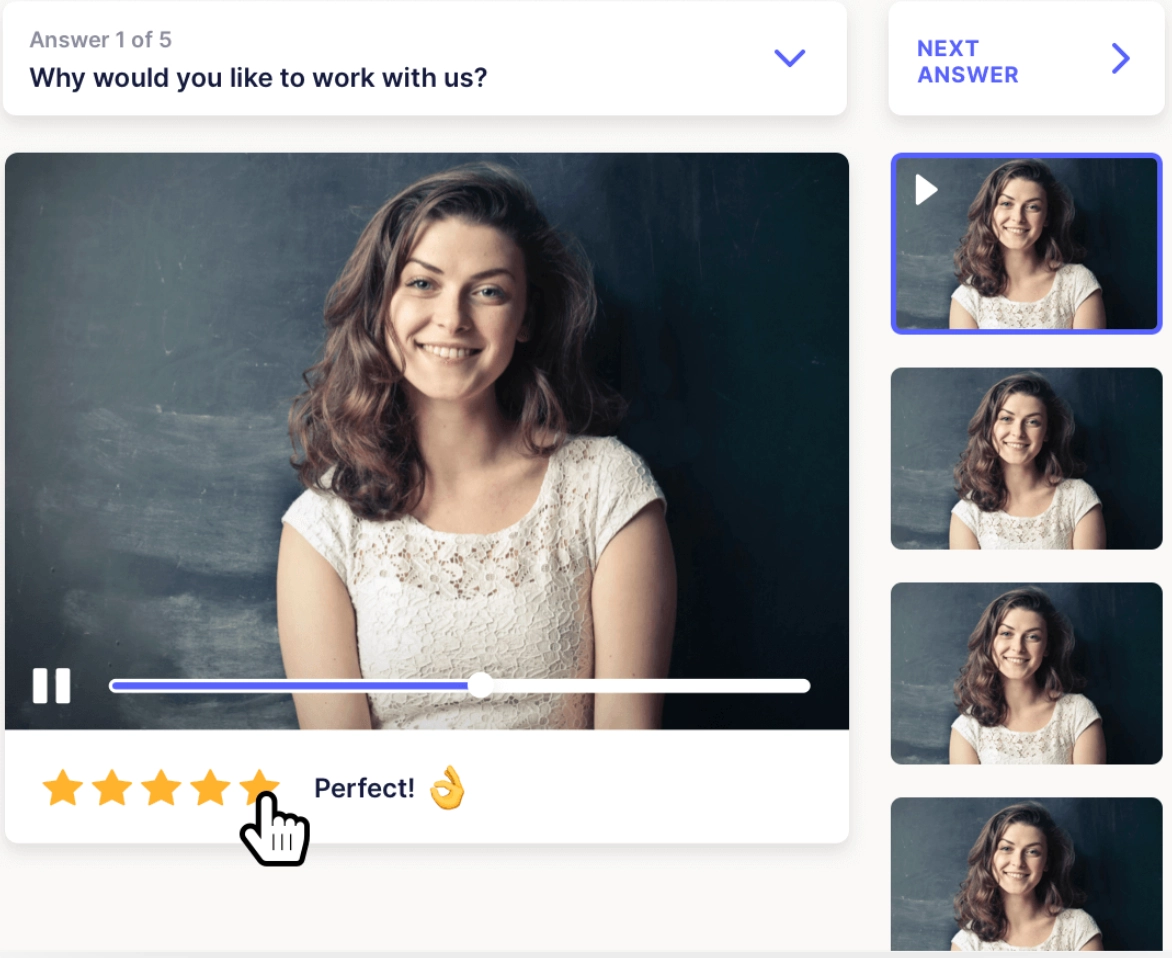
Candidates record their responses when it suits them, and recruiters review those interviews whenever they have time. If you've ever had to work through hundreds of graduate applications in a short space of time, you can probably see the appeal. Everyone answers the same questions, and your team isn't stuck coordinating endless interview slots.
That simplicity means there are limits. You won't find built-in skills assessments or the broader hiring workflows that come with larger recruitment platforms. But if you've already got those parts covered and just want a faster way to identify promising graduates, Hireflix does exactly what it's designed to do.
Pricing
Hireflix offers a one-month free trial, so you can test it before committing. Paid plans start at $75 per month (billed annually) for companies with fewer than 50 employees. If your organization is larger, the Medium plan starts at $150 per month, while enterprise pricing is available on request.
Pros
- Unlimited positions and interview responses on paid plans
- Makes high-volume graduate screening more manageable
- Integrates with popular ATS platforms
Cons
- Designed primarily for one-way video interviews
- No built-in skills or aptitude assessments
- You'll need another platform if you want end-to-end hiring workflows
Willo: Find Your Next Graduate Talent With Ease
Campus recruitment software solutions like Willo help you look beyond similar CVs to identify graduates with the greatest long-term potential.
With Willo, you can evaluate early-career candidates through structured assessments, AI-assisted insights, and consistent scorecards, ensuring every applicant is assessed against the same role criteria.
Even more, unlike platforms that lock you into annual contracts, Willo's flexible pricing lets you scale hiring up during graduate recruitment season and wind down once your intake is complete.
Hiring for one seasonal intake? Start a 14-day free trial and explore Willo's flexible pricing to see how it fits your recruitment process.
Running a larger graduate program across multiple campuses or hiring teams? Book a demo to see how Willo can streamline enterprise-scale campus recruitment.