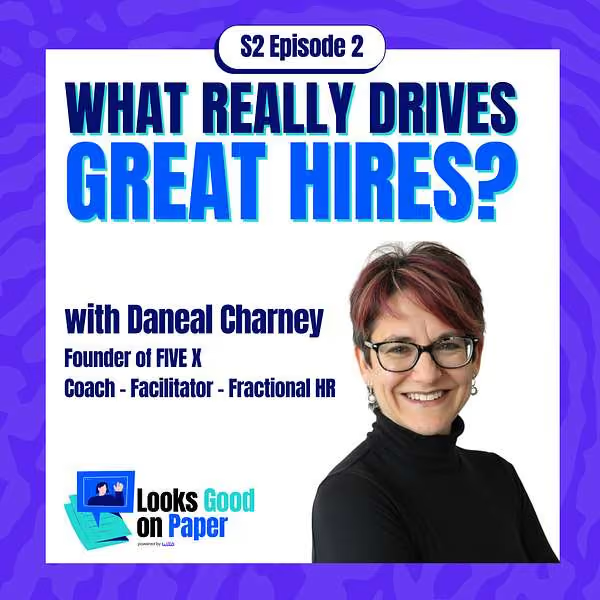
What Really Drives Great Hires? - Daneal Charney (S2E2)
Subscribe on:


Daneal Charney is a fractional HR executive and leadership coach who has seen hundreds of tech companies navigate their hiring challenges. After 10 years in the Toronto tech ecosystem, including her role as Executive in Residence at MaRS, she now helps fast-growth companies build high-performing leadership teams. In this episode, she breaks down the three biggest hiring mistakes that keep companies stuck in broken patterns.
Daneal reveals why we consistently hire based on what we can see rather than what actually drives performance - the motivation and mindset that exist "below the iceberg." She shares why hiring before you're organizationally ready sets everyone up for failure, and tackles the controversial topic of hiring from your personal network. Her insights on CEO bias in hiring decisions and the importance of defining success criteria will change how you think about building your team.
From a medical company's innovative panel interview approach that led to a 15-year hire, to frameworks for identifying the drivers and motivations that predict long-term success, Daneal provides actionable strategies for better hiring decisions. She also weighs in on emerging tools like one-way video interviews that can reveal communication patterns and behavioral signals traditional methods miss.
Connect with Daneal Charney:
- LinkedIn Profile - Fractional HR Executive and Leadership Coach specializing in fast-growth tech companies https://www.linkedin.com/in/danealcharney
- MaRS Discovery District - Toronto innovation hub where Daneal served as Executive in Residence https://www.marsdd.com
Show Resources
- Willo: willo.video - The most cost-effective way to screen candidates at scale. Interview candidates anywhere & at any time
- CV Free Toolkit: cvfree.me/join - Break up with the CV and get everything you need to modernize your hiring approach with skills-based assessments
- Anita Chauhan: linkedin.com/in/anitachauhan - Connect with the host
S2 Daneal Charney
Intro
Anita: This is looks go on paper, a podcast from Willo about flipping the script on traditional hiring. I'm Anita Chauhan, and every episode I put big voices in hiring work culture through three quickfire questions, speed, dating style to get the habits, trends, and ideas that matter.
Guest Introduction
Anita: Hi, and welcome to this episode of The Looks Good On Paper Podcast. So today with us, we have somebody that I think is phenomenal and a really big name in the Toronto Tech space. Um, I've personally known her for about 10 years now and we've worked together, uh, with some of the venture backed companies I worked at, and I thought she would be the perfect fit for this podcast. So I'm so excited to introduce Daneal Charney, um, who is a fractional HR and executive coach who helps fast growth tech companies build aligned, high performing leadership teams. Um, hi. Thank you so much for being here. I'm so excited to chat with you.
Daneal: Yeah, I'm excited too, Anita. I mean, it's amazing that we did meet that long ago and when I was a executive in residence at Mars and you know, you are one of the hundreds of tech companies that I got to see a little bit in terms of how effective leadership teams operate. Um, and now I'm doing a program that ready, sort of like that next level of leader.
So super excited to chat with you today.
Anita: Yeah, I know. That's why I'm so excited because I think like the amount of people that you got to see the amount of companies in that amount of time and still in the work that you do, that you get to see like, you know, hiring and talent at its best and sometimes worse. And that's kind of why we're here today
Daneal: Yeah. Let's be honest. Sometimes at it's worst.
Anita: Awesome. Well, uh, again, so great to have you here. Uh, so you know the game, uh, three questions, rapid fire and then one wild card at the end. And we are going to jump right in.
Biggest Hiring Mistake
Anita: So what is the biggest hiring mistake companies keep making even though it's clearly not working?
Daneal: Yeah, so I couldn't pick one. I literally picked three, so you're gonna hate me. But, um, I thought the three biggest things that I, you know, where the hiring is kind of broken is the, well, the first one is we tend to hire on what we see, of course, like it's the top of the iceberg. How people answer questions, your resume, right? Um, versus what you don't see below the iceberg. And so I wanted to talk a bit about motivation because I find the reason people join a startup and motivation is really key to retaining them, which is right? Performance retention. That's why you're hiring them, I mean. I always call it the lifetime value of an employee.
Okay.
Um, second one I wanna talk about if you let me, is like hiring before you're ready.
'cause some organizations the whole like, I hope they, you know, I hope they survive. Let's just throw them into the fire. I mean, does that make sense? And the third one is hiring your close network. That's probably a controversial one because we tend to do that a lot.
Anita: Oh yeah, absolutely. I have a lot to
Daneal: Can jump in?
Anita: Absolutely. That last one though, that last one I, I also have lots to say about it,
Daneal: okay, good.
Anita: let's dive in.
Daneal: Yeah, so diving into number one, which is, you know, we hire based on skills and experience and, and so in my experience, the key drivers is one of the things we have to dig into. And one of the things I do, um, again, I'm not a recruiter by background. I, I think I just have good instincts and I've done recruiting, especially at the executive level, often like the final, one of the final interviews. Is, you know, have a list of motivators and drivers that are key to this company. And live, have people rank them and talk about them. Like just, that's a quick thing. Um, so I really red flag to me is people who are motivated by power and title, like giving away that title. Um, because I think what should motivate people who join startups is kind of collecting experience and the growth mindset, right?
And the, and ultimately the mission of the company, right? Um, someone who enjoys that. Stage of the company and is not looking for the support and infrastructure you just don't have. Right? Um, and then someone who like really is there for the right reason. So if you have a CEO that's building a billion dollar business, they should expect that it's gonna be a long time for that exit. So don't get someone who's like, oh, you know, in two years, uh, the company is gonna be acquired and I'm gonna be rich. Probably not gonna happen.
Um, so that's my mistake number one.
Anita: Absolutely. I really, I think what's really interesting too is just like how do you go about finding those things? You say you have them rank them, so you go in and how do you identify? Is it through the conversations you're having with them? Like is it just like asking them directly the questions? How do you go about you direct?
Okay.
Daneal: I mean, yes, I can ask a question in 10 different ways,
but I've added this to the interview process where I'm clear on here are the key requirements and what are the motivators that we need this person to have? Right? And when we, and then let's have those motivators kind of up on a screen and say, Hey, looking at these motivators, here's the definition.
Can you quickly rank your top three and talk me through why
Anita: I love it. And just like I'm thinking here, so a big thing that, you know, we do at Willo and uh, we care so deeply about is encouraging companies to take more of a skill. Is base hiring approach. So even before you get to the point where you're speaking and have the motivators on the screen, how would, like, how do you determine those types of things before?
Do you have a way to identify if they have motivators? Like within the resume? Between before the actual interview process? Yeah.
Daneal: I dunno if you can, I mean, I'm sure there's a way, but uh,
I haven't like, I think it's honestly, I think it's the deep listening and conversation and it's often, you know, when they say 80% of communication is. Is, is what people don't say.
I always believe in candid feedback because in the end, who wants to be in a company that they are not achieving things, they're not recognized, they're, they shouldn't be there. Right? So I, yeah. So that I take that approach.
I think it's the kindest and honest, most honest thing.
Anita: Yeah. Yeah. I feel like, uh, I like that one because everybody wins, so, um,
alright, so let's go into question one B.
Daneal: Yes. Yes. Ms. Mistake number two. Okay. So we often see this like, you know, you'll throw you into the fire. But what I wanted to talk about and what I see is when CEOs aren't ready, it's all, honestly, it's usually early stage. They're hiring their next leader. And it's amazing because they're gonna get to do the work that they weren't getting to do.
But what happens is CEOs get in their own ways sometimes, because it's their baby, they've gotten to zero to one. On their own. And now they actually have to transition some of the responsibilities. They have to be very clear about accountability metrics. what are your decision making rights? And it is very hard for many founders. I've seen them struggle and I've coached them through it.
Anita: That's so unfortunate too, like that
cost of like bringing them in, onboarding, um, the overall employee experience, the in, like the people that were on their team. Like
you think about the, of those
things. And I, I, obviously have been in a lot of startups and we've dealt with that too, where it's like, you know, the CEOI get it, it's your baby, but you want a
high performer and you're gonna spend all this time bringing them in.
You're gonna go scale them, maybe head hunt them, and then you let you bring them in and you don't relinquish. And I
get it, you know, it's your baby again. Like you've, you've blood, sweat, and tears. And I know is there raison d'être. Right? Like they've been doing this for X number of years, but that stage right.
Alright, and what is the third mistake?
Daneal: So the third one, as you said, it's your favorite, is like hiring through your network and I think like it's great. It's easy, right? But I see trouble where you start hiring your family and your very close relatives, right?
Or. Them, you are very close friends,
right? And I, and I had, uh, I have a friend who's a CEO and he said, I couldn't believe it for 15 years. He had, his co-founder was his close friend, and it said he, he took and took him 15 years to realize, first of all, the person who the, the other person was running sales. They didn't agree on the approach. He would kind of hold his tongue for a long time and then just get super pissed off, right? And, what he realized is if you are the CEO. You're actually an employee employer relationship, even with your founders and your others, and you have to manage that relationship.
Set up expectations have real time feedback, and that is very hard in a high stakes relationship where it's family or close friends. It's very hard to, and of course when you're hiring them, there's a lack of due diligence. I trust you come on board and when you're terminating them, it's so painful and, and heartbreaking and so, yeah.
It didn't work. his company never did what he wanted it to because he didn't have the right co-founder ultimately.
Anita: it's so tough, right? And I think it's like. Someone that you know, you love and trust, and then you have someone that buys into your vision. That person is close to you. You've
known them, bring them in, you respect them. Like, oh, whatever. But you know what, that's the part that people would talk about, like the conflict that happens that people, you, you might lose a friendship.
These are things I've seen before, so it, it is, it's dicey.
You take a chance. Sometimes it
might co-creating with someone you love and respect is beautiful, but there are consequences if it doesn't go well.
Daneal: Yeah. Um, and that's why one of the things I do with clients, I'm such a big fan of, and to your point is like alignment conversations, constant alignment
Make sure you are aligned on things like what do we do if there's disagreements?
How do we make decisions, right? Are we aligned on our value proposition in any core business thing that we need to be aligned on?
You should do it in the hiring process, start to ask those questions to see if there's alignment.
Anita: how do you do that? How have you seen that done?
Daneal: the more you can get people to be themselves, right. And be a bit unhinged, I think. I think there's two things like s. I've thought about. One is really getting people to be themselves. So like, you know, you're going out with a team for a coffee or whatever, right?
And you see what they're really like. Or we used to do this thing at, uh, one of our organizations is we used to make sure that the EA interacted a lot with. The hiring person. She used to gimme a score. She was lovely. She'd always gimme a score on a candidate. The interpersonal skill, ultimately that's so important, right?
How are they gonna collaborate, right? It's, it's all around team effectiveness. So, um, know, there's, there's, it's, you know, it has to start with. What are we, what I, what do we wanna observe? What are the real requirements? And then you go, well, how do we test for that? Right? And it's like a mix, right? It's a mix of, you know, questions.
It's a mix of maybe working interview. It's a mix of assessments. It's like there's no one, there's no one formula, but. Being clear on the actual requirements and having a scorecard that everybody looks to and is consistently looking to. And that's gonna go into the next question that you're
Anita: let's jump in.
Unknown Hidden Bias
Anita: What is a hidden bias companies unknowingly have even when they think that they're being progressive in their hiring?
Daneal: Yeah. So I know you're not gonna be surprised with this, um, but I think we rarely do, uh, challenge the CEO to come up with. His or her version of what success looks like.
really important, like it's so important for hiring, it's so important for performance management, it's so important for terminations.
Like you need to know what success looks like. Right? And so the specific behaviors, mindsets, skills, um, what do you mean when you say cultural add? Like what is that in an organization? And there's no time. That's too early. Like to have that conversation.
so I think what happens a lot of time, because it is the CEO, it's their company, so they know, but what do they know, right?
And so their interviews often lack the structure. They have no oversight. And when they say, this is my gut, this is my gut. Um, and the problem with that is if they're, they have really great instincts, there's maybe not a problem, except I would like to still know all those questions. I to have those questions down. But not all CEOs are equally good at hiring. sometimes they really have bad instincts.
Anita: This is one of the things too. The first scenario you gave is something that a lot of people see, and as I've spoken through these conversations as a bias that we hire, what we know is that, um, that confirmation bias of like,
I know this person, this person went in from school as me.
Therefore they're a better candidate. And you know, it's just not the case.
we just have to be aware of our biases. We know that we do these things, but just even having a conversation about like, you know, hopefully your CEO or the company is open to hearing that, yeah, maybe you actually just need to be aware that you have this bias of doing this
and this will us in the long run.
Now let's jump into number three, and then after that we'll have our quick wild card.
Most Surprising Hire
Anita: So most surprising hire you've ever made, and how did their success define what looked good on paper or vice versa? Sometimes I ask that.
Daneal: Yeah, so this is an interesting one. It's a non-tech one. Um, I was working with a medical company actually like many years ago, and I was thinking about the whole panel interview. Oh, it's the worst, right? When you have like four people interviewing you, it just feels like I was like. Hmm, interesting. This medical, um, medical company, what was really important to them?
Of course, the technical skills. Okay.
They had already interviewed for that, but like really a great patient experience PA at nint that people had to really work together to be very collaborative, to make sure like the team's winning, the business is winning. And I was like. Let's switch the panel interview round and take our top three candidates. And what we did is we interviewed them, but it wasn't so much what they said because we'd already decided tech. I mean, you know, that was somewhat important, but it was more, again, what I was saying that beneath the iceberg
were so the top candidate, I'll tell you the things that she showed. First of all, when she came in, she, um, you know, she introduced herself.
She was very collegial, not just with us.
With everyone. With everyone who was being interviewed. Right?
The other thing is when we asked her a question, uh, she did have a lot of confidence, which is, which is great, but she also built on other people's ideas, right? So
try to be the smartest in the room. Um, although she was very smart, but she really showed that she listened well and she built on other people's ideas, and there was other things that showed that she was a great team player. We ended up offering her the job and she's still there 15 years later. Like she's
Anita: I love that. I love hearing that.
Daneal: She's stuck.
She's stuck in a It was and it was like, wow, this was really cool. This was a nice
experiment. I love it.
Anita: I also love how you flipped it on his head, and I just, I
think so important, right? Where also like giving them a chance to also show those things. But I love, I love that idea where it's like, okay, you know, what are we looking for? What are those things that are like, you know, she's building off other people's ideas, these softer skills.
Like maybe, like you talked about in the first answer you gave as well, this idea, like what's the motivation? So these types of things are like, like such like little signals
Daneal:
Anita: I used to work as a hiring manager for like my department line, obviously marketing.
Um, I would look deeply at things like, did they start side projects? Do they do things for themselves? I love the idea of a self-starter. I love, like the
initiative. know what, I'm in the startup I have, I'm gonna be the best manager I can be. But there are times when you need to go and do the things yourself.
And I'm not gonna be able to like direct everything. So, you know, we have to look for those like little cues. And I would say like, did you ever start anything, even in an interview, I'd ask some things like, have you ever done anything on the side? Like what gives you passion? Like these
types of things you know?
Daneal: A hundred percent. I wish I wouldn't start so many things on the side
because I throw myself into things that are very difficult and scary, and it puts me in the beginner mindset again.
Right.
Wildcard: How do you feel about one-way video interviewing tools for assessing fit?
Anita: But jumping into our wild card question, We talk about assessing like fit and stuff like that and identifying those signals.
How do you feel about new tools, like one-way video, interviewing tools and things like that as a way to determine if somebody is a good fit? Do you ever use anything like that? I.
Daneal: I personally like video. Okay. Um, because it shows you how people communicate. Um, again, it's, it's interesting. I just looked at a tool called mapa. It's a screening tool that analyzes, I'm just reading here, analyzes the voice to uncover what's unique about someone. Basically it gives you behavioral signals.
So you know, a lot of who we are is, you know, how, how we show up sounds so trite. Right? And, how we communicate. And I personally get a lot from watching people on video. I think it's a very quick way to. to see the way someone interacts. Now obviously there's, you know, some drawbacks video and some people are really uncomfortable with it, so they may not show up, um, as they normally would.
I mean, I'm guess I'm a person who's very comfortable on video, but I have definitely done that. Um, in roles I've personally hired for on my team. Video was part of the interview process yeah, I just think it's a great. It's a great, it can be a great tool personally.
Anita: I think so too. if you're a hiring manager, I think the biggest thing here is front loading and understanding that not everyone will show up in the same way. And that's understandable, but as a compliment to within the hiring process actually is a really good tool to be able to assess personality.
Um, I think we talk a lot about cultural fit and alignment with other team members. Maybe you can get a vibe off that, how people talk. Um, you know, I think these are all really important things. So I agree with you. Um, obviously I'm asking because Willo is a one way video interviewing tool, and I
wanted to see your. Yeah.
So there.
Daneal: I didn't even, I didn't even catch you onto that. You're good.
Conclusion
Anita: Well, thank you s pa My last question for you. Thank you so much for being here. What a great conversation.
Daneal: Of course. is so much fun.
Anita: I really appreciate your thoughts. Yeah, so fun. Your thoughts, your experience. I just think like. One of the reasons I reached out was like, oh my God, the sheer amount of people and companies you have seen.
I'm like, gotta get her on here. Thank you so much.
And um, yeah, I can't wait for this to go live and people to hear it.
Outro
Anita: Thanks for joining me on Looks Good on Paper. Powered by Willo. If today's three question sprint gave you something new to think about, hit subscribe and share with your network. Because in hiring and really in life, it's never just about what looks good on paper.

More episodes from the Looks Good on Paper podcast

Stay close to the conversation
New episodes, hiring insights, and data-informed thinking — delivered occasionally and intentionally.