Why Hiring More People Is the Wrong Fix (And What High-Growth Companies Do Instead) (S2E12)

Jan 14, 2026 | 22 minutes

Subscribe on:

Most companies think growth means hiring more people. According to Mike Bettley (Senior Director of Talent, StackAdapt), that mindset is exactly what leads to wasted budgets, bloated teams, and stalled growth.

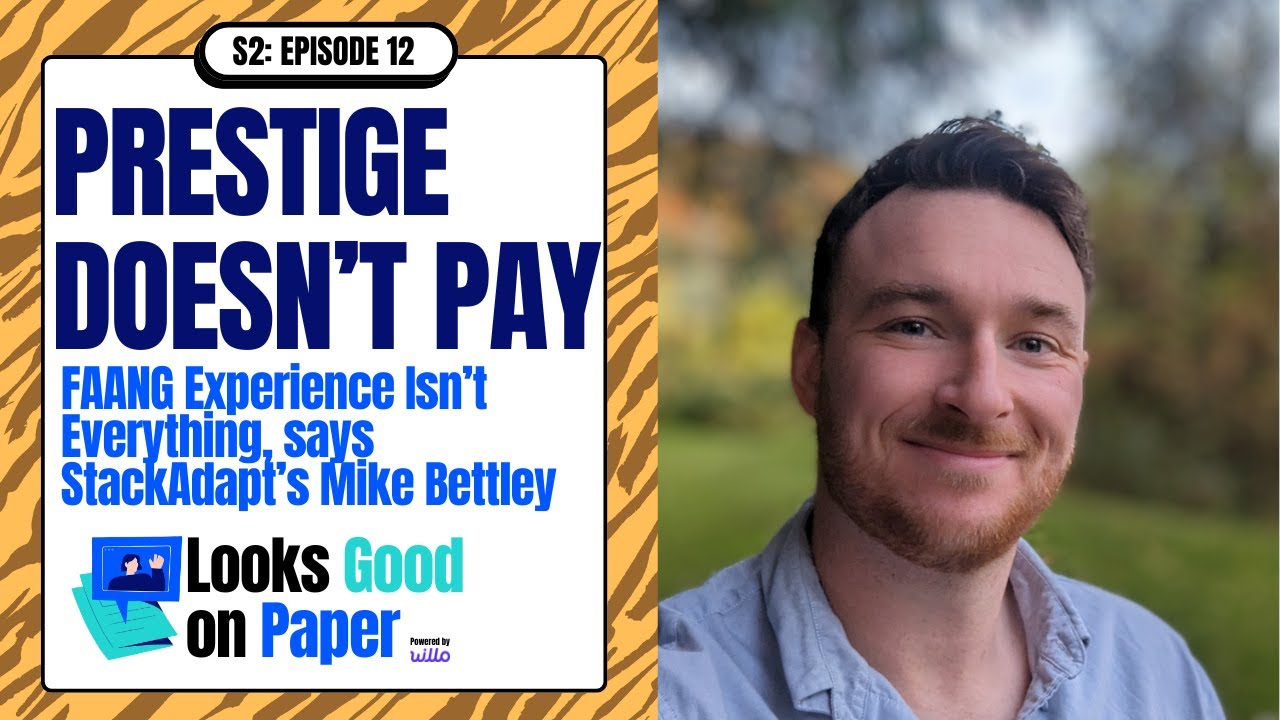
In this episode of Looks Good on Paper, Mike explains why hiring is the most expensive decision a company makes — and why adding headcount is often a lazy substitute for real strategy. Drawing on his experience at Google, Thomson Reuters, and OpenCare, Mike breaks down how high-growth companies decide who to hire, when to hire, and what problem each role is actually meant to solve.

This is a must-listen for founders, hiring managers, recruiters, and talent leaders navigating today’s volatile job market.

In this episode, we're covering

  • Why “we need more people” is usually the wrong answer
  • How to identify the real business bottleneck before hiring
  • When scaling too early creates long-term damage
  • Why company pedigree (Google, Meta, etc.) is a misleading hiring signal
  • Whether CVs still matter in an AI-driven hiring market
  • The skills talent leaders will need heading into 2026

👤 About Mike Bettley

Mike Bettley is Senior Director of Talent at StackAdapt, leading global hiring across a company that has grown from 800 to over 1,600 employees in just two years. His career spans Google, Thomson Reuters, and high-growth startups, giving him a rare perspective on what actually works at every stage of scale — from scrappy startups to global enterprises.  

👉 https://www.linkedin.com/in/michaelbettley/

About Looks Good on Paper

Looks Good on Paper, powered by Willo, explores modern hiring, talent strategy, leadership, and how work is changing beyond what shows up on a résumé.

Episode Chapters

00:00 – Why hiring is more dangerous than people think
01:40 – From Google to startups to StackAdapt
03:10 – Why hiring is the most expensive business decision
04:15 – The biggest hiring mistake companies keep making
05:30 – Headcount vs solving real business problems
07:00 – CEOs, hiring strategy, and the 80/20 rule
08:25 – Why hiring too far ahead backfires
09:25 – The hidden bias of company pedigree
13:55 – Can hiring work without CVs?
15:50 – Writing, communication, and AI-era skills
19:45 – The skills talent leaders need in 2026
21:40 – Final thoughts

Show Resources

  • Willo: willo.video - The most cost-effective way to screen candidates at scale. Interview candidates anywhere & at any time
  • CV Free Toolkit: cvfree.me/join - Break up with the CV and get everything you need to modernize your hiring approach with skills-based assessments
  • Anita Chauhan: linkedin.com/in/anitachauhan - Connect with the host

Stay close to the conversation

New episodes, hiring insights, and data-informed thinking — delivered occasionally and intentionally.

Looks Good on Paper
/
/
Mike Bettley

Why Hiring More People Is the Wrong Fix for Growth

Mike Bettley
Mike Bettley
Senior Director of Talent
,
StackAdapt
22 minutes
 ·
Season 2

In this episode of Looks Good on Paper, Mike explains why hiring is the most expensive decision a company makes — and why adding headcount is often a lazy substitute for real strategy. Drawing on his experience at Google, Thomson Reuters, and OpenCare, Mike breaks down how high-growth companies decide who to hire, when to hire, and what problem each role is actually meant to solve.

Season 2
Why Hiring More People Is the Wrong Fix for Growth
Audio player loads here when the Listen tab opens

Three ideas to put into practice

01

The signals that tell you it's time to hire versus time to optimise.

02

How high-growth companies think about team design before opening a role.

03

The headcount planning practices that prevent over-hiring cycles.

Get every episode in three points you can use

Joining [X,XXX] hiring leaders. One email per episode, unsubscribe in one click.
Thank you! Your submission has been received!
Oops! Something went wrong while submitting the form.
In this episode

00:00 Why hiring is more dangerous than people think 01:40 From Google to startups to StackAdapt 03:10 Why hiring is the most expensive business decision 04:15 The biggest hiring mistake companies keep making 05:30 Headcount vs solving real business problems 07:00 CEOs, hiring strategy, and the 80/20 rule 08:25 Why hiring too far ahead backfires 09:25 The hidden bias of company pedigree 13:55 Can hiring work without CVs? 15:50 Writing, communication, and AI-era skills 19:45 The skills talent leaders need in 2026 21:40 Final thoughts

Full transcript

Most companies think growth means hiring more people. According to Mike Bettley (Senior Director of Talent, StackAdapt), that mindset is exactly what leads to wasted budgets, bloated teams, and stalled growth.

In this episode of Looks Good on Paper, Mike explains why hiring is the most expensive decision a company makes — and why adding headcount is often a lazy substitute for real strategy. Drawing on his experience at Google, Thomson Reuters, and OpenCare, Mike breaks down how high-growth companies decide who to hire, when to hire, and what problem each role is actually meant to solve.

This is a must-listen for founders, hiring managers, recruiters, and talent leaders navigating today’s volatile job market.

In this episode, we're covering

  • Why “we need more people” is usually the wrong answer
  • How to identify the real business bottleneck before hiring
  • When scaling too early creates long-term damage
  • Why company pedigree (Google, Meta, etc.) is a misleading hiring signal
  • Whether CVs still matter in an AI-driven hiring market
  • The skills talent leaders will need heading into 2026

👤 About Mike Bettley

Mike Bettley is Senior Director of Talent at StackAdapt, leading global hiring across a company that has grown from 800 to over 1,600 employees in just two years. His career spans Google, Thomson Reuters, and high-growth startups, giving him a rare perspective on what actually works at every stage of scale — from scrappy startups to global enterprises.  

👉 https://www.linkedin.com/in/michaelbettley/

About Looks Good on Paper

Looks Good on Paper, powered by Willo, explores modern hiring, talent strategy, leadership, and how work is changing beyond what shows up on a résumé.

Episode Chapters

00:00 – Why hiring is more dangerous than people think
01:40 – From Google to startups to StackAdapt
03:10 – Why hiring is the most expensive business decision
04:15 – The biggest hiring mistake companies keep making
05:30 – Headcount vs solving real business problems
07:00 – CEOs, hiring strategy, and the 80/20 rule
08:25 – Why hiring too far ahead backfires
09:25 – The hidden bias of company pedigree
13:55 – Can hiring work without CVs?
15:50 – Writing, communication, and AI-era skills
19:45 – The skills talent leaders need in 2026
21:40 – Final thoughts

Show Resources

  • Willo: willo.video - The most cost-effective way to screen candidates at scale. Interview candidates anywhere & at any time
  • CV Free Toolkit: cvfree.me/join - Break up with the CV and get everything you need to modernize your hiring approach with skills-based assessments
  • Anita Chauhan: linkedin.com/in/anitachauhan - Connect with the host
Mike Bettley
Your guest

Mike Bettley

Mike Bettley
Powered by Willo

Candidates answer your questions on video in their own time, and your team assesses what they say.

See how Willo works

Resources

Follow on LinkedIn

Join the conversation on hiring, hear fresh perspectives and share your own.

Connect with Anita

Got a question or a different take? Drop Anita a message and keep talking.

Read our research

Discover what candidates and employers are thinking through our Hiring Trends Reports and latest findings.

Willo blog

Find practical advice and new ideas to try with your hiring team.

Explore HireMap

See where people are hiring around the world and discover opportunities beyond your own postcode.

Product roadmap

Explore what's coming next at Willo and how we're helping teams hire better.