Screening questions can help you venture beyond the shiny surface people naturally want to present, revealing insights into the real person beneath.
But only when you are asking the RIGHT questions for your specific context. The screening questions that work brilliantly for a high-volume retail hiring blitz might fall flat when recruiting senior engineers.
In this candidate screening question guide, we share the 45 candidate screening question examples, complete with guidance on how to use them and answers to look out for.
Here are the types of screening questions we cover:
- Knockout questions to filter out unqualified applicants fast
- Background questions to understand the person behind the resume
- Workplace preference questions to assess culture fit
- Experience questions to evaluate their track record
- Company knowledge questions to gauge genuine interest
- Role expectation questions to ensure a realistic understanding
- Candidate expectation questions to check for alignment
- Skills-based questions to verify technical capability
- Behavioral questions to assess how they'll actually perform
- Wrap-up questions to close strong and maintain candidate experience
Let's get started!
Knockout Question
Knockout questions are best for high-volume hiring, roles with specific requirements (location, schedule, certifications), and early-stage filtering.
Recruiters can spend up to 5 hours interviewing one candidate. Knockout questions act as the gatekeepers in the hiring process, saving time and increasing effectiveness, and ensuring only those suitable proceed to the next stage.

Use them right at the start of the application process to assess non-negotiable requirements that determine whether it's worth anyone's time to continue. These are your filters, not your relationship-builders.
Examples of knockout questions to use in candidate screening:
- Are you authorized to work in [location] without sponsorship?
- This role requires [weekend/evening/travel] availability. Does that align with your schedule?
- What is your salary expectation for this role?
- When would you be available to start if offered the position?
- Do you have [required certification/license]?
- Are you open to relocation if needed for this role?
What to listen for: Straightforward yes/no answers or specific details. Hesitation or vague responses on knockout criteria usually mean trouble ahead. If someone's not a fit here, you're doing both of you a favor by ending the conversation respectfully.
Pro tip: Knockout questions aren't the place for creativity. Be crystal clear, direct, and always make sure these requirements are actually in your job description.
Screening Questions to Assess Applicant Background
If you’re running early-stage phone or video screens, use applicant background testing questions right after knockout questions to know the applicant beyond their resume.
You should aim to test the applicant’s self-awareness, communication skills, honesty, and cultural indicators hidden in their story. How people talk about themselves reveals a lot about how they'll show up at work.
Examples of screening questions to test an applicant's background
- Can you share a brief introduction about yourself?
- What's your greatest strength?
- What's an area in which you could improve?
- Can you help me understand this gap in your employment?
- Who has significantly inspired you and why?
These questions are important for culture-fit-focused organizations and positions requiring strong interpersonal skills.
What to listen for:
- Green flags: Concise, structured responses that connect their background to the role. Honest self-assessment (especially on weaknesses—canned answers like "I'm a perfectionist" are tired). Genuine enthusiasm when discussing inspirations.
- Red flags: Rambling without focus, inability to articulate strengths clearly, defensive responses about employment gaps, or blaming others excessively.
Pro tip: These questions set the tone for your entire screening conversation. Start warm and genuine—you're trying to put candidates at ease while gathering crucial intel.
Screening Questions to Assess Workplace Preference
After establishing basic rapport, use workplace preference questions to understand if your environment matches the candidate's needs and whether they'll thrive in your specific culture.
In the US, for example, research shows a consistent dip in employee motivation since 2022. We also know that when actual remote/hybrid levels don’t match employee preferences, studies find weaker motivation, weaker community, and higher resignation intentions.

In that case, ask questions to assess whether your actual workplace culture (not the aspirational one in your mission statement) will make this person flourish or struggle. Misalignment here causes most early turnover.
Examples of screening questions to assess workplace preferences:
- Could you describe how you approach work?
- What elements separate a positive work environment from a negative one?
- How much time do you typically need to excel in a new role?
- How do you think managers should deal with lagging job performance?
These questions are especially important for companies with distinctive cultures, remote/hybrid roles, startups versus corporate environments, and high-collaboration positions.
What to listen for:
- Green flags: Specific examples from past experience, alignment between what they value and what you offer, and realistic expectations about onboarding timelines.
- Red flags: Vague platitudes ("I just want everyone to get along"), expectations that dramatically conflict with your reality (they want structure; you're a scrappy startup), or inability to identify what helps them thrive.
Pro tip: Be honest about YOUR workplace reality. If you have a fast-paced, chaotic startup environment, don't hide it—celebrate it and find people who love that energy.
Screening Questions to Evaluate Prior Experience
Once you've established basic fit and rapport, use experience questions to understand what candidates have actually accomplished, how they handle challenges, and whether they learn from mistakes.
You're assessing their track record of performance, capacity for self-reflection, and whether past experiences translate to future success in your role.
Examples of screening questions to evaluate prior experience:
- What was your greatest achievement in your last role?
- What did you like most and least about your previous position?
- Can you provide an example of how you handled a mistake at work?
- Can you share a brief overview of your work experience?
- How would your current supervisor describe you?
- How have your experiences in various workplaces shaped your career journey?
These questions work best for roles requiring specific experience and mid-to-senior level positions where you need evidence of past performance.
What to listen for:
- Green flags: Specific, measurable achievements with clear personal contribution. Balanced perspective on previous roles (liked AND disliked aspects). Ownership of mistakes with lessons learned. Thoughtful reflection on career progression.
- Red flags: Taking credit for team achievements without acknowledging others. Only negative talk about previous employers (especially current ones—loyalty matters). Blaming others for mistakes. Jumbled career narrative with no clear thread.
Pro tip: Follow up on vague answers. If someone says "we achieved great results," ask "what was your specific contribution to those results?" The difference between "I" and "we" tells you a lot.
Screening Questions to Test Company Knowledge
After discussing the candidate's background, use company knowledge questions to gauge whether they're genuinely interested in your organization or just spray-and-pray applying.
The goal here is to measure their research effort, authentic enthusiasm, and understanding of what the role actually involves. People who care do the homework.
Examples of screening questions to test company knowledge:
- What brought you here today?
- What do you know about our company's culture?
- Can you describe what we do?
- What drew you to our company?
- How does this role align with your career goals?
- What would you say is the most important thing our company stands for?
These questions are particularly valuable for competitive roles with many applicants, employer brand building, and roles requiring passion for your mission.
What to listen for:
- Green flags: Specific details from research (mentioned your recent product launch, funding round, or mission statement). Authentic connection between their values and yours. Clear understanding of your industry and challenges.
- Red flags: Generic answers that could apply to any company ("you seem like a great place to work"). Completely wrong information about what you do. Zero research effort is evident.
Pro tip: Don't expect candidates to memorize your website. Do expect them to understand what you do and why they're excited about it specifically. The best answers connect their goals to your company's work.
Screening Questions to Check Role Expectations
Mid-to-late in the screening process, use role expectation questions to ensure candidates understand what the job actually entails and can handle the responsibilities.
Check whether they have realistic expectations about the day-to-day work (not just the glorified version), can meet the demands, and won't be surprised by the reality of the position.
Examples of screening questions to check role expectations:
- How do you meet the requirements listed in the job description?
- Can you describe how you handled a task relevant to this role in a previous job?
- How would you manage it if your team resisted an idea you introduced?
- What tactics would you use to motivate your team?
- What kind of daily responsibilities are you hoping for?
These questions are crucial for all roles, but especially important for positions with common misconceptions or roles that sound more glamorous than they are.
What to listen for:
- Green flags: Direct mapping of their experience to your requirements. Realistic understanding of challenges in the role. Examples that demonstrate relevant skills. Enthusiasm for the actual work, not just the title.
- Red flags: Can't articulate how they meet requirements. Expectations wildly different from reality ("I thought this was mostly strategy work" when it's mostly execution). No relevant examples despite claiming experience.
Pro tip: Be transparent about the less exciting parts of the role. If 40% of the job is data entry, say so. Better to lose a candidate now than have them quit in month two because they're bored.
Screening Questions To Understand Candidate Expectations
Late in the screening process, when you're seriously considering candidates, use expectation questions to ensure mutual fit and alignment on what matters most.
You want to uncover their motivations beyond salary, assessing long-term satisfaction potential, identifying deal-breakers, and determining whether you can actually make them happy.
Examples of screening questions to understand candidate expectations:
- What motivates you at work?
- What are your salary expectations for this role?
- Are you open to relocation or work-related travel, if needed?
- What factors go hand-in-hand with job satisfaction for you?
- If you were in my shoes, what characteristics would you look for in a candidate for this role?
These questions are essential for final screening stages, roles with high retention importance, and positions where motivation significantly impacts performance.
What to listen for:
- Green flags: Intrinsic motivations that align with what the role offers. Salary expectations within your range (or room for negotiation). Thoughtful consideration of what makes them satisfied. Self-awareness about their ideal work scenario.
- Red flags: Motivation solely focused on external rewards (money, title, perks) with no passion for the work. Unrealistic salary expectations with no flexibility. Can't articulate what makes them happy at work.
Pro tip: Create space for honest conversation. If salary expectations don't match your range, it's better to know now. If they're motivated by things you can't offer, that's valuable information for both of you.
Skills-Based Screening Questions
Throughout the screening process, especially after establishing basic fit and interest, use skills-based questions to verify technical competency and problem-solving ability.
You're assessing whether they can actually execute on the job requirements, have the technical knowledge needed, maintain continuous learning, and perform at the level you need.
Examples of skills-based screening questions:
- Can you describe your experience with [specific tool/skill/technology]?
- How do you handle tight deadlines and high workloads?
- Can you provide an example of a project where you used [specific skill]?
- How do you stay updated in your field?
- What professional achievement are you most proud of?
- How do you ensure accuracy in your work?
These questions are critical for technical roles, specialized positions, skills-dependent functions, and any job where performance is measurable.
What to listen for:
- Green flags: Specific tools, technologies, or methodologies mentioned with confidence. Concrete examples with measurable outcomes. Evidence of continuous learning (courses, certifications, side projects). Systematic approaches to quality and accuracy.
- Red flags: Vague descriptions of experience. Claims of expertise without examples. Outdated knowledge with no effort to update. No quality control processes mentioned.
Pro tip: Ask for specific examples, not theoretical approaches. "Tell me about a time you used [skill]" beats "how would you approach [skill]" every time. Past behavior predicts future performance.
Behavioral Screening Questions
After establishing technical capability, use behavioral questions to understand how candidates will actually perform in your environment when faced with real workplace challenges.
Resilience, collaboration skills, growth mindset, emotional intelligence, and how they show up when things get difficult— these are the personality traits you should assess here.
Examples of behavioral screening questions:
- Describe a time when you went the extra mile to achieve something.
- Could you tell us about a time when you overcame an obstacle at work?
- How do you handle feedback and criticism? Can you provide a specific example?
- Describe a situation when you had to collaborate with a difficult team member. How did you tackle it?
These questions are vital for team-based roles, high-stress positions, leadership roles, and anywhere human dynamics matter (which is everywhere).
What to listen for:
- Green flags: Ownership of situations (not victim mentality). Evidence of initiative and persistence. Openness to feedback with examples of implementing it. Mature conflict resolution approaches. Growth and learning from challenges.
- Red flags: Blaming others consistently. No examples of going beyond the bare minimum. Defensive about criticism. Avoiding difficult people rather than addressing issues. No learning from failures.
Pro tip: Look for the STAR method in responses (Situation, Task, Action, Result). If answers are vague, probe deeper: "What specifically did YOU do in that situation?"
Wrap-Up Screening Questions
At the end of every screening conversation, use wrap-up questions to gauge remaining enthusiasm, address lingering concerns, and maintain positive candidate experience.
These questions help you assess whether they're still interested after learning about the role's reality, what questions they have, and how they feel about your process.
Examples of wrap-up screening questions:
- How did you feel about the video interview process with us so far?
- Is there anything else you'd like to share that we didn't already ask about?
- What aspects of the role are you most excited about?
- What questions do you have for me?
These questions are essential for all screening contexts and particularly important for maintaining positive candidate experience.
What to listen for:
- Green flags: Thoughtful questions about the role, team, or company. Genuine enthusiasm that's maintained or increased. Appreciation for the process. Specific excitement about aspects of the work.
- Red flags: No questions at all (suggests lack of interest or research). Decreased enthusiasm compared to the start of the conversation. Only questions about perks and time off. Concerns about basic job requirements.
Pro tip: These questions show respect for the candidate's time and create space for a two-way conversation. Remember: they're evaluating you just as much as you're evaluating them. End on a collaborative, respectful note.
Want To Create Screening Questions That Improve Hiring Quality? Consider These Four Key Factors
Before we dive into our question bank, let's map out the screening variations you might encounter—because the best recruiters know how to adapt their approach to fit the context.
You preferred screening format
Your screening format shapes everything from question length to response expectations:
- Phone screens are conversational and time-sensitive. You're listening for energy, communication skills, and instant chemistry. Questions should flow naturally and invite dialogue.
- Video screening interviews (whether async or live) add visual cues to the mix. You can assess presentation skills, professionalism, and how candidates perform on camera—increasingly important in our remote-first world.
- Application screening questions need to be crystal clear and answerable in writing. They're your high-volume filter, so focus on knockout criteria and must-haves.
The interview stage
Timing matters. The questions you ask at different stages serve different purposes:
- Pre-application screening helps you qualify candidates before they even formally apply. Think: "Are you authorized to work in this location?" or "This role requires weekend availability—does that work for you?"
- Post-application, pre-interview screening is where you narrow the pool from hundreds to dozens. You're verifying basics and identifying who deserves your limited interview slots.
- Between interview rounds, it lets you validate specific concerns or dig deeper into areas that surfaced earlier. These are targeted, strategic questions.
The hiring volume
Your candidate volume dramatically impacts your screening strategy:
- High-volume hiring (think: hundreds of applicants for entry-level or seasonal roles) demands rapid filtering. You need knockout questions that quickly separate viable candidates from non-starters.
- Specialized roles with fewer candidates allow for deeper exploration. You can afford to ask more nuanced questions and invest time in understanding each person's potential.
- Executive searches are relationship-building exercises. Your screening questions should feel more like strategic conversations than interrogations.
The screening purpose
Whether it’s for high-volume hiring or a specialized role, every screening question should serve a specific purpose:
- Knockout questions establish must-have requirements: location flexibility, salary alignment, required certifications, or availability. These are your efficiency superpowers—they save everyone's time.
- Qualification verification confirms that candidates actually have the skills, experience, and credentials they claim. You're validating their resume, not just admiring it.
- Culture and values alignment questions reveal whether candidates will thrive in your specific environment. Skills can be taught; culture fit is fundamental.
- Depth exploration helps you understand nuance, potential, and the human behind the resume. These questions uncover problem-solving approaches, growth mindset, and adaptability.
Why Are Screening Questions So Important?
Assessing a candidate’s suitability
Screening questions determine if a candidate will mesh with your company's culture and ethos. They offer insights into their values, working style, and social skills, which help to better understand their potential place in your organization.
Uncovering the applicant’s skills and qualifications
Screening interview questions evaluate whether a candidate's technical abilities, experience, education, and qualifications align with your job requirements. However, while hard skills are important, it's equally vital to notice soft skills.
Gleaning additional candidate expectations
Screening questions provide a window into the applicant's expectations and ambitions for the role, ensuring that there’s alignment with what you (and the job) are offering, and avoiding any wasted time. Ultimately, this contributes to a great candidate experience.
How to Conduct a Candidate Screening Interview
Navigating the hiring process requires strategic planning, and the screening interview is no exception.
Let’s take a closer look:
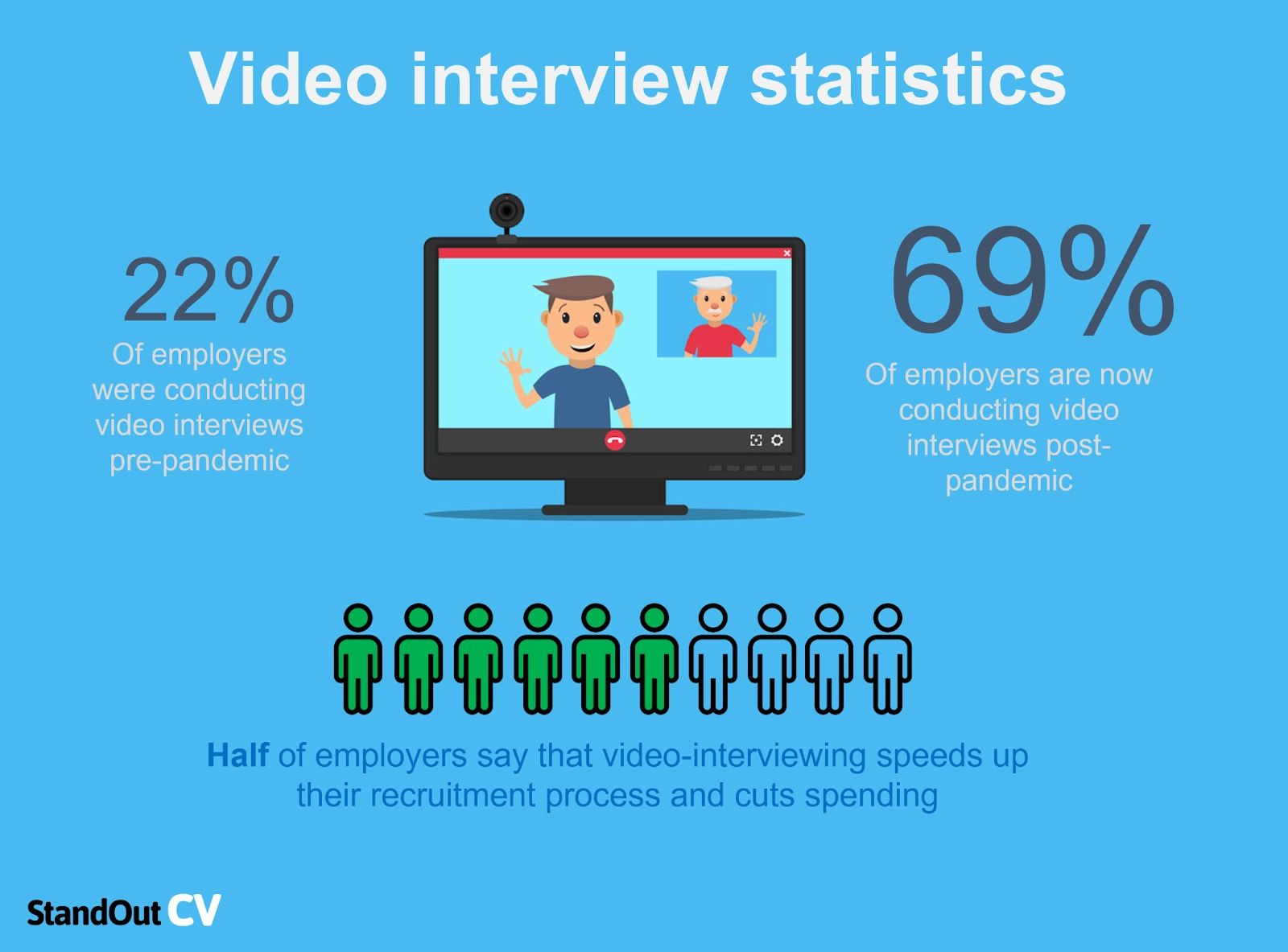
Image Source: StandOut CV
Statistics Sources: Personnel Today; StandOut CV
1. Plan the pre-screening interview process
The next step involves planning the screening process in detail:
- Prepare questions: Begin by preparing interview questions to ask job candidates. Your aim should be to verify the candidate's qualifications, assess their skills and work style, and gauge their cultural fit within your company.
- Allocate time: Set aside an appropriate amount of time for each candidate. For traditional interviewing, this should include the interview itself, collecting feedback, and reviewing. For async interviews, you can devote almost all of your time to reviewing candidates’ responses.
- Develop a scoring system: Consider devising a scoring system or a checklist to compare candidates efficiently. This method can help standardize your evaluation process and reduce bias.
- Set up your tech: Interview and recruitment tech has come a long way. Recruiters now have the option of using asynchronous video interview tools like Willo to assess skills, experience, and cultural fit effectively and efficiently. Async interviews are a win-win—interviewers can create a single interview and share it with multiple candidates, while candidates can relax knowing they can schedule the interview to fit their busy lives.
Willo helps recruitment teams screen candidates at scale with a range of question types, easily shareable interview links, and an accessible, browser-based design. Candidates can access Willo interviews on any device, anywhere in the world.
Plus, Willo fits seamlessly into your company's recruitment tech stack, thanks to native integrations with platforms like Slack, Google Workspace, and Lever (plus 5,000 more through Zapier).

Want to see Willo in action? Book a demo or take a look at this article on how Willo’s async video interviews helped Endava save 100 recruitment hours while hiring 60 interns.
2. Invite candidates to interview
When you have your interview platform set up, you have to make sure candidates know about it.
You can do this in two different ways:
Send a special invitation: Once someone applies for a role, email them inviting them to a screening interview. The link should contain information about the one-way interview process, opportunities for practice, and resources for support.
- Embed the invitation in your ATS process: When a candidate applies, they are either automatically taken to a screening interview page (like a Willo interview) or receive an auto-responder inviting them to take part in the screening interview.
3. Review responses with stakeholders
Once you start getting responses, it’s time to get your team involved.
Share strong interviews with your team, for example, by using Willo’s Showcase feature to keep their responses and comments organized. Use the feedback you collect to decide who should move on to the next round of interviews.
Boost Your Interview Screening Questions with Willo
Screening questions aren't just a simple check-in-the-box process – they're your secret to finding the best fit for your team. You're digging into everything from previous experience to how well they'll mesh with your company culture.
Remember, you're not just looking at skills, but at behavior and values. And when you've got your questions ready to go, uncovering their potential gets a lot easier! But let's make it even better.
Enter Willo.
Willo can turn your screening process from good to great. Time is money, and Willo users save an average of 36 hours per month by switching from traditional video and face-to-face interviews. That's nearly a week's worth of work!
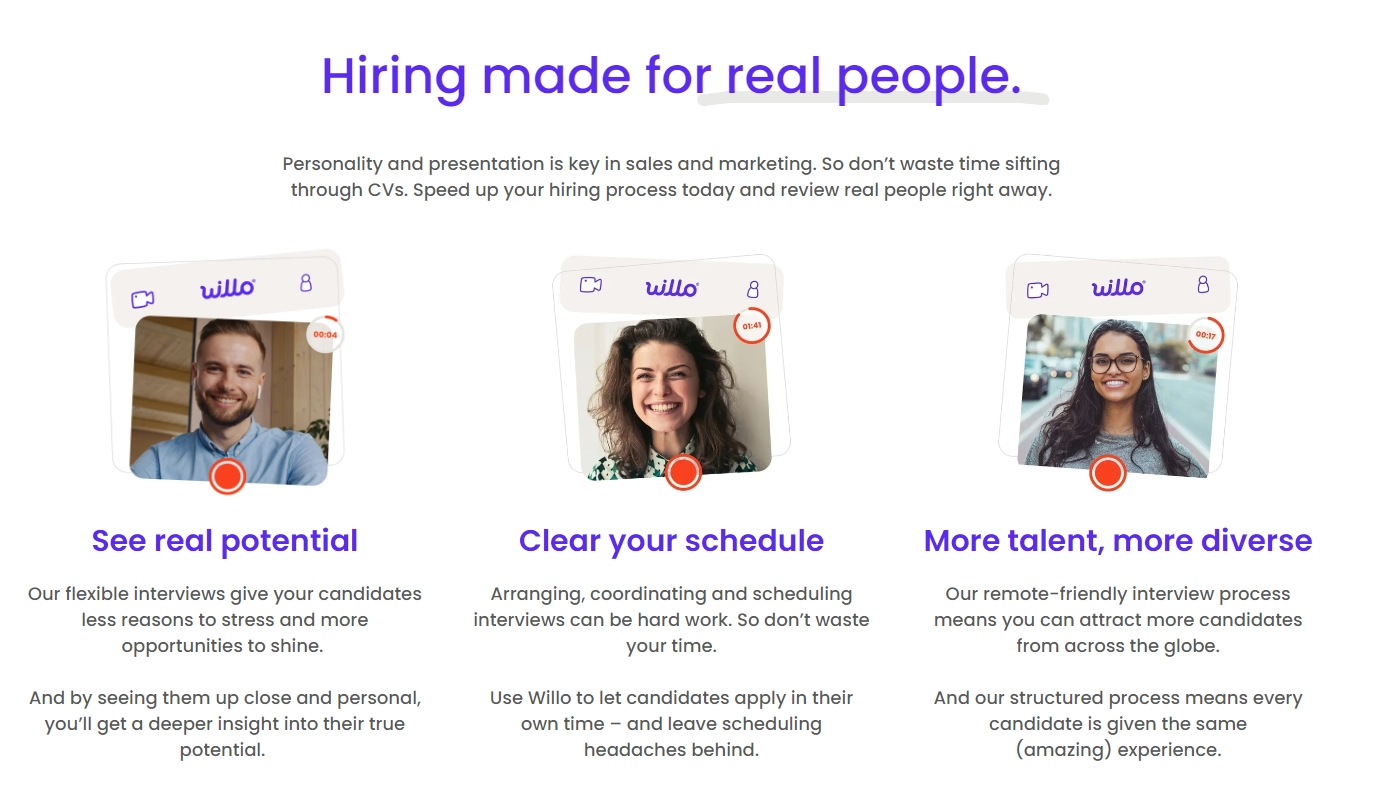
So why not give it a go? Book a demo with Willo. Supercharge your hiring success and find your next superstar employee.