You handle high-volume hiring on a small or mid-size TA team, recruiting candidates for multiple roles across geographies. Speed matters. And AI can help you process applications more efficiently. But it also introduces new challenges around bias, transparency, and regulatory compliance.
In fact, new regulations; such as the EU AI Act, now classify AI systems used in employment decisions into the high-risk category, emphasizing the importance of transparency, consistency, and meaningful human oversight over AI hiring processes.
The good news? Responsible AI hiring doesn't mean avoiding automation. It means using AI tools for the right tasks while keeping recruiters accountable for the decisions that matter.
In this article, we share seven practical ways to use AI in hiring without tripping compliance and legal boundaries. Let’s begin:
1. Let AI Automate Tasks, Not Hiring Decisions
Rather than replacing recruiters with AI, use artificial intelligence to eliminate repetitive administrative work so your team can spend more time making better hiring decisions.
AI excels at tasks like summarizing interviews, organizing candidate information, surfacing relevant insights, and automating repetitive workflows. But hiring decisions require context, empathy, and judgment—qualities AI still can't replicate.
That's why it’s important to clearly define where automation stops and human decision-making begins.
What AI should do and where humans must remain
This table shows the decision boundary succinctly (pulling insights from our 2024 Hiring Humans analysis and 2026 Hiring Trends report):
Want to know more about finding a balance between automated employment decision tools and human thought processes? Read our guide to safe, ethical AI candidate screening.

Every Candidate Sounds Great on Paper. Now What?
Get 20+ AI-proof interview questions - with follow-ups that spot the difference between real experience and a rehearsed answer.
2. Standardize Your Hiring Process to Reduce AI Hiring Bias
Using AI for the right tasks is a good starting point. But reducing AI hiring bias also depends on the fairness and consistency of the hiring process behind it. Otherwise, AI simply mirrors and amplifies existing human biases.
A recent Stanford report has also found that biased screening tools can hide significant numbers of qualified candidates before recruiters ever review their applications.
While every hiring process is different, bias typically enters AI systems in three ways:
- Flawed training data: AI learns what a "successful hire" looks like by analyzing historical hiring decisions. If those decisions consistently favored one demographic over another, the model may begin treating similar profiles as inherently more qualified—even when they aren't.
- Subjective evaluation methods: Some AI hiring platforms analyze facial expressions, tone of voice, or body language rather than focusing on what candidates actually say. These systems can unintentionally disadvantage neurodivergent job seekers, people with disabilities, or non-native English speakers whose communication styles differ from what the model considers "ideal."
- Inconsistent hiring practices: AI performs best when every job applicant is evaluated using the same process. If recruiters ask different interview questions, rely on gut instinct, or document feedback inconsistently, the AI has no stable baseline to learn from. Instead of identifying top talent, it simply scales inconsistent human decision-making across thousands of applicants.
The solution isn't abandoning AI. It's giving AI a structured, repeatable hiring process to support.
That starts with standardized interview questions, consistent scorecards, and clearly defined evaluation criteria for candidates applying to the same role. When every applicant is assessed against the same benchmarks, recruiters make more defensible hiring decisions, and AI’s recommendations are significantly more reliable.
3. Evaluate Objective Evidence Instead of Candidate Appearance or Tone
Even with a structured hiring process and a clear line between AI and human inputs, algorithmic models can still introduce bias if they’re evaluating the wrong signals.
Many AI recruitment tools go beyond resumes and interview transcripts to assess facial expressions, eye contact, tone of voice, or other behavioral cues. While these features are often marketed as indicators of confidence or cultural fit, they can unfairly affect qualified candidates whose communication styles don't fit the model's assumptions.
For example, neurodivergent candidates, people with disabilities, or non-native English speakers may naturally communicate differently without that reflecting their ability to perform the job.
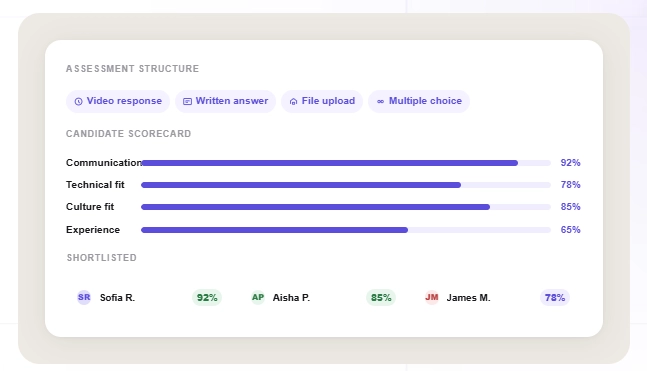
Instead, focus AI on evidence that's directly relevant to job performance. That means using AI to analyze structured interview responses, work samples, written assessments, and interview transcripts—not biometric or behavioral signals that are difficult to validate and even harder to defend if challenged.
The more closely your AI evaluates demonstrated skills rather than subjective traits, the more accurate and defensible your hiring decisions become.
Tunstall is a good example of this approach in practice. Over six months, the healthcare technology company screened more than 700 candidates using Willo's multimodal screening process, combining asynchronous video interviews with multiple-choice questions, written answers, and file uploads.
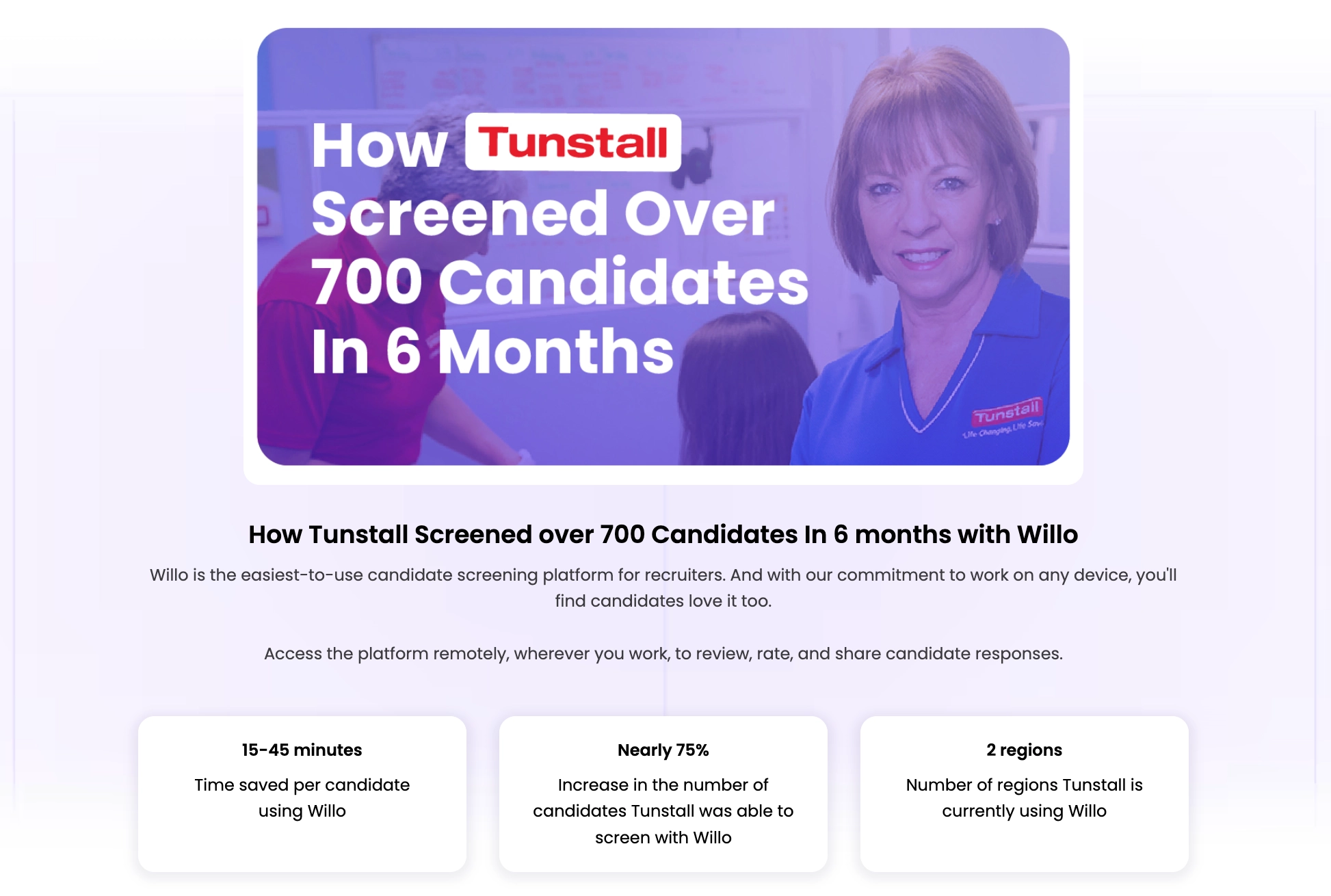
Rather than relying on opaque AI algorithms to infer suitability, the team gave every candidate a structured opportunity to demonstrate their skills, experience, and personality while evaluating everyone against consistent, job-related criteria. The result? Tunstall increased the number of candidates it could effectively screen by nearly 75% while also improving hiring quality.
4. Build Compliance into Your Daily Workflows
Compliance should be built into your hiring process from day one, not treated as something to address after implementing AI. And while AI hiring regulations vary by region, they're increasingly pointing toward the same core principles: AI should support hiring decisions, not replace human judgment.
For example, New York City's Local Law 144 requires employers using automated employment decision tools to conduct independent bias audits and notify candidates before using the technology. Illinois requires employers to obtain consent before using AI to analyze video interviews.
And the U.S. Equal Employment Opportunity Commission (EEOC) has made it clear that employers remain responsible when AI-driven hiring practices result in unlawful discrimination. Similarly, the EU AI Act classifies AI systems used in employment as high-risk and places additional obligations on organizations deploying them.
Although specific requirements vary across jurisdictions, most regulations reinforce the same themes: transparency, consistency, meaningful human oversight, accountability, and privacy.
- Be transparent with candidates: Notify candidates when and why AI is involved in the hiring process. Also ensure that recruiters understand how AI generates recommendations so they can review or challenge them if needed.
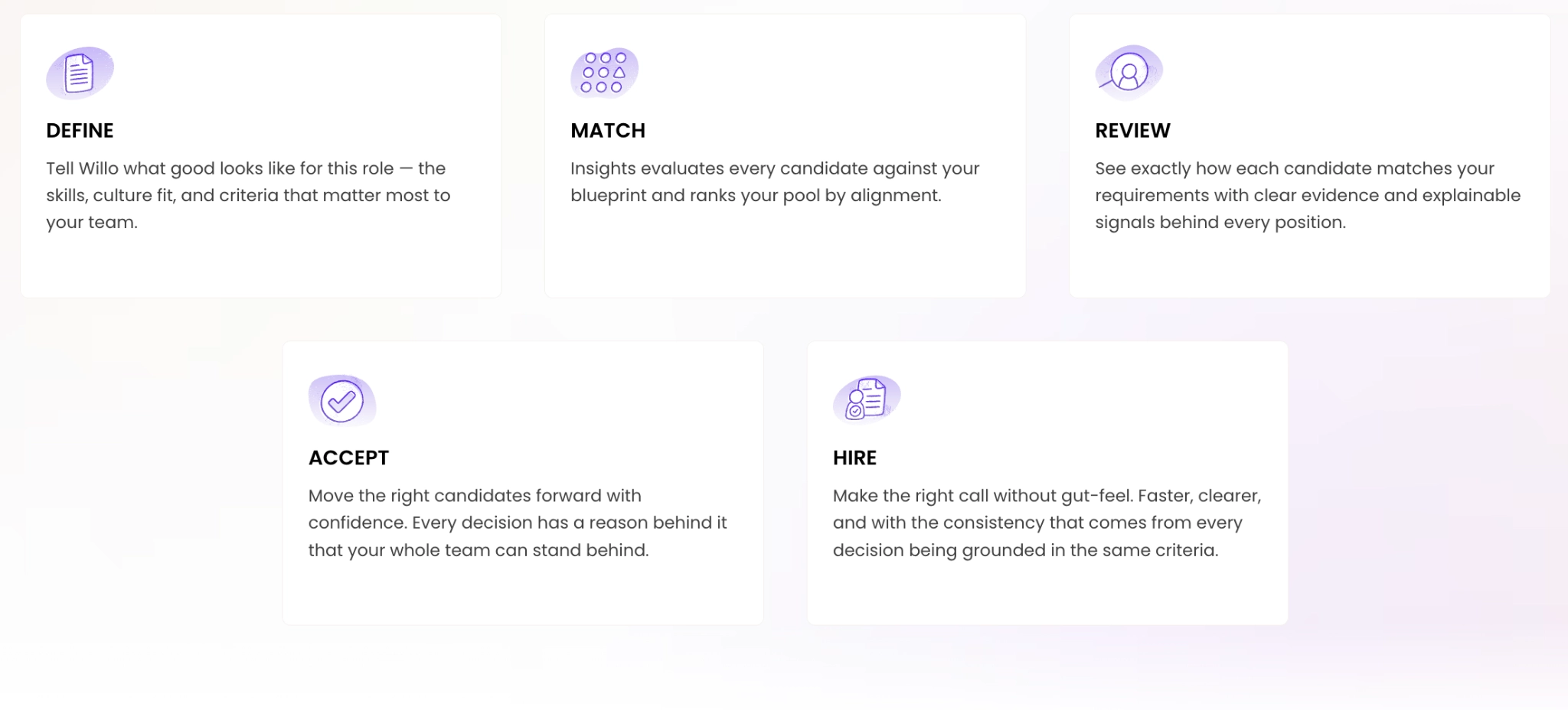
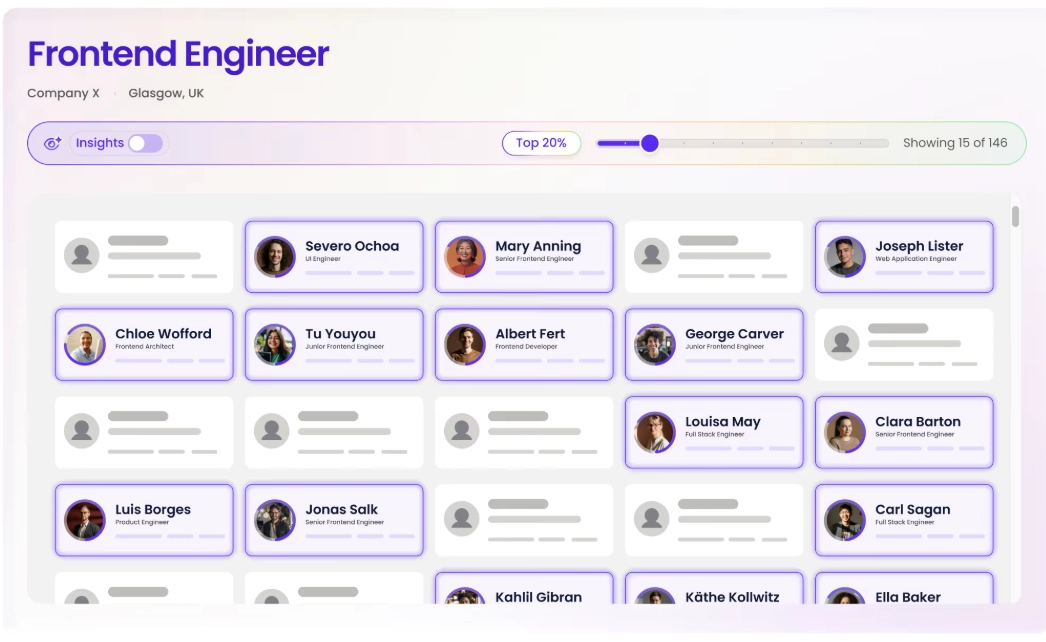
- Apply the same process consistently: Screen each candidate for the same role with standardized interview questions, scorecards, and assessment criteria. Consistency improves hiring quality and reduces opportunities for algorithmic bias.
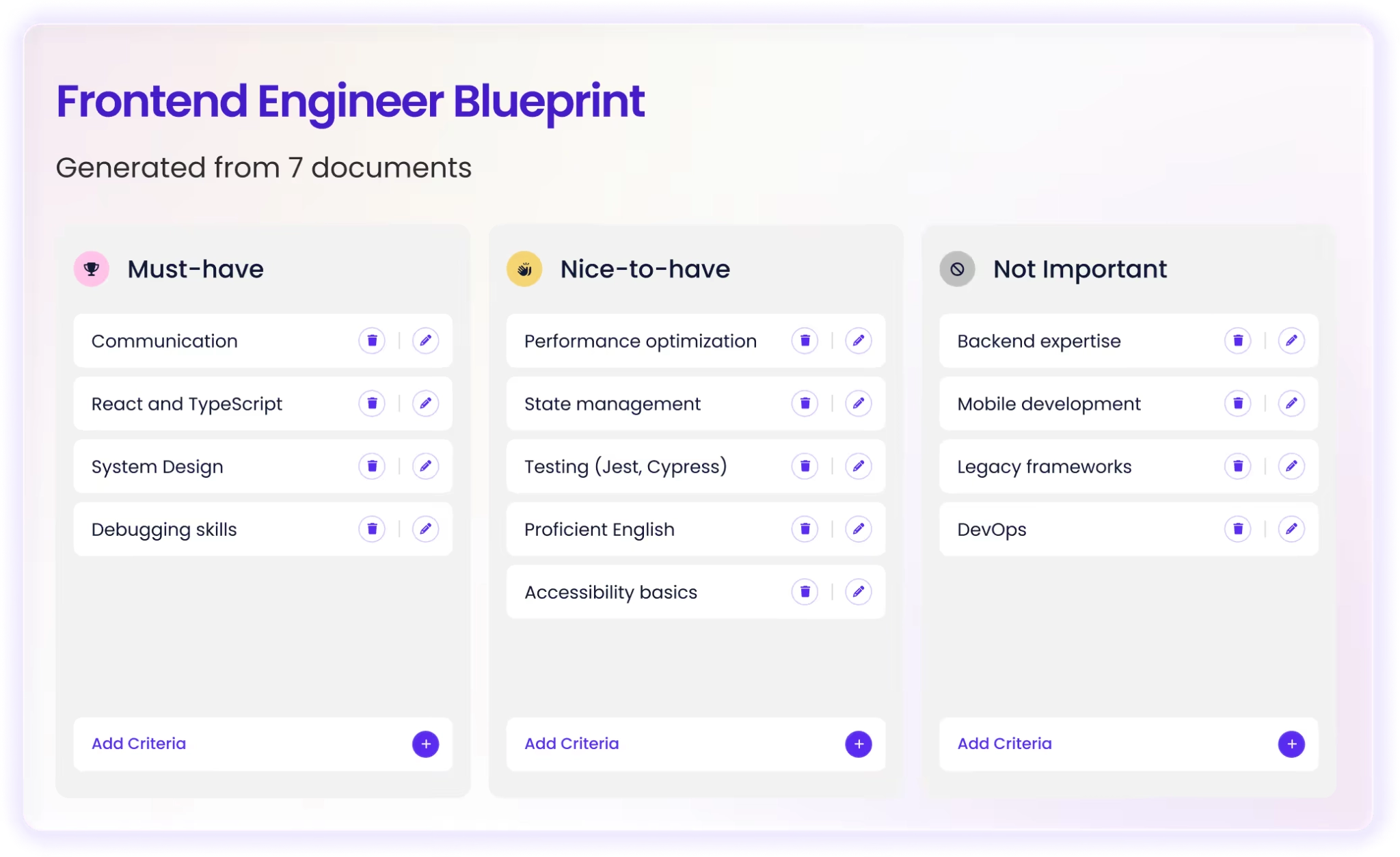
Keep humans in the loop: AI can summarize interviews, rank candidates, and surface patterns at scale—but recruiters should always review the evidence and make the final hiring decision.
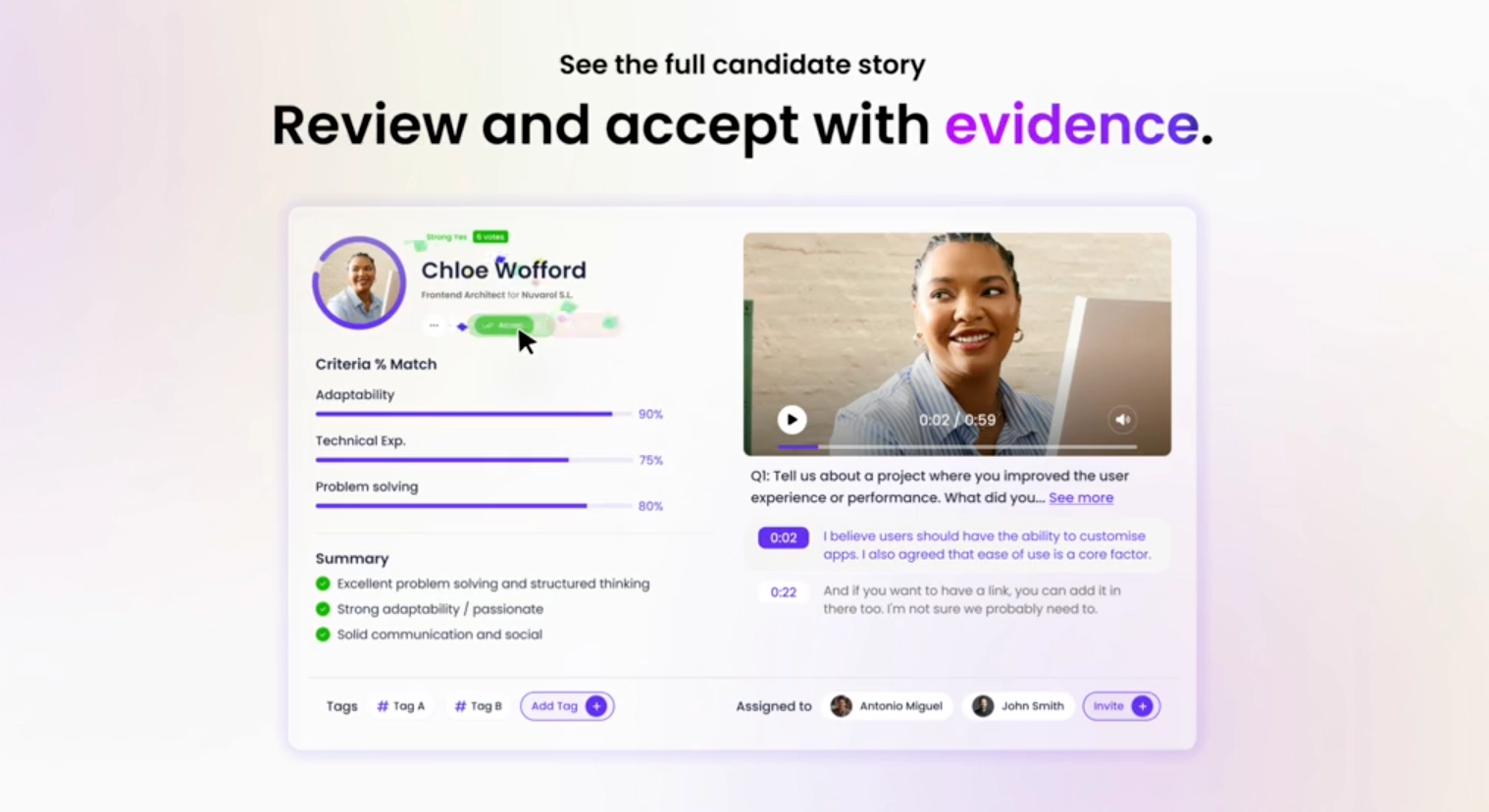
- Document everything: Keep clear records of AI-generated recommendations, recruiter evaluations, hiring decisions, and any overrides made during the process. This documentation provides accountability if you’re ever questioned.
- Document everything: Keep clear records of AI-generated recommendations, recruiter evaluations, hiring decisions, and any overrides made during the process. This documentation provides accountability if you’re ever questioned.
Ultimately, compliance isn’t just about satisfying regulators. It’s about creating a consistent hiring process that gives candidates a fair chance while allowing your team to hire quickly and confidently.
5. Prioritize AI Tools That Create a Defensible Audit Trail
With AI becoming more common in hiring, recruiters increasingly need to explain why one candidate progressed over another. Whether you're responding to a candidate complaint, a regulator, or your own legal team, you should be able to reconstruct the entire decision-making process as well as the roles AI played.
To stay audit-ready, choose AI tools that preserve:
- The input: Original candidate responses, interview transcripts, or submitted work.
- The process: Interview questions, prompts, evaluation criteria, and scoring method.
- The output: AI-generated insights, scores, and recommendations that informed the hiring decision.
Together, these elements create a defensible audit trail that makes hiring decisions transparent, explainable, and easier to review if challenged.
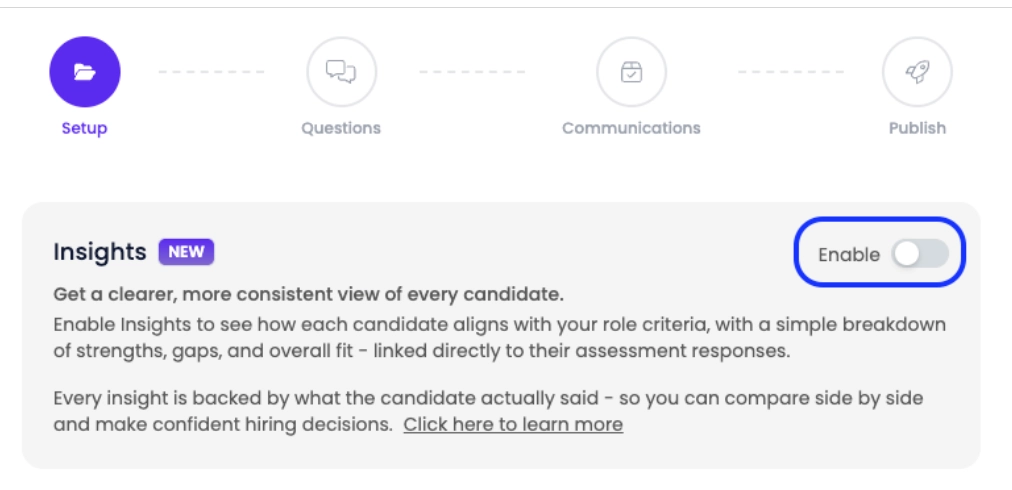
A platform like Willo supports this by preserving interview transcripts alongside AI insights and documented scoring criteria, creating a clear record of how recommendations were reached rather than presenting unclear black-box rankings.
6. Document and Approve Changes to Your AI Hiring Process
Your AI hiring process shouldn't be rigid, but neither should it evolve informally. As interview questions, evaluation criteria, prompts, and scoring frameworks change, document and review every update.
This way, there’s clear accountability for who approved the change, why it was made, and when it took effect.
Say your legal or compliance team reviews interview questions or AI prompts before they're deployed. Document that approval alongside the version of the criteria used. If a hiring decision is later challenged, you'll be able to show not only how the candidate was evaluated, but also that the process itself is in line with an approved governance framework.
Along with a defensible audit trail, documented change management helps ensure your AI hiring process remains transparent, explainable, and consistent even as it evolves.
7. Don’t Store Candidate Data Indefinitely
AI hiring tools receive and handle large volumes of personal data, but storing candidate information with no discard date increases both compliance risk and privacy concerns.
Instead, create a clear data retention policy that states how long you'll keep candidate information, the lawful basis for keeping it, and when you plan to securely delete it.
As much as possible, default to data minimization, i.e.,
- Limit your data collection process to only information necessary for candidate screening, and confirm this by reviewing your AI tool’s privacy notice.
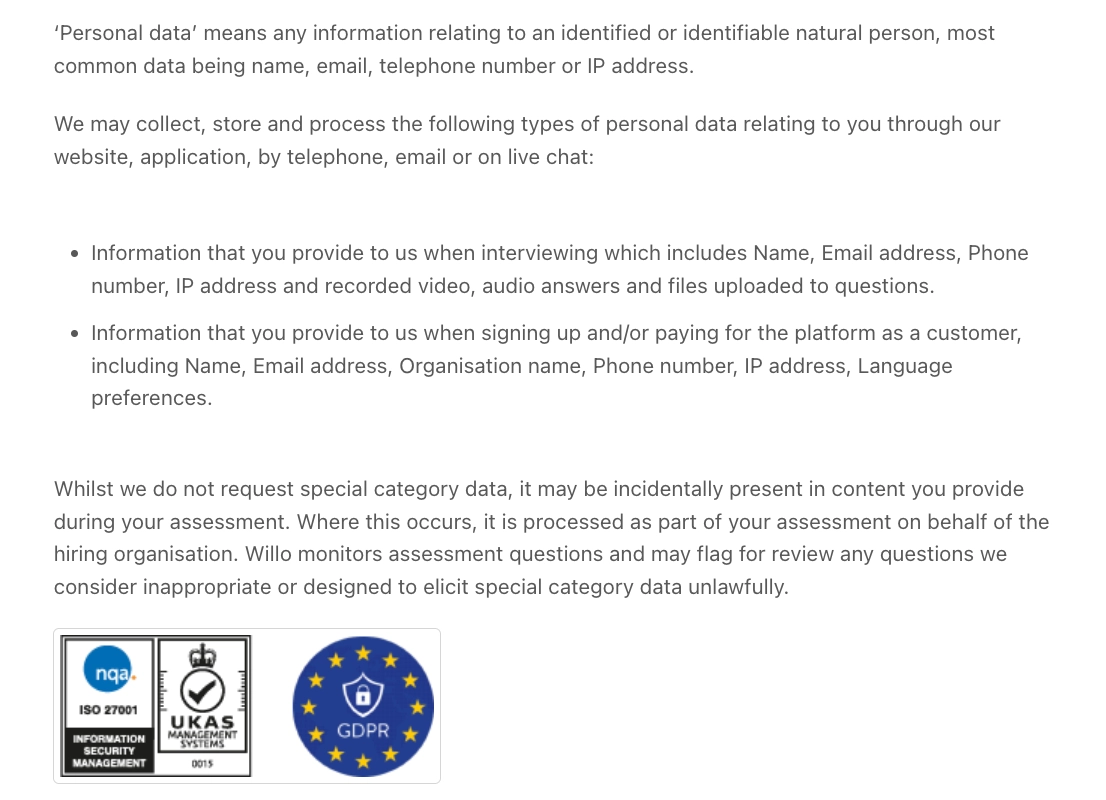
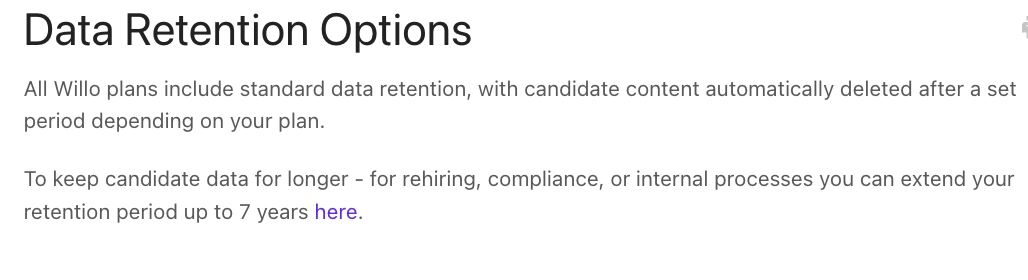
- Retain interview data only for as long as there's a legitimate business or legal reason, e.g., talent pool creation, audit planning, or internal review. Choose AI technology that includes configurable retention settings so data doesn't linger by default.
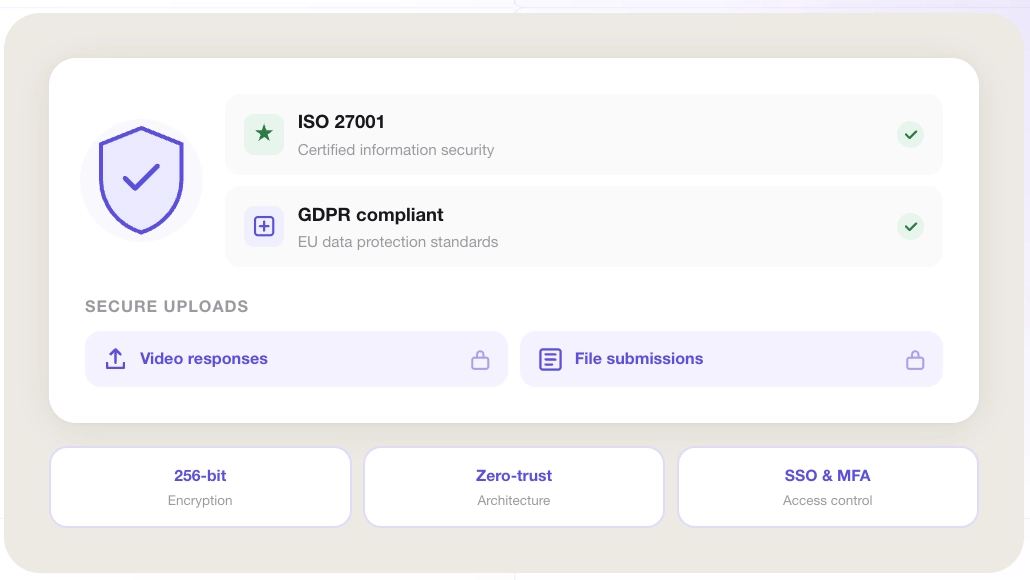
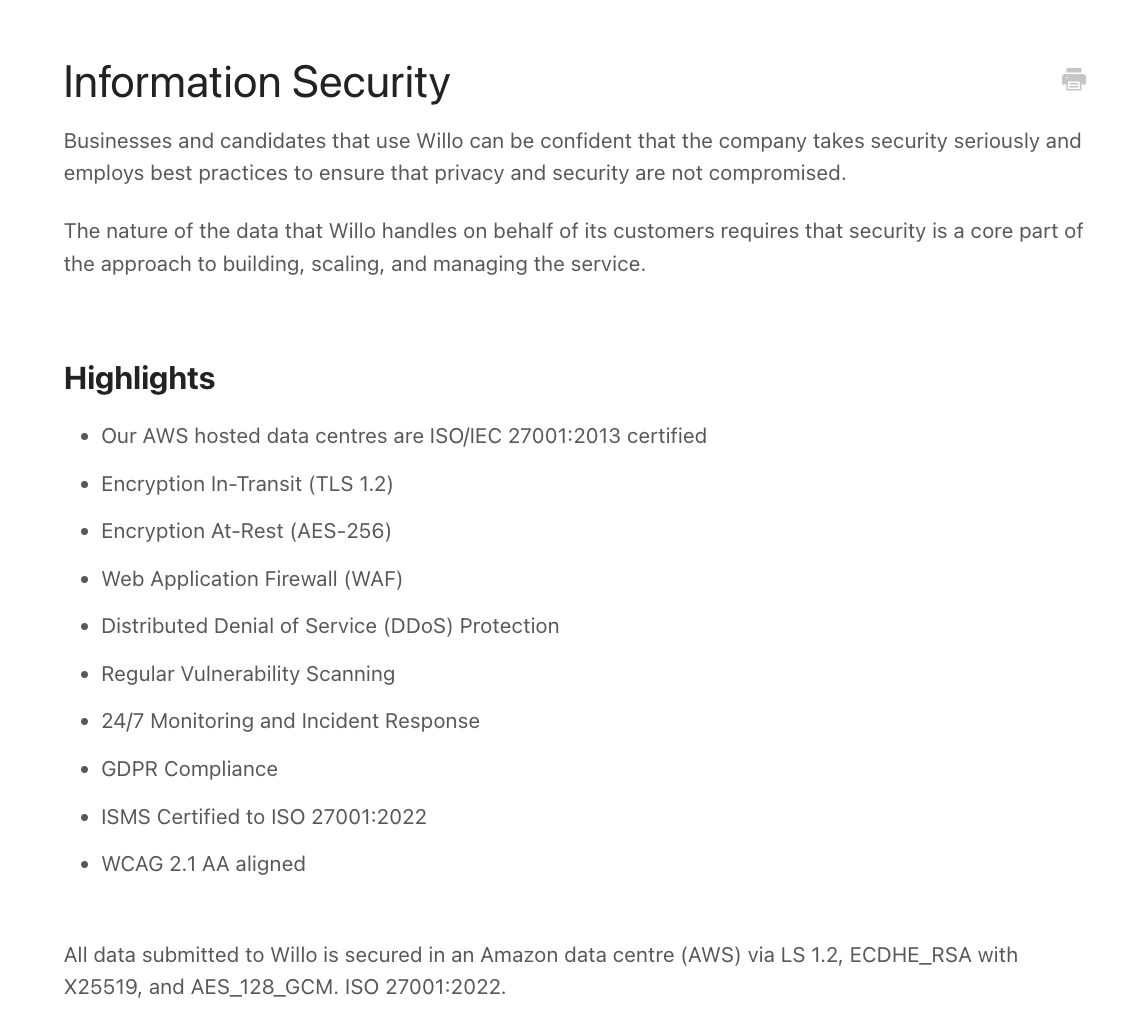
- Choose AI platforms that take solid information security measures and align with global and local compliance regulations.
By treating data minimization and timely deletion as standard practice, you can protect candidate privacy without sacrificing hiring efficiency.
The Path to Fairer, More Confident Recruitment
The concerns with AI hiring bias and compliance are real, but with the right approach, you can bypass them. To recap, reducing AI hiring bias comes down to a few consistent principles:
- Use AI to support hiring, not replace your judgement. Keep human recruiters responsible for final hiring outcomes.
- Score candidates against your own structured, job-related hiring criteria rather than opaque, generic ranking models.
- Evaluate candidate information like interview transcripts and work samples instead of facial expressions or biometrics.
- Build a transparent, compliant hiring process with clear documentation and accountability.
- Maintain a defensible audit trail for every AI-assisted hiring decision. Ensure every recommendation and choice is traceable back to the transcript that informed it.
- Document and get approval for any changes to interview questions, prompts, and scoring criteria.
- Retain candidate data only for as long as there's a legitimate business or legal reason. And don’t use it to train models.
If this resonates with the kind of hiring workflow your team is looking to build, book a demo to see how Willo supports human-first, AI-assisted hiring.