
When you’re hiring at volume for retail and logistics roles, the biggest challenge is finding a tool that helps you identify who can actually do the job, fast enough to meet seasonal demand, and consistently across locations.
- Resume screening doesn’t help much at scale. With 76.6% of applications being AI-assisted, surface-level screening tells you less about who’s actually qualified.
- Lengthy phone screens aren’t realistic when recruiters are processing thousands of applications in short hiring windows.
- At the same time, quality can’t be fully delegated to generic AI screening or external teams that aren’t calibrated to your operational standards.
In this article, we review seven high-volume hiring platforms used by retail and logistics teams. Specifically, we look at how each solution assesses candidate quality at speed:
- How it surfaces real job capability when resumes fall short
- How it maintains consistent hiring standards across distributed teams
- How well it scales to hundreds of hires without adding administrative overhead
Quick comparison of our best picks among hiring solutions for retail and logistics
- Willo: Best for retail and logistics teams that want to hire fast without sacrificing the quality of review.
- VidCruiter: Best for teams that need structured interviewing + scheduling with strong control over consistency (often in more process-heavy environments).
- Radancy: Best for enterprise teams that treat high-volume hiring as part of a broader talent acquisition ecosystem (brand, campaigns, CRM, pipeline).
- Sapia: Best for teams open to AI-first, chat-based screening who want speed + consistency, but need explainability and governance.
- HireVue: Best for enterprise teams running very high volume with a need for breadth (video + assessments + scheduling + structured guides) and formal governance.
- Spark Hire: Best for teams that want one-way video (and optionally live video) with straightforward collaboration and evaluation.
- Hireflix: Best for budget-conscious teams that want simple one-way video screening as an asynchronous replacement for phone screens.
1. Willo
Best for: Best for retail and logistics teams that want to hire fast without sacrificing the quality of review.
Willo is a candidate screening software that replaces manual early-stage screening with an automated, asynchronous process, making it possible to screen up to 20,000 applicants without compromising the human judgment you need.
Instead of reading AI-polished resumes or scheduling hundreds of phone screens, retail and logistics teams use Willo's asynchronous video screening to see how candidates communicate, handle real scenarios, and demonstrate the judgment that frontline roles require.
Why we chose Willo
Shortlist candidates quickly without phone screens
Instead of scheduling hundreds of phone screens, teams send structured screening questions to large applicant pools in a single step. Candidates respond asynchronously, on their own time, without logins or scheduling coordination.
After that,
- Benchmark scoring filters out candidates who don’t meet the minimum pass percentage that the recruiter defines during the assessment setup.
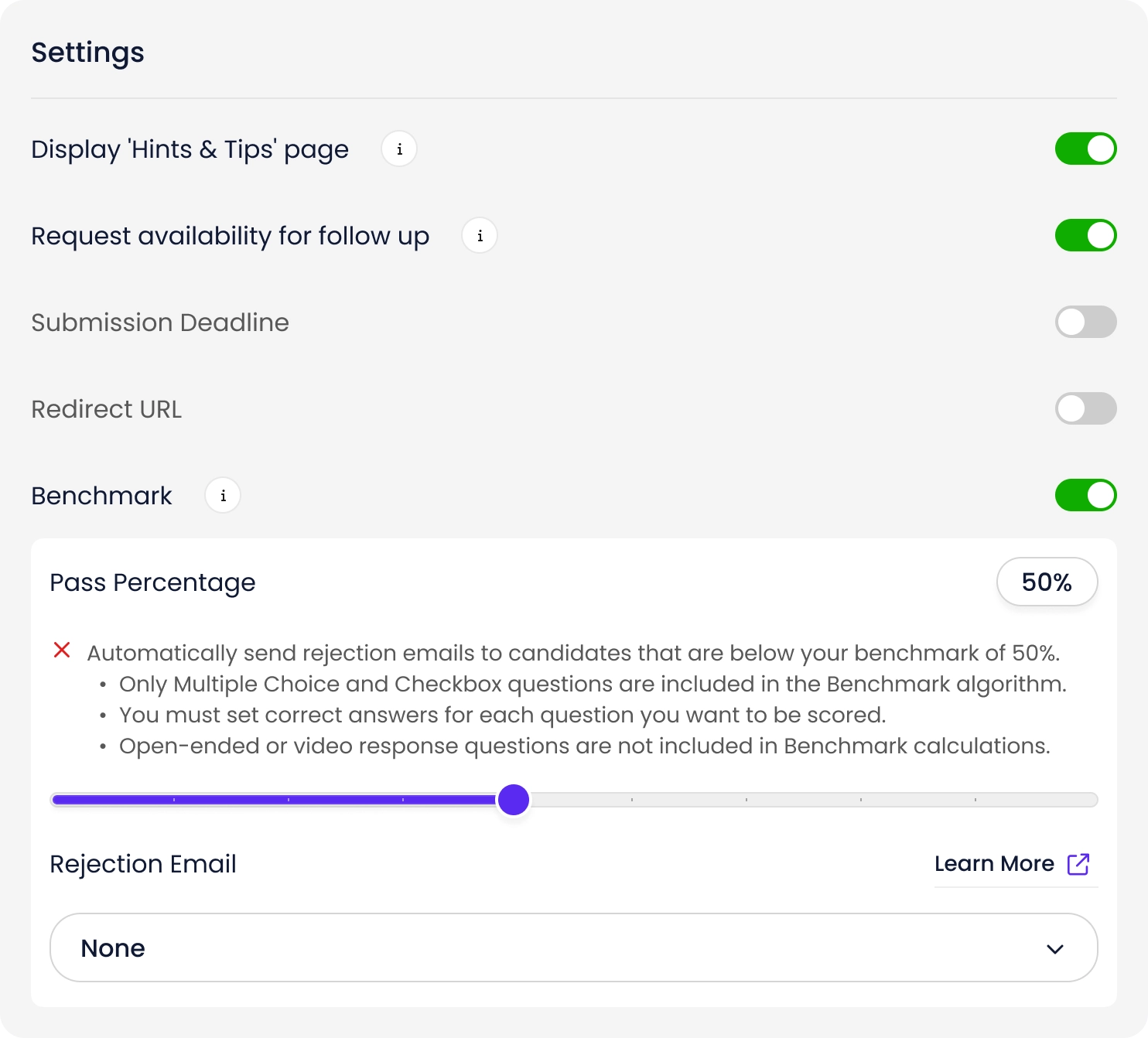
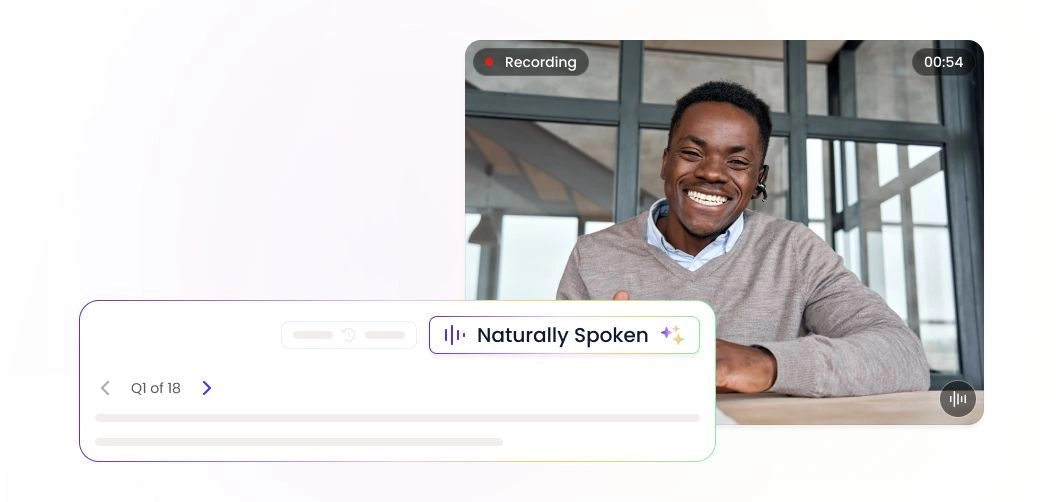
- Real Talk detection flags whether responses are authentic, helping teams restore authenticity when resumes no longer differentiate candidates.
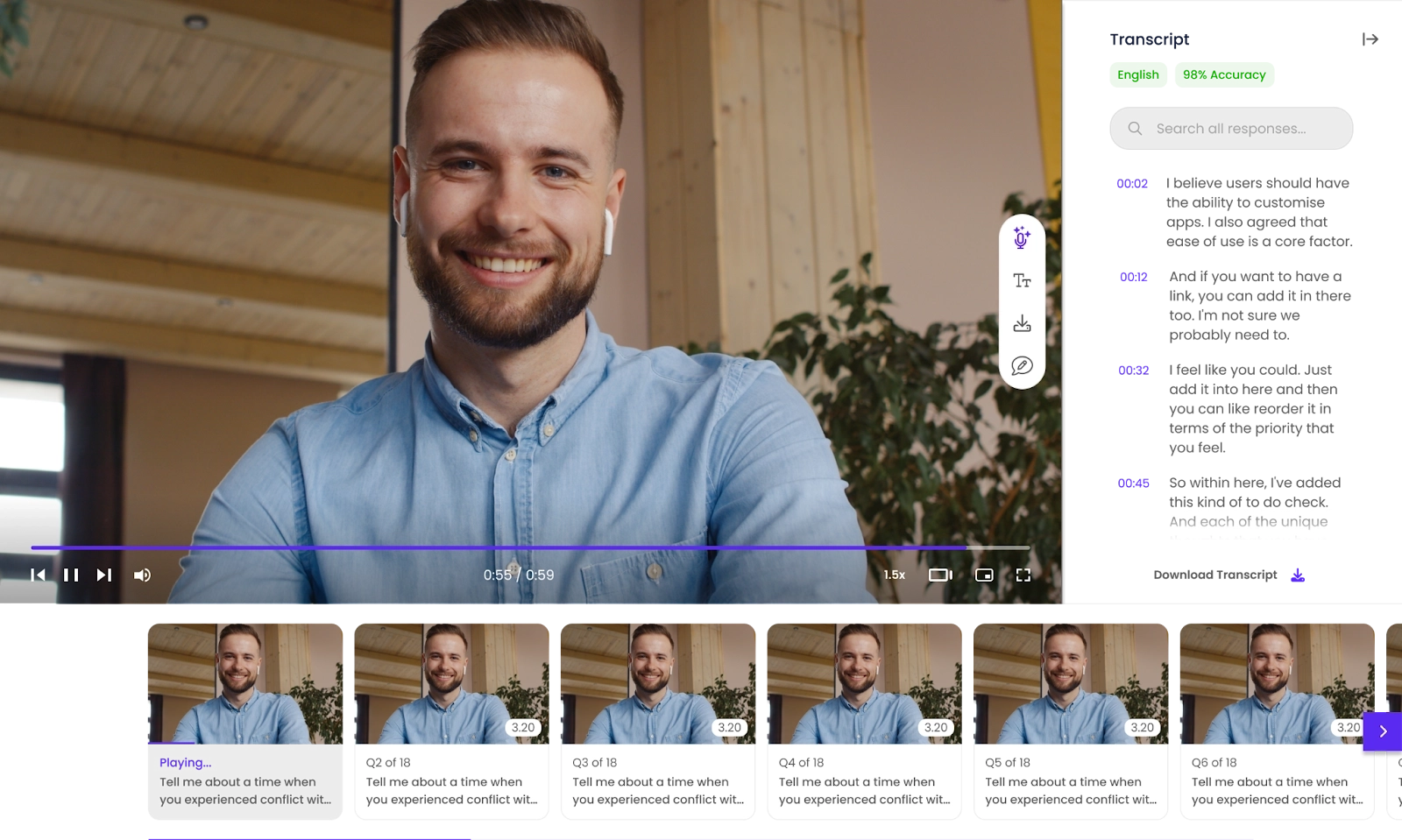
- Willo intelligence generates detailed performance and searchable transcripts surface key signals without requiring full video review.
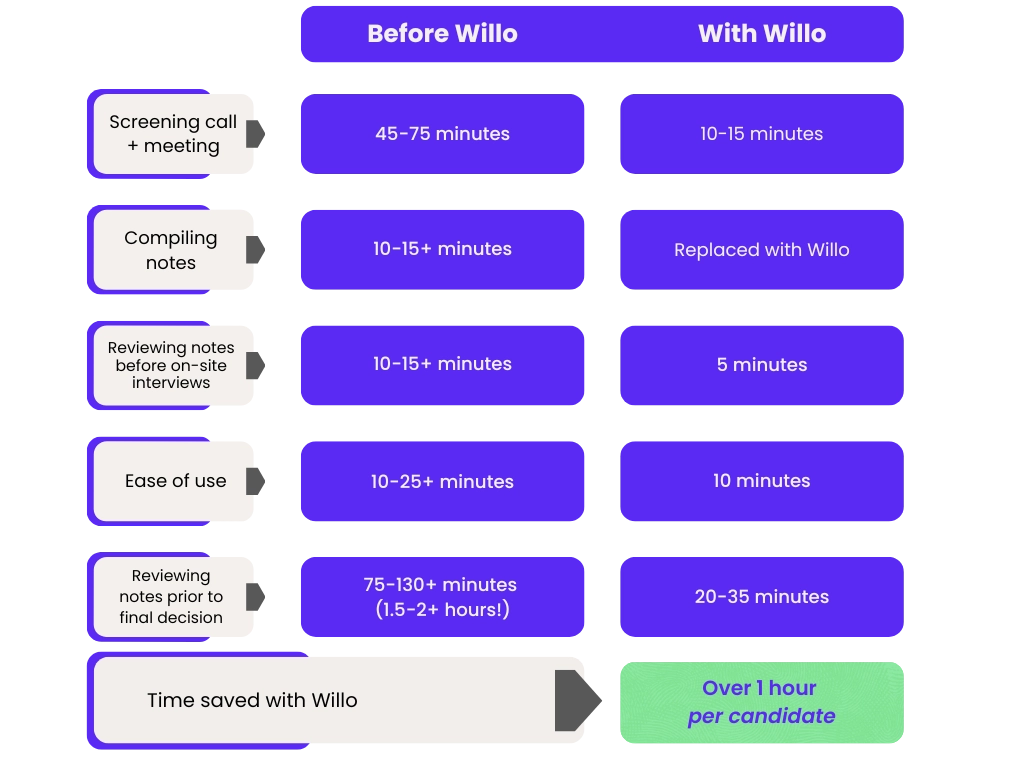
That way, your team gets to review only qualified responses, rather than booking calls or manually checking requirements. Asynchronous reviews take 10–15 minutes, compared with 30–45 minutes for phone screens, saving roughly 60 minutes per candidate.
At Packaly, this process reduced courier onboarding from seven days to just eight hours, allowing their team to do the work of four full-time recruiters without increasing headcount.
Compare candidates consistently across managers and locations
Once teams narrow the pool, inconsistency often creeps in, especially when different managers review candidates independently across sites.
Willo keeps evaluation aligned by standardizing how candidates are assessed:
- Customizable scorecards rate every candidate against the same criteria.
- Blind scoring ensures reviewers assess candidates independently before seeing others’ input.
- Collaborative dashboards allow location managers to review, comment, and compare candidates in one place.
At Madison Reed, this process saved 66% on review time and cut time-to-hire in half.
“What truly set Willo apart wasn’t just the technology, it was the shared values. From day one, they aligned with our mission to foster inclusivity, and create greater opportunity for all.”
Arianna Watters, Regional Talent Acquisition Partner, West Coast, Madison Reed
Move qualified candidates into live interviews without repeating work
Many tools regain speed early but lose it later when teams have to download files, re-upload videos, or summarize decisions for other stakeholders.
Willo keeps screening outputs usable as candidates progress. Showcase Links let team members review & share responses from your ATS without logging in or transferring files. Screening insights carry forward, eliminating re-screening or recap work.
Screening responses, scores, and summaries sync directly into the candidate record, so you can move candidates forward without downloading files or rewriting context for other stakeholders.
Additionally, candidates share their availability at the end of screening, allowing teams to schedule next steps quickly while keeping all screening context attached.
This makes the transition from screening to live interviews cleaner for teams hiring at scale inside an ATS, especially for shift-based roles where interviews don’t always fit standard business hours.
Key features
- 1,000+ pre-made skill-testing questions
- Flexible answer formats (audio, video, text, & multi-choice)
- AI-powered candidate performance summary
- Video interview transcripts
- Custom branding and company intro video
- Collaborative scorecards
- 5000+ integrations across ATS and hiring tools
- 24/7 customer support in 18+ languages
- Digital identity checks support over 200 countries
Pros
- Willo’s structured hiring maintains consistent early decisions across locations and managers
- Candidates can instantly switch from a desktop to a smartphone to finish an interview without losing progress.
- Simple for candidates to complete on mobile
- Fits into existing hiring workflows without rebuilding processes
Cons
- Not designed for live interviews
- Less suited for very low-volume, high-touch executive roles
Pricing
Willo comes in three pricing tiers:
- Growth plan at $233/month
- Scale at $299/month
- Enterprise plan for large organizations
Want to see how Willo helps teams hire more frontline talent without increasing headcount? Book a demo.
2. VidCruiter
Best for: Teams that need structured interviewing + scheduling with strong control over consistency (often in more process-heavy environments).
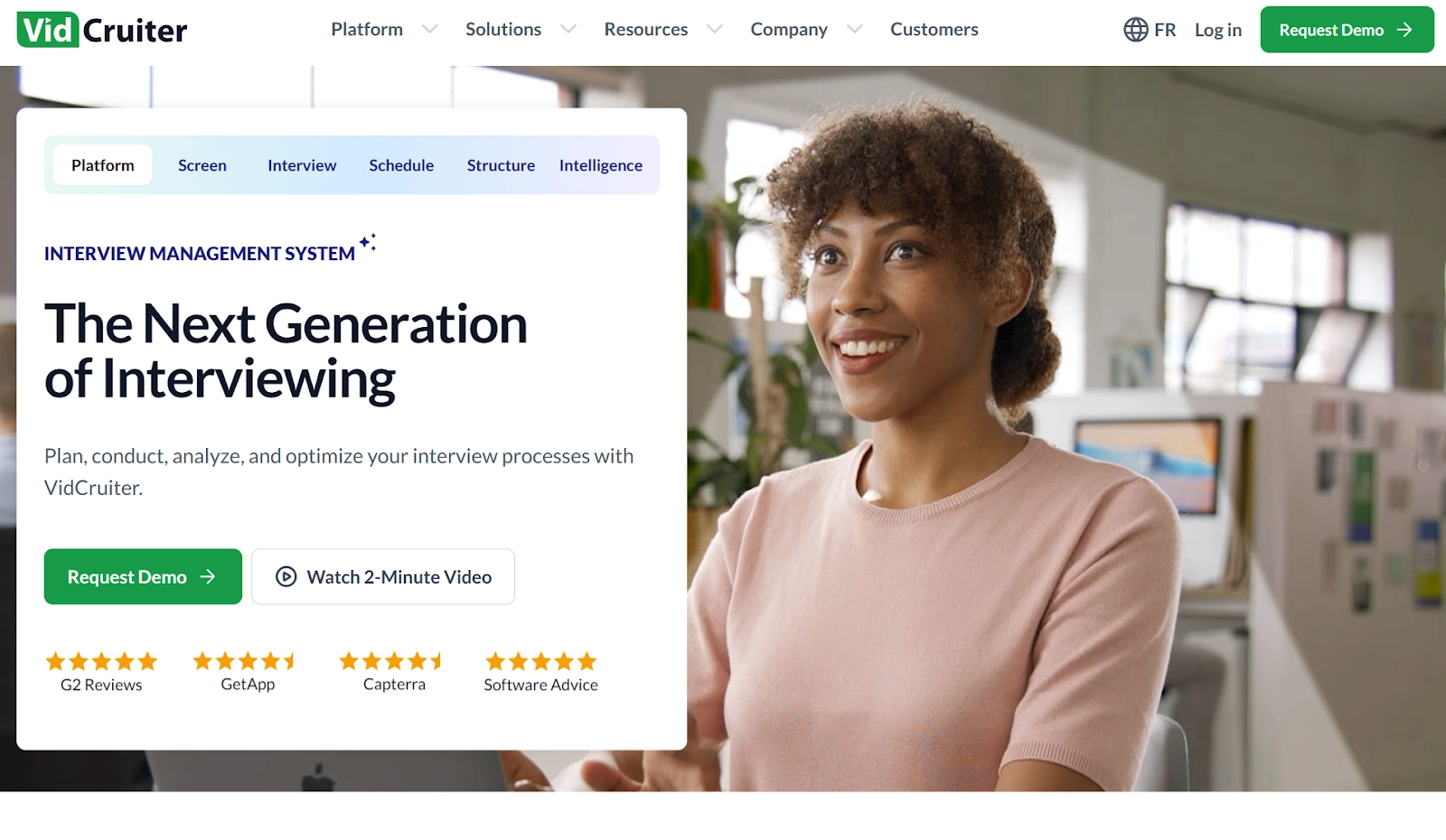
VidCruiter positions itself as an interview management platform built around structured interviews, enterprise scheduling, and workflow control.
The core idea isn’t “more automation.” It’s standardizing how interviewers evaluate candidates (and making scheduling workable as volume increases), so decisions don’t depend on who interviewed a candidate or whether or not the process was rushed.
Why we chose VidCruiter
It leans into two pressure points that usually break first at scale: coordination (scheduling) and consistent evaluation (structured scorecards).
G2 comparison data also highlights strong scheduling and evaluation scores relative to other enterprise hiring tools, which are useful when “admin creep” shows up as calendar chaos and messy handoffs.
Key features
- Structured interview guides and scorecards to keep evaluation consistent across interviewers and locations.
- Enterprise scheduling is designed for complex interviewer rules and high-volume coordination.
- End-to-end interview management positioning (VidCruiter frames the platform around workflow, compliance, and structured interviewing at scale).
Pros
- Strong fit for teams that care about standardized evaluation more than “flashy AI.”
- Scheduling is a clear strength for handling coordination at scale.
- Built around process control (helpful in multi-stakeholder hiring).
Cons
- Not the simplest “quick start” tool if you just want lightweight async screening. (It’s designed for structured workflow depth.)
- Pricing transparency is limited publicly (typical enterprise motion).
Pricing
- Contact the sales team to get a quote based on your needs.
Interested in platforms like VidCruiter with an easier setup and cost? See our review of VidCruiter alternatives for faster hiring. And if you’re curious about how Willo stacks up against VidCruiter, read our Willo vs VidCruiter review.
3. Radancy
Best for: Enterprise teams that treat high-volume hiring as part of a broader talent acquisition ecosystem (brand, campaigns, CRM, pipeline).
Radancy positions itself as a “talent acquisition cloud” that spans attraction and end-to-end recruiting workflows. For retail and logistics scale, it’s typically relevant when teams want hiring to run like an always-on pipeline, rather than a “pick a screening tool” approach, more like “run a full recruiting engine.”
Why we chose Radancy
If you’re already operating with centralized employer branding and candidate CRM motions, Radancy’s strength is linking those parts together rather than optimizing only the screening step.
Key features
- Emphasis on attract and automation-driven reach (top-of-funnel strength).
- Recognized for career site and recruiting marketing capabilities in partner listings.
- Strong performance in G2-reported areas like branding/CRM (category-dependent).
Pros
- Strong fit when scale depends on brand and pipeline, not just screening.
- Helpful for multi-location hiring programs that need consistent campaigns.
Cons
- It can have too many features you don’t need if you only need screening.
- Some G2 comparisons indicate weaker ATS-style scoring compared to ATS-first tools (depending on stack expectations).
Pricing
- Typically, contact for pricing (enterprise platform).
4. Sapia.AI
Best for: Teams open to AI-first, chat-based screening who want speed + consistency, but need explainability and governance.
Sapia focuses on chat-based structured interviews to screen at volume.
The promise is simple: candidates complete a structured, mobile-friendly screening flow, and recruiters and hiring managers review standardized responses instead of coordinating early phone screens.
Decision confidence depends on whether those responses remain visible, reviewable, and consistent across reviewers.
Why we chose Sapia AI
It directly represents the “AI-first” model, which forces us to evaluate: where AI helps (speed + consistency) vs. where it introduces risk (confidence, fairness perceptions, compliance).
Sapia explicitly emphasizes explainability and “ethical” positioning, which is what experienced TA leaders probe first.
Key features
- Chat-based AI interview for structured early screening at scale.
- Claims explainable/ethical AI and enterprise security posture in partner listings.
- Verified ATS integrations, including formal partner listings such as Greenhouse.
Pros
- Fast, standardized first-pass screening without scheduling.
- Explicit focus on explainability helps with stakeholder scrutiny.
Cons
- AI-first screening raises “trust and governance” questions that some orgs won’t accept.
- The chat interview format may not fit roles that require rich work samples or early live interaction.
Pricing
- Contact the sales team to get a quote.
5. HireVue
Best for: Enterprise teams running very high volume with a need for breadth (video + assessments + scheduling + structured guides) and formal governance.

HireVue positions itself as an end-to-end hiring platform with live and on-demand video interviewing, assessments, structured interview guides, and workflow components like scheduling.
It’s a common solution in enterprise hiring because it covers multiple stages, not just one-way screening.
Why we chose HireVue
- HireVue tends to shine when you need global support, depth, and structured governance, but it becomes a constraint when your team needs speed through simplicity and minimal implementation overhead.
Key features
- Supports both on-demand and live video interviews, using structured evaluation tools for review.
- Includes assessments and skill validation as a core part of the hiring workflow.
- Provides scheduling and workflow tools designed to reduce back-and-forth coordination.
Pros
- Covers interviewing and assessments within a single enterprise platform.
- Emphasizes security and compliance, supporting global hiring requirements.
- Reviewer feedback cites use in high-volume hiring and mixed integration outcomes depending on the stack.
Cons
- Platform breadth introduces greater complexity than narrower point solutions.
- Fit depends heavily on implementation quality and stakeholder buy-in.
Pricing
- Contact the sales team to get a quote.
Is Willo a good alternative to HireVue? Here's a side-by-side comparison of HireVue and Willo.
6. Spark Hire
Best for: Teams that want one-way video (and optionally live video) with straightforward collaboration and evaluation.
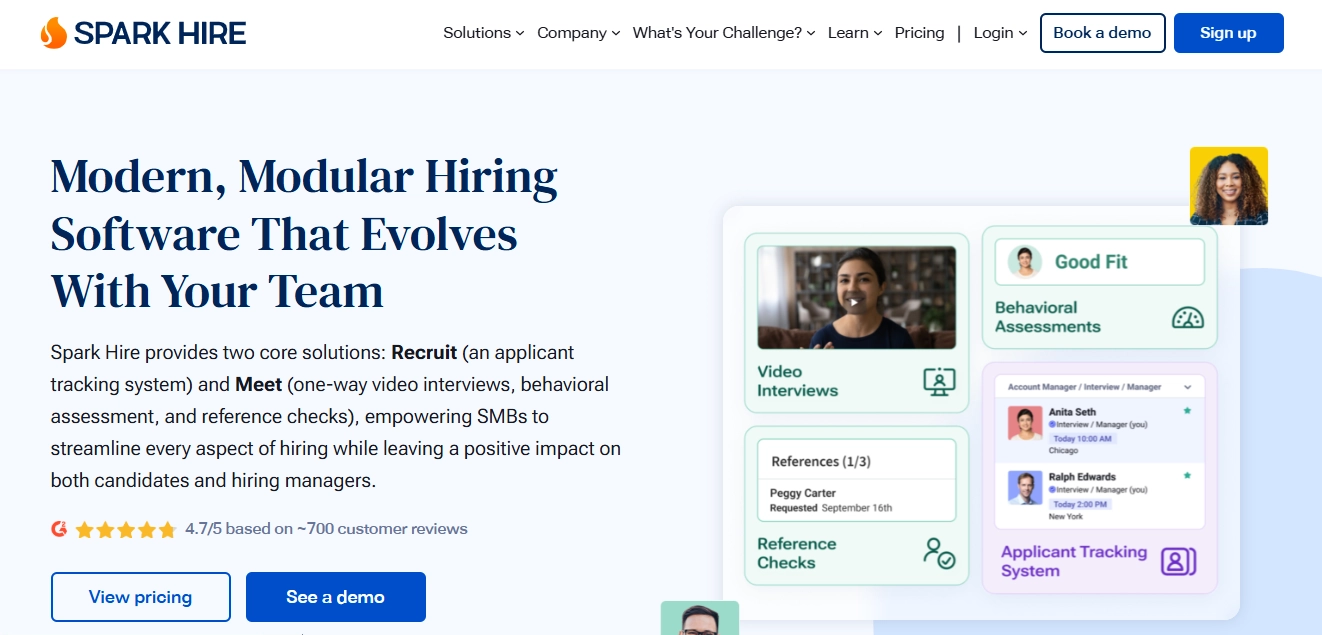
Spark Hire is best known for one-way video interviews that let candidates respond at their own pace, with recruiters and hiring managers reviewing them later.
It also offers live video interviewing and evaluation workflows (ratings, comments, collaboration), which makes it a common “move off phone screens” option.
Why we chose Spark Hire
Spark Hire is a practical baseline option: easy to understand, easy to pilot, and focused on asynchronous review. The open question is whether its evaluation workflow stays consistent as more reviewers and locations get involved.
While Spark Hire emphasizes collaboration and structured evaluation, you need to assess how that structure holds up as volume and stakeholder count increase.
Key features
- One-way video interviews that reduce scheduling and expand reviewer coverage.
- Built-in evaluation and collaboration tools (ratings, comments, tagging, manager sharing).
- Optional live video interviews, depending on workflow needs.
Pros
- Clear asynchronous workflow that’s easy to pilot and operationalize.
- Evaluation and collaboration tools help maintain consistency in reviews.
- Transparent, published pricing.]
Cons
- It can be a standalone interviewing tool if you need broader end-to-end workflow coverage or deeper integrations.
- Teams that require more governance or assessment depth may outgrow it.
Pricing
Spark Hire has three pricing tiers. Meet Pro at $299 per month, Meet Growth at $499 per month. For Meet Enterprise, contact the sales team for pricing
Familiar with Spark Hire and looking for alternatives? Here are the top SparkHire alternatives to consider.
7. Hireflix
Best for: Budget-conscious teams that want simple one-way video screening as an asynchronous replacement for phone screens.
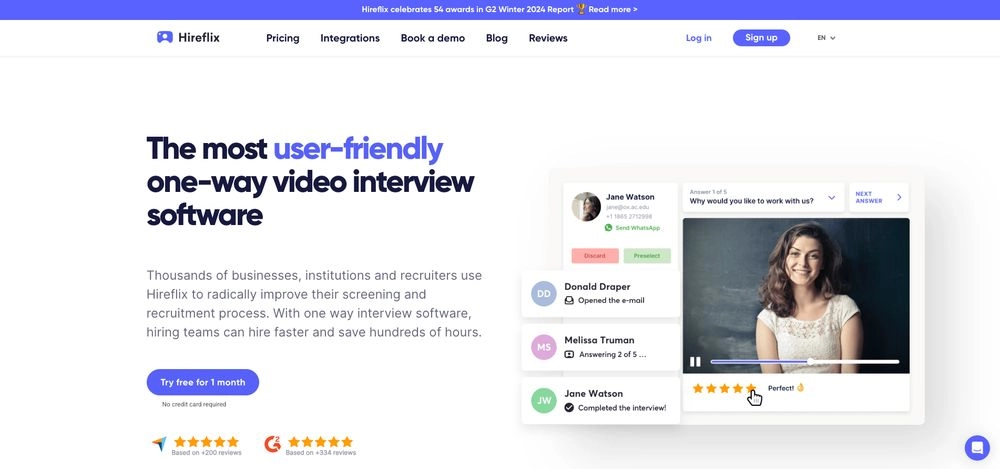
Hireflix is a one-way video interview platform that focuses on simplicity and affordability.
In practice, teams use it to prevent first-round calls from being booked. They send the same questions to every candidate, applicants respond at their own pace, and recruiters review recordings in batches rather than chasing calendars.
It’s a common step when replacing phone screens without rebuilding the rest of the hiring stack.
Why we chose Hireflix
It’s the “lightweight ceiling” option. It earns a spot because some teams don’t need a full platform but need a stable, simple async screening layer with predictable pricing and minimal setup.
Key features
- One-way video interviews for asynchronous screening.
- Unlimited users, roles, and interview responses on published plans.
- Simple rollout model, with a trial available.
Pros
- Clear pricing with unlimited usage tiers.
- Simple workflow that’s fast to pilot.
- Works well as a direct replacement for phone screens.
Cons
- Lightweight feature set can hit limits when teams need deeper workflow governance, assessments, or complex integrations.
- Not designed as an end-to-end high-volume hiring platform.
Pricing
- $75/mo (Small, billed yearly) and $150/mo (Medium, billed yearly) with unlimited usage on those tiers.
Looking beyond Hireflix? Here are the best Hireflix alternatives to try.
Which High-Volume Hiring Solution Is Best for Retail and Logistics Recruiting?
By this point, the question usually isn’t which platform has the most features. It’s which option fits how hiring actually runs day to day: the volume you handle, how many people review candidates, and where coordination work starts to creep back in.
If you’re screening 500+ candidates a month with a lean team, removing scheduling and early phone-screen work matters most. Willo fits this scenario by replacing live coordination with structured asynchronous screening that multiple reviewers can assess consistently. HireVue can also work at this scale when teams need broader coverage, though it typically requires more setup.
If you’re moving away from phone screens for the first time, lighter async tools like Spark Hire or Hireflix can remove the immediate scheduling burden. But when inconsistency across hiring managers is already a concern, Willo’s shared evaluation structure helps prevent those issues from resurfacing as volume grows.
If your goal is to move fast without reintroducing admin work or letting early decisions drift as hiring scales, Willo is the most balanced option in this shortlist.
CTA: See how Willo fits into your screening workflow without adding operational overhead as volume grows.