If you're evaluating TestGorilla's pricing, you're likely dealing with some version of the same problems: too many applications to screen manually, a shortlisting process that keeps cycling back to the pool, and screening that isn't consistent enough for hiring managers to trust.
TestGorilla can help with parts of this. But its pricing structure can also limit how far it can take you. For example:
- Credit-based pricing can limit your screening capacity during hiring peaks. Seasonal surges, sudden growth, or multiple roles opening at once — a metered system creates friction exactly when you need to move fast
- Annual pricing only: For seasonal hiring, that means paying for a tool you might actively use for three or four months.
- Essential features require premium access: Customizing assessments, inviting candidates to one-way video interviews, and connecting your ATS all require a Plus upgrade. Given that most tools offer these essential features by default, you might want to reconsider.
If you'd rather assess how applicants communicate, respond, and solve problems without paying for features you don't need, a testgorilla alternative like Willo is worth a look. Book a demo to see how it works.
Or keep reading: below we break down the five pros and cons of TestGorilla's pricing and evaluate whether it's worth it for high-volume hiring.
5 Pros & Cons of TestGorilla Pricing You Should Know
- You can complete basic initial pre-screening for free
- Annual commitment locks in costs regardless of when you actually hire
- Running a complete skills-based hiring workflow requires the most expensive tier
- TestGorilla costs more the moment you need ATS integration
- AI-led interviews may cost you candidates, if employer brand matters
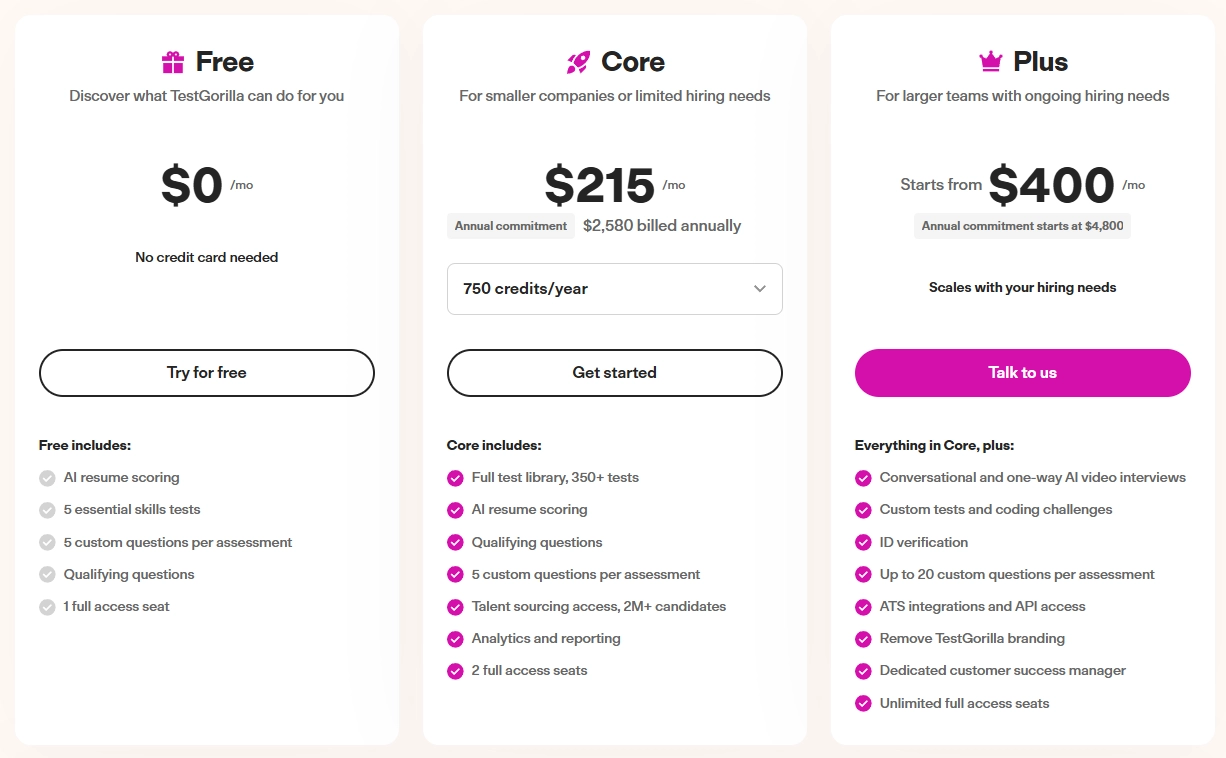
Here’s the full TestGorilla pricing at a glance:
1. You can Complete Basic Initial Pre-Screening for free
When you're early in your hiring process and need to filter a high volume of applicants before spending recruiter time on them, TestGorilla's free tier gives you a real starting point without touching your budget.
.webp)
That’s because:
- AI resume scoring costs zero credits: TestGorilla automatically scores resumes against job-specific criteria before a human opens a single application. When you're managing 200+ applicants for one role, that matters.
- Qualifying questions screen out mismatched candidates before the assessment starts: Candidates who fail qualifying questions don't consume credits. For high-volume roles where many applicants won't meet basic requirements, this protects your credit bank from day one.
- Custom questions give you flexibility at no cost: Essay, multiple-choice, and file-upload formats are all free. You can build a structured first-stage filter without paying per candidate.
A user on YouTube noted:
“The free plan costs absolutely nothing, $0 per month, and it’s free forever. It’s available to companies of any size and is ideal if you’re just starting out or only need the basics. You get five free tests and five custom questions along with access.”
There are a few concerns worth understanding before you build your process around the free plan, though.
TestGorilla's AI scores the resume — it doesn't verify it. With 76.6% of hiring teams now encountering AI-assisted applications, a resume score tells you how well a candidate used AI to write their CV, not whether they can do the job.
Beyond that, the free tier gives you five skills tests from a library of 350+, one recruiter seat, and no assessment deadlines. That's enough to understand what TestGorilla can do — not enough to run a real multi-role hiring process.
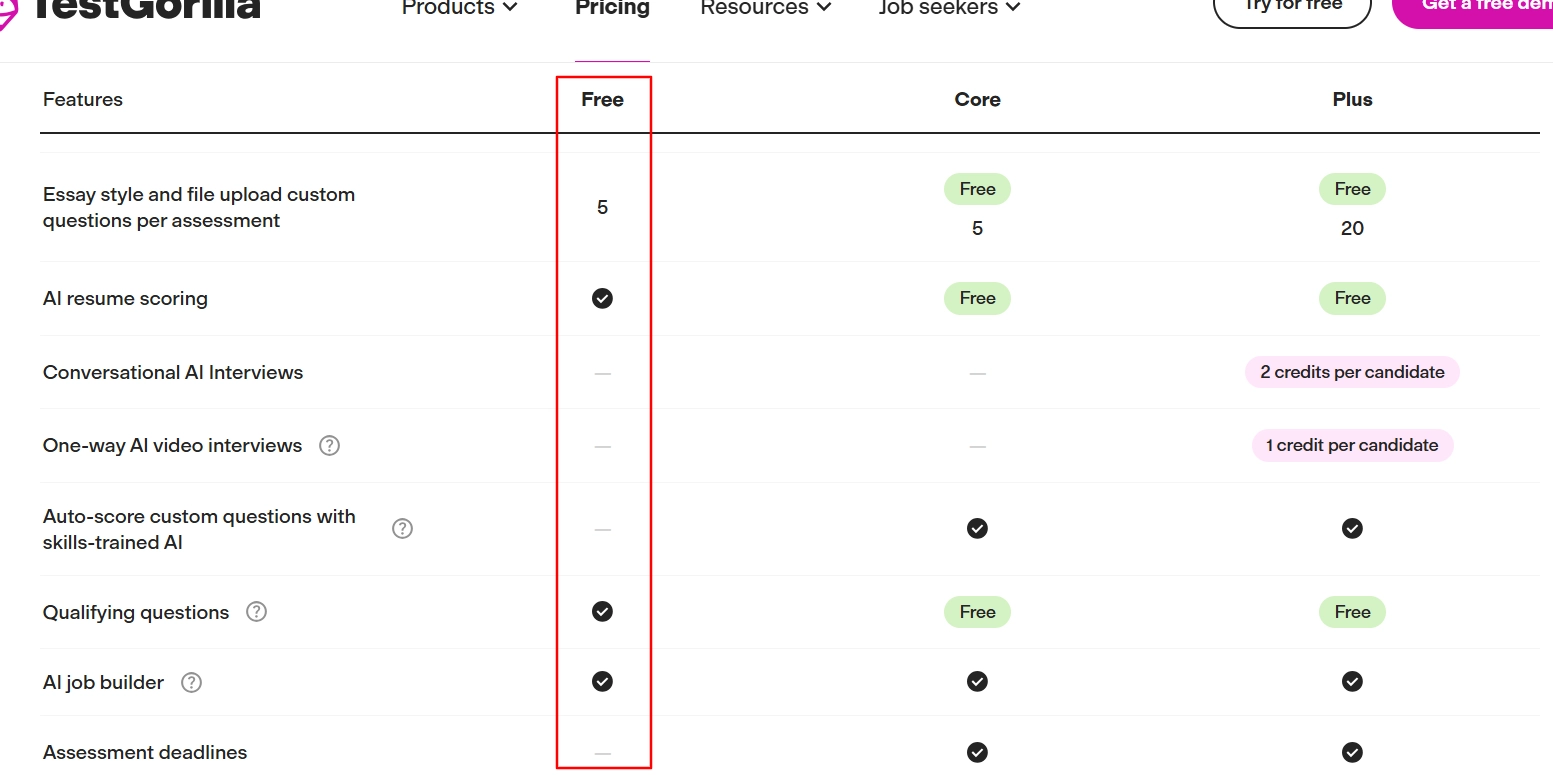
The only step up is the Core plan, which requires an annual commitment. There's no monthly Core option. If you want to pilot across two or three open roles before committing, TestGorilla's structure doesn't give you that room.
If you need to screen candidates across multiple roles from day one — with video, audio, multiple-choice, and file upload all in a single assessment — Willo's Growth plan ($279/month, $209/month annually) covers all of that without a credit system tracking every candidate.
A user noted how Willo helps to hire for multiple roles using multiple-format screening effectively:

Watch the demo below to see how Willo works.
2. Annual Commitment can be Challenging for Seasonal Hiring
If you hire around a specific window — seasonal recruitment, project-based growth spurts, or early-stage companies with unpredictable headcount — TestGorilla's pricing structure works against you before you screen a single candidate.
Here’s why:
- Every paid tier requires an annual contract: There’s no monthly Core option. You commit to upfront cost, regardless of how many months you actively use the platform. A G2 reviewer explicitly mentioned that the pricing can be relatively high for infrequent use.

- Credits don’t pause when hiring does: You're locked into 12 months, but your credit bank doesn't carry forward value when hiring goes quiet.
The math is straightforward. If you hire intensively for 10 weeks and go quiet for the rest of the year, you’re paying for a platform you actively use for less than a quarter of the billing period.
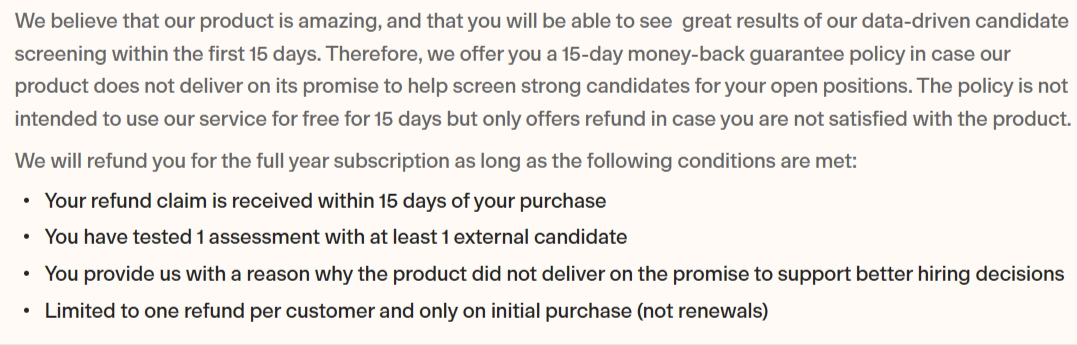
If you later discover the lock-in and try to cancel, you'll hit a wall, getting a refund might be challenging.
3. Running a Complete Skills-Based Hiring Workflow Requires the most Expensive Tier
TestGorilla's Core plan gives you access to a 350+ test library, automated scoring, and qualifying questions at zero credits. For teams whose primary need is skills-test filtering at the top of the funnel, that's a coherent starting point.
But the features most hiring teams need to complete that workflow, video interviews, ATS integration, and adequate recruiter seats, are all locked behind Plus.
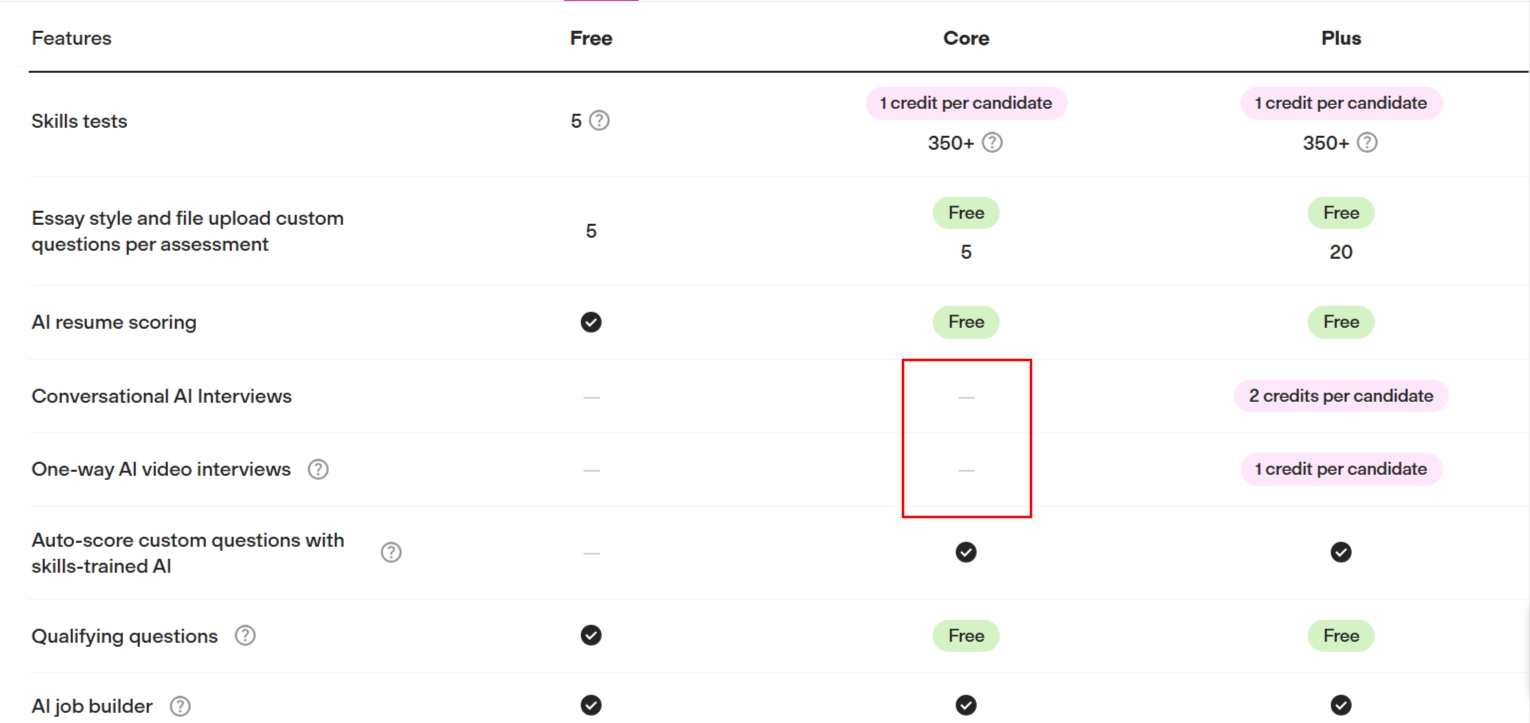
Many TestGorilla users sign up for Core expecting a complete hiring workflow, then discover that video screening, ATS integration, more recruiter seats, and custom branding all require a custom pricing conversation with the sales team.
The Plus plan has no published price, no self-serve upgrade path, and no way to calculate ROI before entering that negotiation.
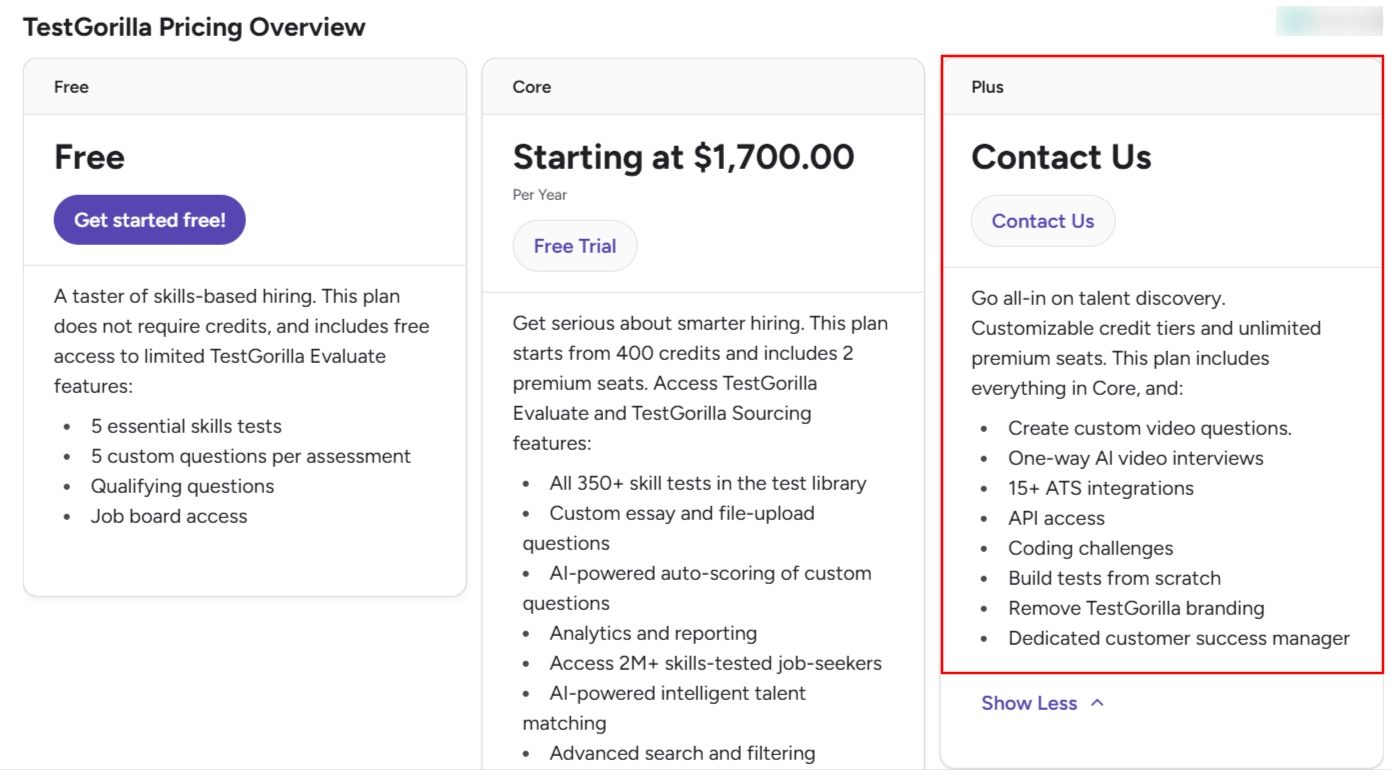
Peter, a TestGorilla user, upgraded his plan expecting needed features, but discovered there’s a need for another upgrade.

Given that video interviews and ATS integration are standard on entry-tier plans at most candidate screening platforms, finding them gated behind TestGorilla's most expensive tier is worth factoring into your decision.
4. TestGorilla Charges More for ATS Integration, and Users Report Mixed Results
Without ATS integration, candidate results sit inside TestGorilla while your pipeline lives in Greenhouse, Lever, or whichever system your team works from. That means manually transferring scores, switching between platforms, and reconciling data for every candidate — across every open role.
At high volume, that overhead compounds quickly and defeats the purpose of having an automated screening tool in the first place. A G2 reviewer described his Greenhouse experience directly:
“When integrated with Greenhouse, it only returned summary scores, not the individual answers.”
Status updates sync, but the actual data your hiring team needs, like individual responses, detailed results, and candidate context, stays locked inside TestGorilla.
Again, ATS integration is only available on the Plus plan. Let’s agree that’s the platform’s policy, but users still complain about low integration options.

Another user noted:
“It does not integrate with our ATS via Zapier — we require a premium subscription on our ATS for integration with TestGorilla.”
So you’re not just paying for TestGorilla Plus; you may also be paying for a premium tier in your ATS before the two systems even connect.
And sometimes when you unlock the integration, a second problem emerges. A G2 reviewer noted:

You pay extra to connect the systems. The data that comes through still can’t be trusted without cross-checking manually.
Willo’s integration approach gives you a concrete advantage. On the Scale plan, Willo connects natively with Greenhouse, Lever, Ashby, Teamtailor, BambooHR, Workable, and over 5,000 ATS and HR tools.
You can create an assessment as a stage directly in your ATS platform, and results sync back automatically, including ratings, scorecards, video responses, and more. That means your entire hiring workflow is in one place, making candidate evaluation faster.
At Madison Reed, 97 hiring managers reviewed candidates entirely within their existing Greenhouse workflow — no system-switching, no per-seat fees for a lean HR team managing 95+ locations.
Candidate response rates doubled, time to fill dropped from 30+ days to under 15 days, and recruiters saved roughly 66% of the time previously spent on phone screens.
Book a demo to see how it works.
5. AI-Led Interviews May Affect Candidate Experience Depending on Your Hiring Context
TestGorilla's Conversational AI interview conducts a live-style audio conversation with candidates, asks follow-up questions, and automatically scores responses. It costs 2 credits per candidate and is Plus-only.
The feature works. The cost is in candidate experience.
Candidates already report friction with one-way video interviews — the impersonal format, no real person on the other end. An AI conducting the actual conversation amplifies that.
For instance, the latest hiring report shows that 59.6% of hiring professionals believe conducting interviews and assessments should remain human-led. 78.7% say the same about final hiring decisions.
If you’d rather let AI assist your hiring team and aid efficient hiring processes, not replace them, consider Willo. Willo Intelligence transcribes responses, summarizes candidate performance, flags proficiency signals, filters candidates based on standard limiting attributes, and sends personalized rejection emails with actionable feedback.
You also get access to an AI-powered authenticity-detection tool (Willo Proof) that checks whether a candidate appears to be reading from a script or using AI-generated answers. Here’s how senior HR advisors describe how Willo helps them detect candidates who rely on AI.

Book a demo call with the Willo team to see how Willo AI-powered tools show the insights that help you make better, more equitable hiring decisions.
So, in summary, here’s the big question:
Does TestGorilla’s Pricing Fit Your Hiring Conditions?
TestGorilla’s pricing structure prioritizes depth of skills testing, a genuine free entry point, and a credit-based model that scales with usage. These choices work well for specific hiring scenarios and are worth reconsidering in others.
TestGorilla pricing works best when:
- You’re building a skills-first screening process and need the widest test library available
- You hire year-round at consistent volume, and annual commitment is straightforward to budget
- Your team needs to hire faster without stretching budget on ATS integration or video screening
A TestGorilla alternative like Willo makes sense when:
- Your hiring is seasonal, and paying 12 months for 3-4 months of use doesn’t make financial sense
- You need video screening and ATS integration as standard features, not premium add-ons
- You want a monthly plan with identical features to the annual, so you can test before committing
- Candidate experience is a hiring differentiator, and AI-led interviews carry too much risk for your market
- You want AI that summarizes and surfaces insights rather than AI that scores and interviews
If your hiring conditions match TestGorilla’s strengths, the investment makes sense. If the friction points above describe your team’s situation, the pricing model is worth reconsidering.
Book a demo to see how Willo compares for your specific hiring conditions.