If your priority is AI-powered candidate screening with seamless ATS integration, the strongest options depend on your company size, AI hiring policy, screening format (video, resume, phone, etc.), existing ATS, and hiring volume.
Here are the top options we recommend in 2026:
- Willo: Rated 4.6/5 on G2 for quick setup, ease of use, and time savings. Includes 50+ bidirectional ATS integrations, offers AI summaries, candidate insights, and flags AI applications. Best for async video and audio screening at volume.
- Eightfold AI: Best known for intelligent candidate matching and bi-directional sync with major ATS, HRIS, and VMS systems. Built for enterprises that need resume screening. Rated 4.2/5 on G2.
- Qualifi: Rated 4.7/5 on Capterra for async phone-based screening with transcriptions, keyword intelligence, and summaries built in. Best for recruiters who want a fast first round without having to schedule calls.
- CodeSignal: Best for online proctoring and technical skills screening with a 4.5/5 rating on G2. Integrates natively with Greenhouse, Lever, Workday, SmartRecruiters, and Ashby, writing scored results back into the candidate record.
- Hirevue: Best for large teams whose hiring stack runs on enterprise ATS like Workday, SAP SuccessFactors, Oracle, and Greenhouse. Rated 4.1/5 on G2 for structured video interviewing and AI assessments.
- Workable: Popular all-in-one ATS with AI-assisted screening that auto-scores applicants on a configurable scale, plus 200+ integrations. Best for SMB and mid-market teams that want recruiting and HR in one system. Rated 4.4/5 on G2.
- Paradox (Olivia): Best for high-volume conversational screening and scheduling. Rated 4.6/5 on G2 for conversational AI that screens and schedules over SMS and web chat.
How To Choose The Right Option for Your Team
Each AI candidate screening software with seamless ATS integration has its own strong suit. However, choosing the right one for your needs requires considering these 6 key factors:
- Primary screening format: No single format (e.g., resumes, phone calls, or chats) fully reflects talent, but together they provide a more complete view of a candidate's proficiency. For example, Willo assesses audio, video, and text responses, as well as file uploads, providing the full context you need to make confidence hiring decisions.
- Hiring volume: Some AI screening tools are built for efficient, high-volume hiring (like EDF filling 400+ roles per recruiting season), while others are good for SMBs but may struggle as applicant volumes grow. Choose an app that scales with your hiring needs.
- AI feature depth: Candidate screening software providers that claim to be AI-powered offer wildly different intelligent capabilities. Check the specific AI-driven features across vendors to really understand and compare what they offer before committing to any.
- AI hiring policy: Experts agree that AI automation can’t effectively handle every hiring stage. So, avoid tools that tout AI screening features without explaining how decisions are made or encouraging human oversight, particularly in final candidate selection.
- Ease of integration: Choose an AI-powered screening platform that a non-technical person can set up quickly, not one that requires an implementation partner and extensive time to customize ATS integrations and configure complex APIs.
- Support: The best candidate screening tools are those that offer adequate user guidance through live chat, email, knowledge bases, and 24/7 support.
7 Top Rated AI Screening Platforms With A+ ATS Integration
1. Willo: Best for Async Video/Audio Screening and Assessment
Willo is an AI candidate-screening platform that helps hiring teams make hiring decisions faster, clearer and with more confidence.
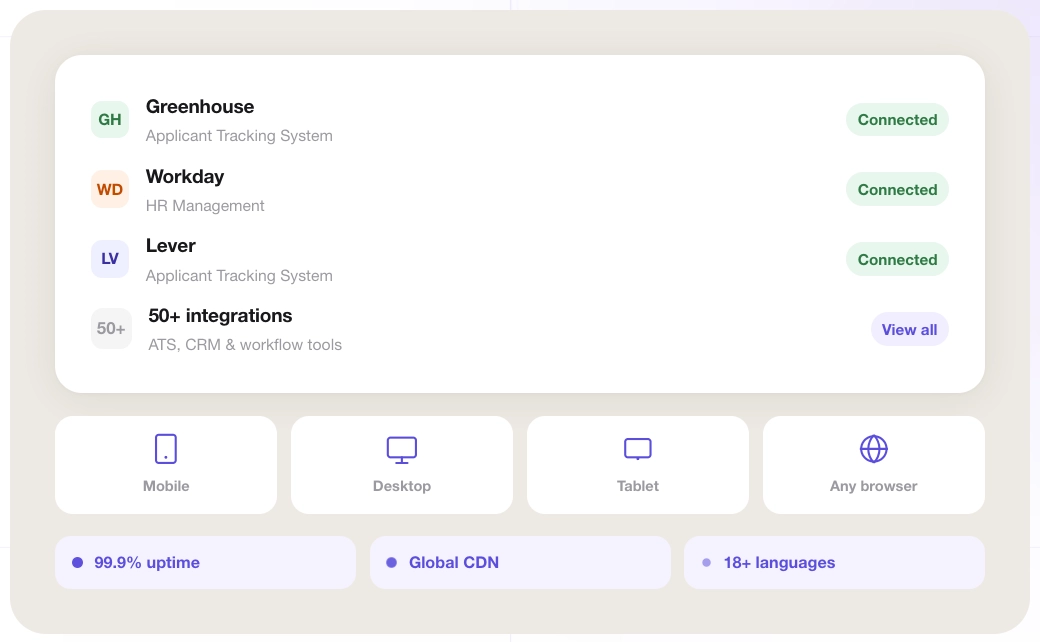
It connects to your ATS the way the work actually flows, pushing candidate data into 50+ systems like Greenhouse, Lever, Ashby, and Workday through native, bidirectional integrations, and automates another 7,000+ recruitment process through Zapier.
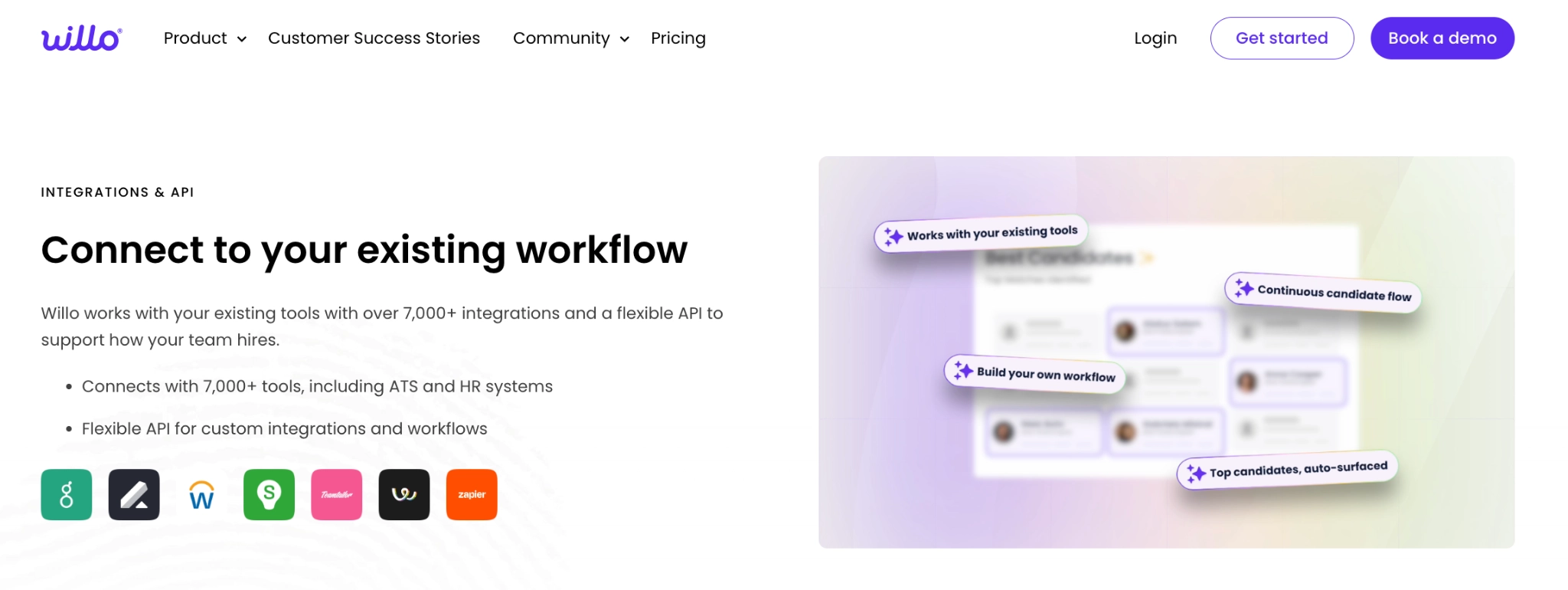
So the moment a candidate finishes screening, your team reviews accessed candidates inside the system they already work in, with the full context attached.
If you’re managing high-volume hiring teams where early-stage candidate screening quality, consistency, and efficiency directly impact hiring outcomes, here are three ways Willo’s ATS integration stand out from others and help organizations reduce time-to-hire by 50%:
- It pushes richer candidate data into your ATS. Unlike other AI tools that rely on resume keyword filters and potentially screen people out before they ever make their case, Willo assesses applicants across video, audio, multiple choice, and file uploads, then sends that fuller picture straight into your ATS. So the profiles you shortlist carry real signal, not just parsed CV text.
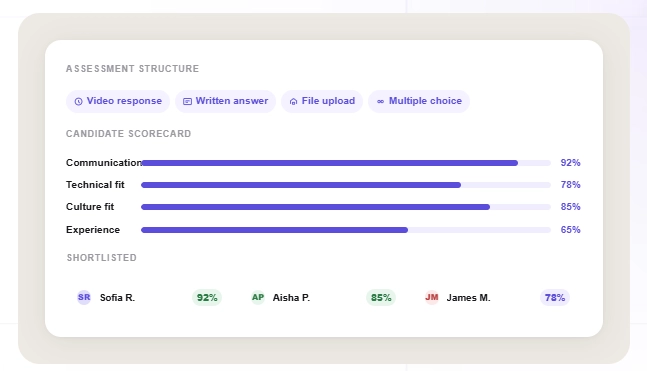
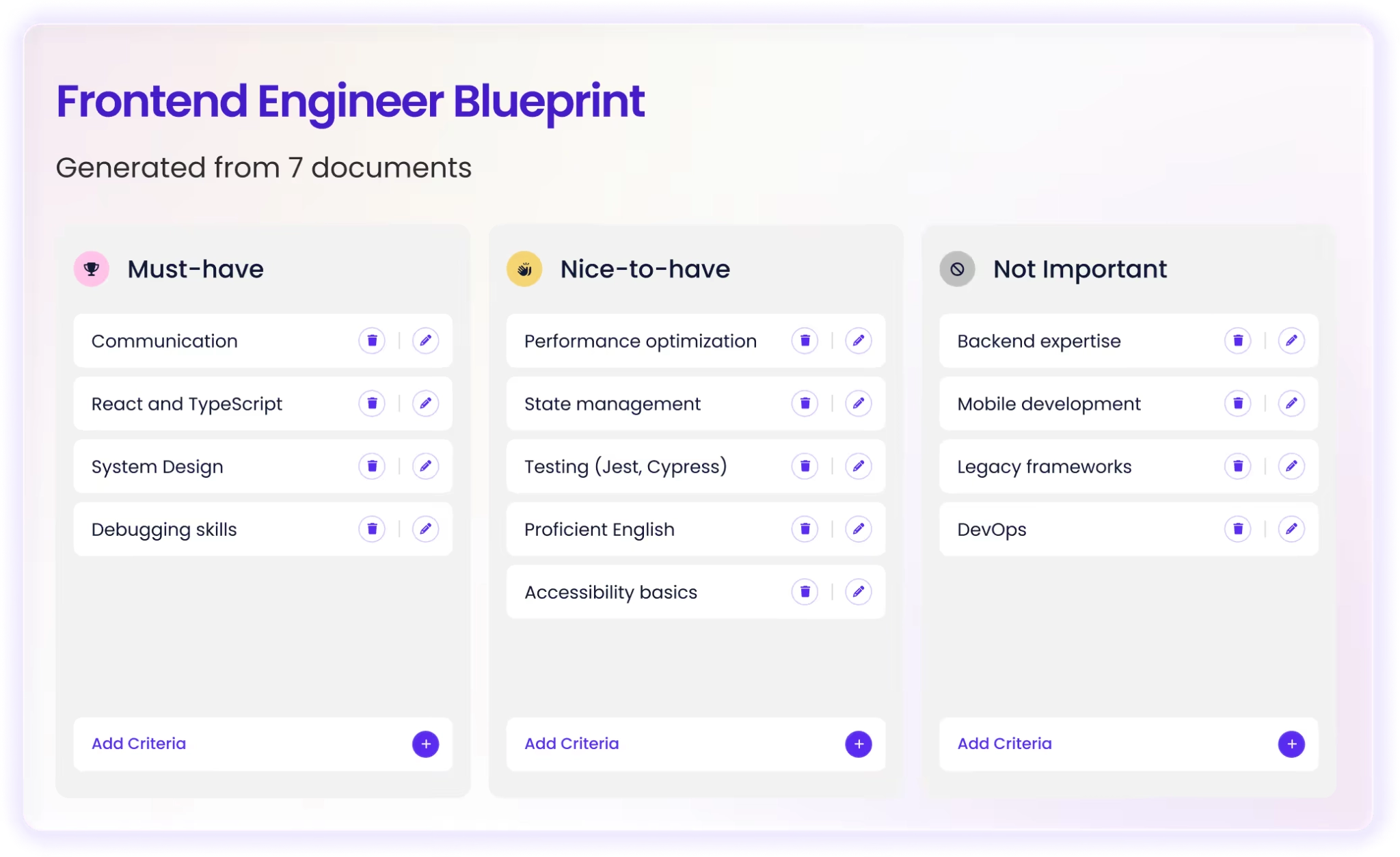
- It filters with assistive AI, so only strong-fit candidates reach your ATS. Before screening starts, you set the blueprint for what a good candidate looks like for the role. Willo measures every response against that blueprint and flags the strongest profiles. The candidates flowing into your ATS are already assessed and ready to move, the ones most likely to succeed in the role.
- It gives you world-class support and a flexible API. You get 24/7 help whenever a connection or setup question comes up, so you're never stuck mid-integration. And the open API means you can build the exact ATS workflow your team needs, not just the off-the-shelf version. Full support and full control, without the engineering headache.
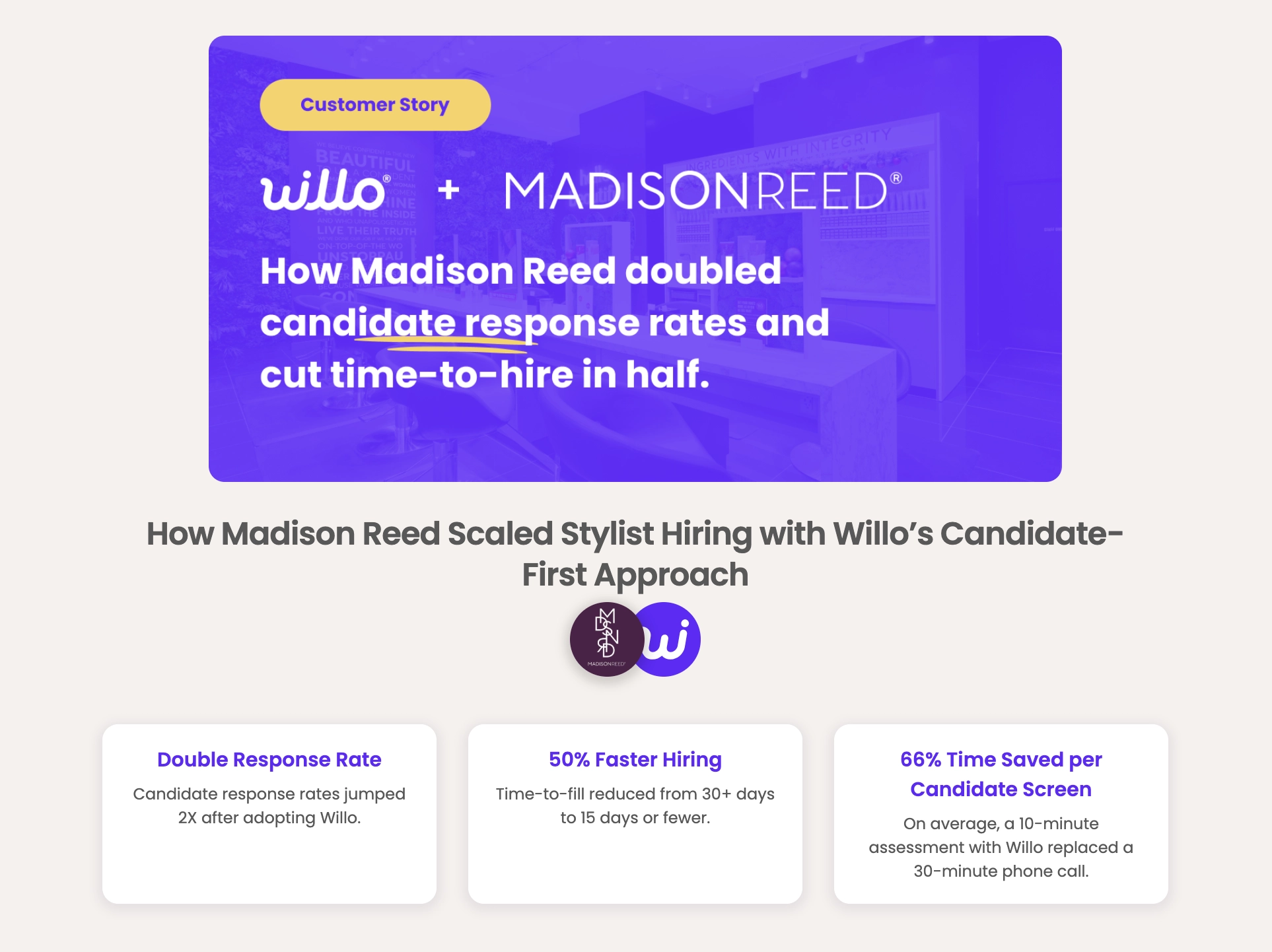
These features and capabilities helped Madison Reed scale stylist hiring while maintaining the human touch. The fashion brand integrated Willo’s one-way audio/video interviews with its existing ATS, Greenhouse, to double response rates and cut time-to-hire by 50%.
Want a faster way to find strong-fit candidates for your role? Connect Willo to your ATS and screen your candidate pool free for 7 days.
Pros of Using Willo for ATS-synced AI Candidate Screening
- Removes hiring workflow friction with native and custom integrations across the most-used ATS, CRM, and job board platforms. No need for expensive engineering resources and no worries about missing out on top candidates, doing manual data entries, or experiencing incomplete candidate sync.
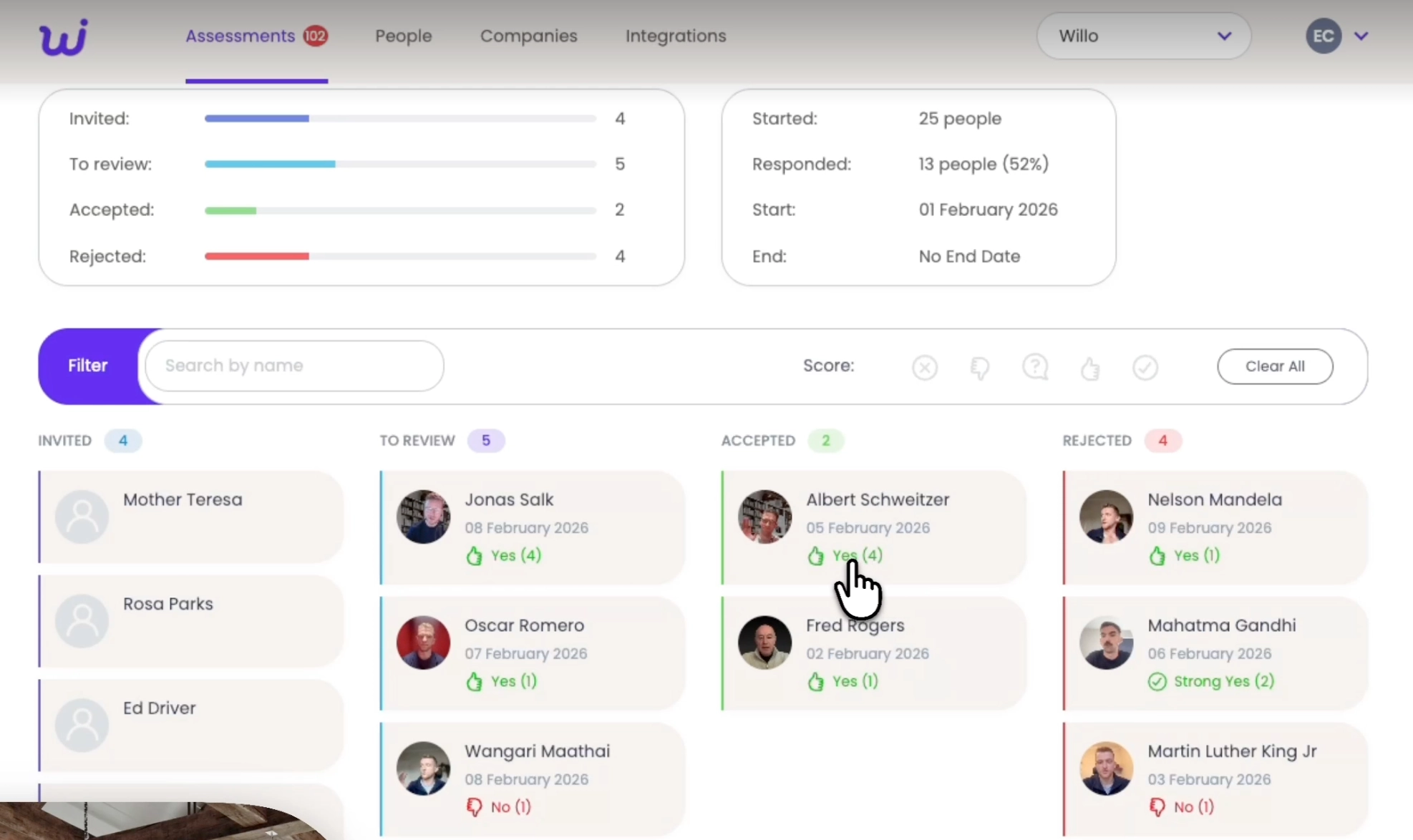
- Humans make the final judgment call, not AI. You set the most important hiring criteria for each role and can adjust them at any time. The platform uses AI only to score candidate responses against these requirements and highlight strong profiles accordingly. So essentially, you get to decide who scales through, not black-box AI algorithms.
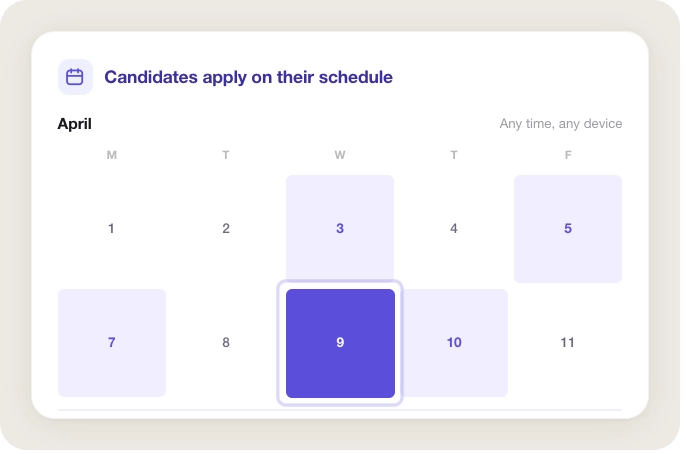
- Prevents interview scheduling delays between stages and enhances the candidate experience. Job candidates share their availability for the next live interview after completing the async screening, and Willo automatically updates your ATS with the details.
Cons of Using Willo for ATS-synced AI Candidate Screening
- No Live interview. At the moment, Willo does not enable live video interviews, although candidates can share their availability for them right at the end of their async screening. Selected times update into connected ATS tools accordingly.
- No automated candidate scoring. Willo does not currently offer automated AI scoring and hiring decision-making. However, this setup ensures you’re fully involved in the entire recruitment lifecycle, promoting transparency and eliminating bias.
Willo Pricing
Willo offers three pricing tiers with varying ATS integration capabilities:
- Growth: $279/month with access to Zapier and Integrately-powered ATS integrations.
- Scale: $409/month, including native integration to over 10 major ATS platforms, such as Greenhouse, PinPoint, Lever, and more. Also supports custom ATS syncs via Zapier, Integrately, and Willo’s OpenAPI.
- Custom enterprise pricing: Gives access to even more ATS systems and is customizable to specific hiring requirements.
2. Eightfold
Best for: Resume screening and matching
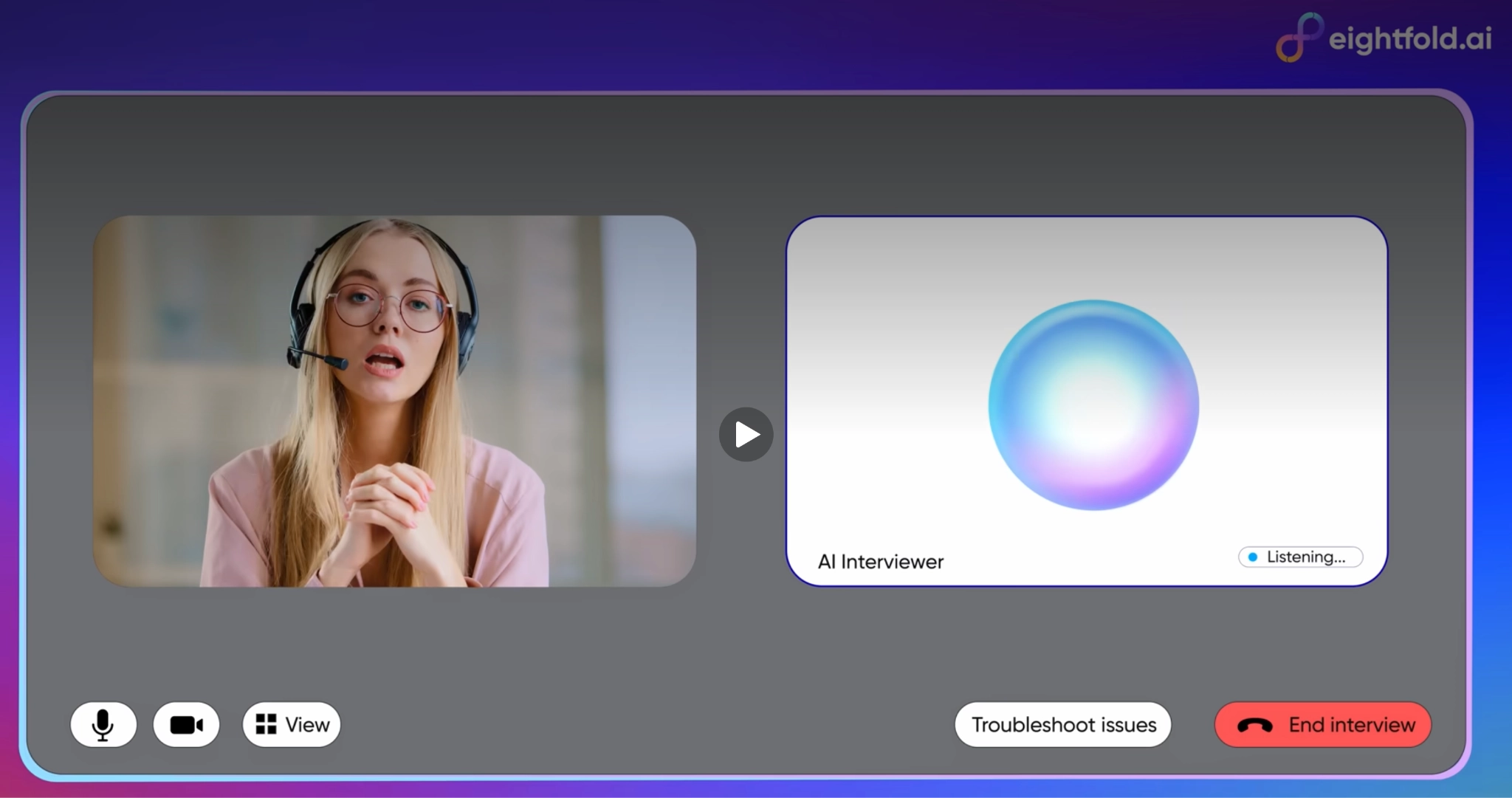
Eightfold is an agentic AI talent discovery and candidate screening platform that matches people to roles based on the capabilities their resume signals.
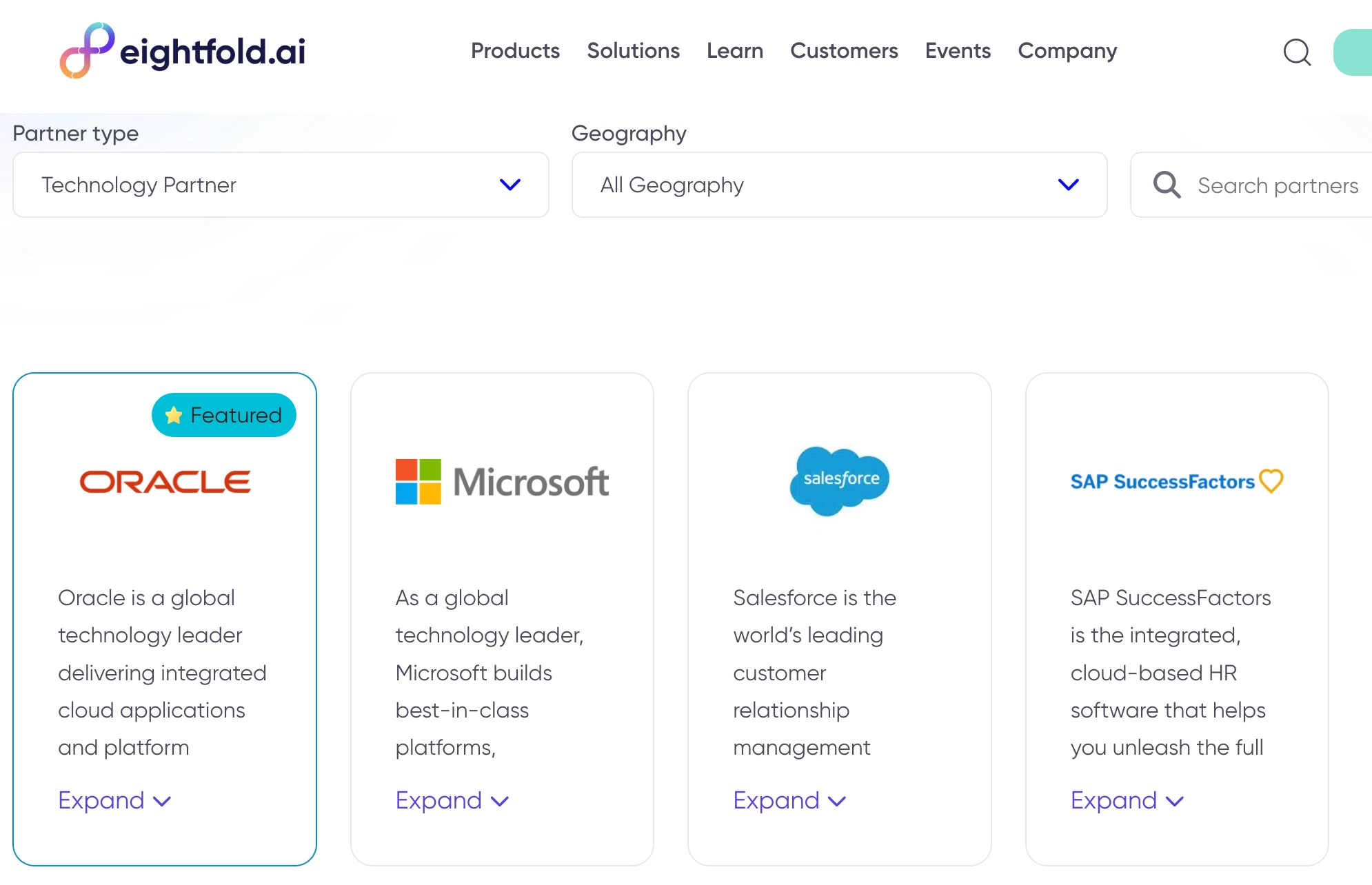
Eightfold sits atop your HR tech stack, including ATS, CRM, and HRIS systems from technology partners such as Oracle and SAP SuccessFactors. And its sales-led pricing, which scales with company size and requirements, makes it well-suited for enterprise-scale teams.
Pros
- Supports two-way ATS integrations that keep talent records up to date, enabling rediscovery, skills-based candidate matching, and internal mobility.
- Analyzes resumes and ranks candidate profiles based on transferable skills and upskilling potential rather than relying solely on keywords.
- Matches top contenders to roles from both existing talent pools with passive candidates and inbound applications from active job seekers, instead of limiting triage to one or the other.
Cons
- Creates procurement planning difficulties since there’s no publicly available pricing information or a clear breakdown of exactly how its technology partnerships enable ATS integrations.
- An AI interviewer may feel impersonal and robotic, and the platform does not currently support one-way video or audio interviews.
- Messaging and features are more tailored to larger firms, not SMBs or lean recruiting teams managing high-volume hiring.
Pricing
Reach out to the Eightfold team for custom quotes.
3. Qualifi
Best for: Phone-based candidate screening
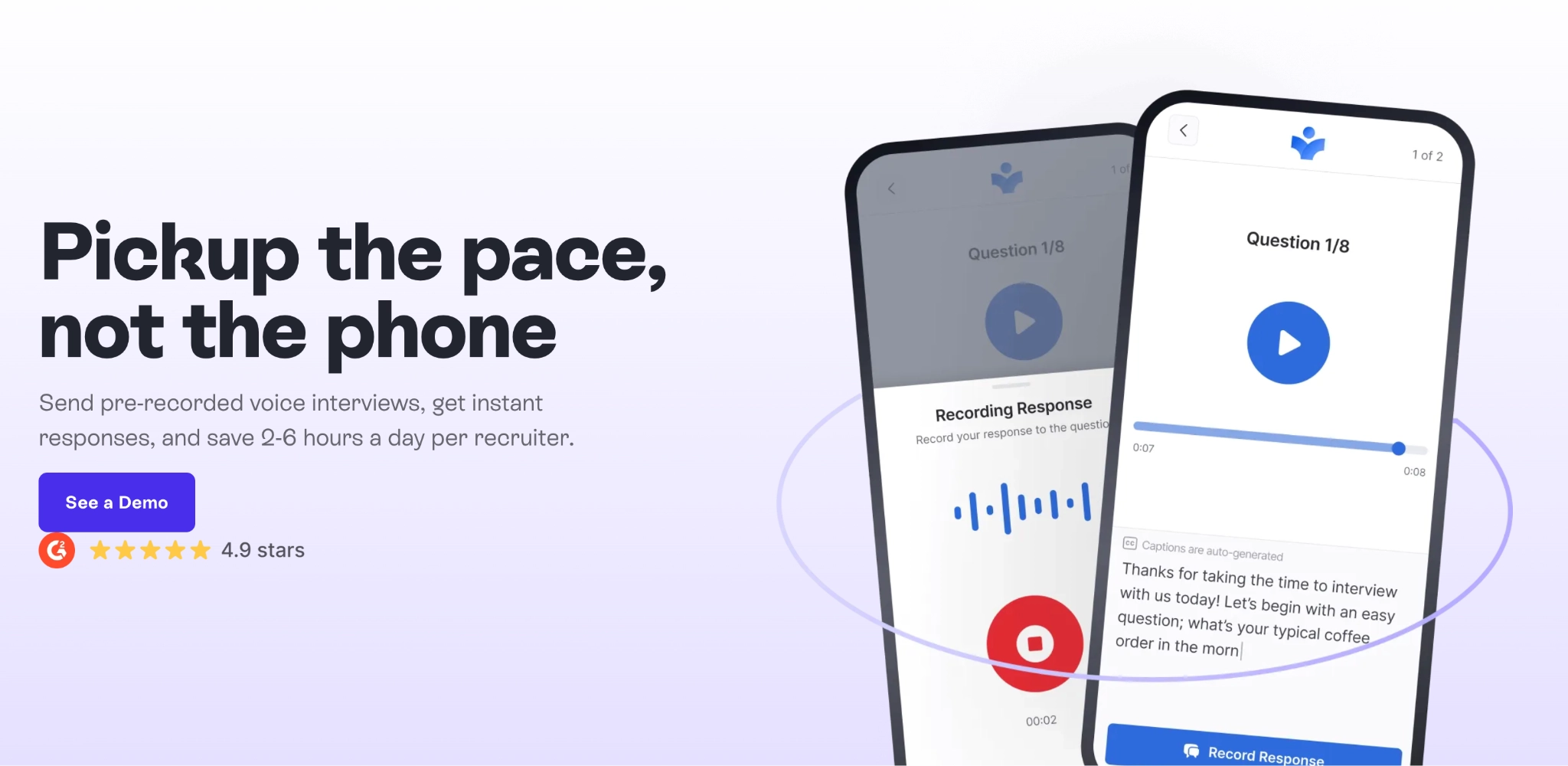
Qualifi is a virtual interview tool that lets you run automated phone interviews at scale. Candidates call in, or you set up the system to call them; they then listen to pre-recorded questions and answer when they’re ready.
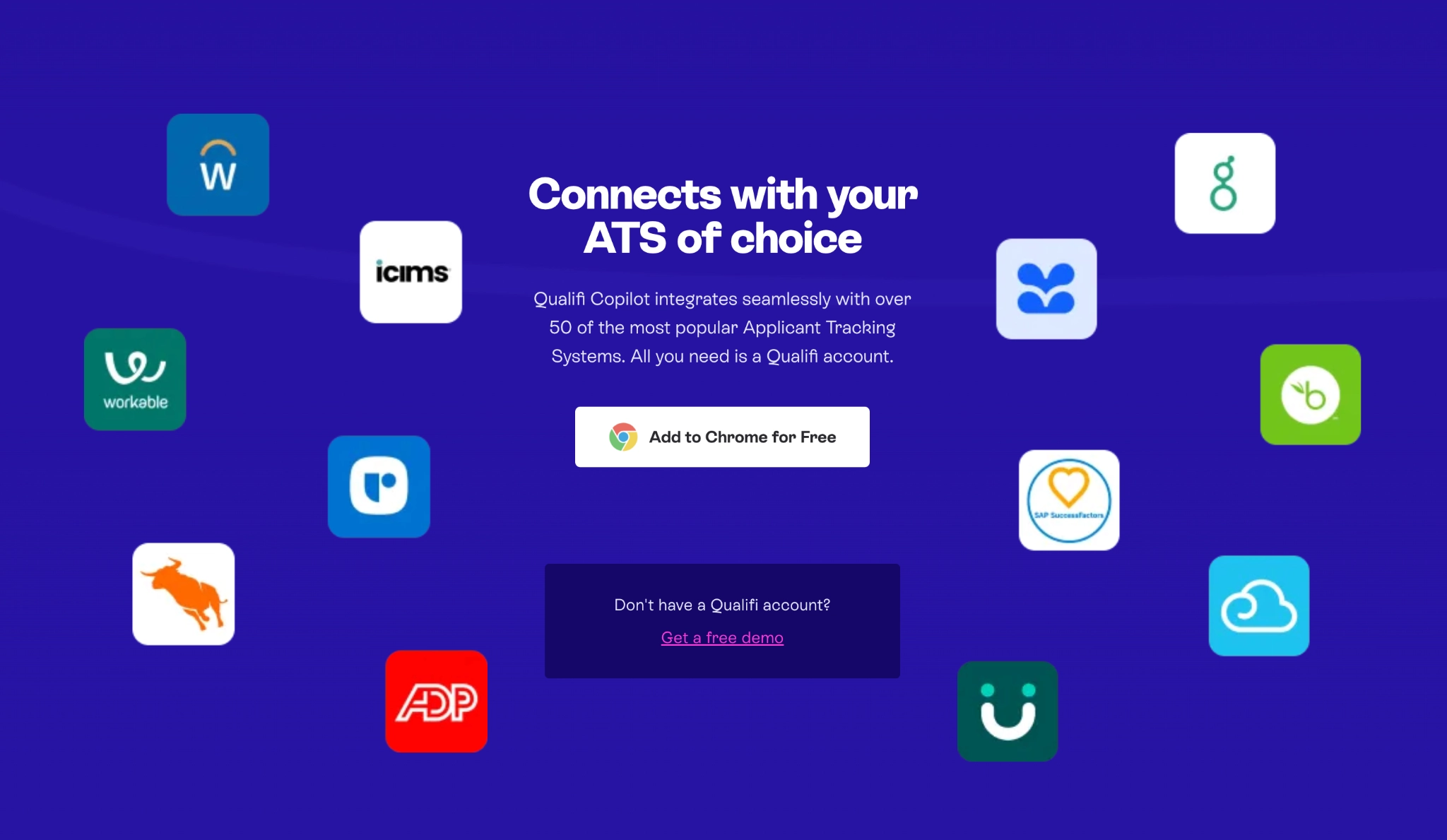
The platform offers Qualifi Copilot, an AI-powered Chrome extension that adds interview insights directly into ATS systems to optimize review and data-driven decision-making workflows.
Pros
- Easy follow-up interview scheduling via its AI Copilot, ensuring a hassle-free continuation of the hiring cycle.
- ATS-integrated interview insights, such as screening responses and auto-transcriptions.
- Comprehensive candidate profiles within your ATS, with details like AI summaries and keyword matches updated directly from survey responses.
Cons
- Auto-transcriptions may struggle with non-native speakers and accents, necessitating manual review to ensure fair evaluation despite solid ATS integration.
- Audio-only screening means no visual cues or work-sample assessment support. Recruiters and hiring managers may still need to combine phone screens with short tasks and live or one-way video interviews later on to more effectively assess expertise.
- Since they're faceless, pre-recorded phone screenings can reduce candidate engagement and potentially make them drop off before they ever reach your ATS.
Pricing
Qualifi offers customized pricing plans tailored to your unique business needs.
4. CodeSignal
Best for: Online assessment proctoring
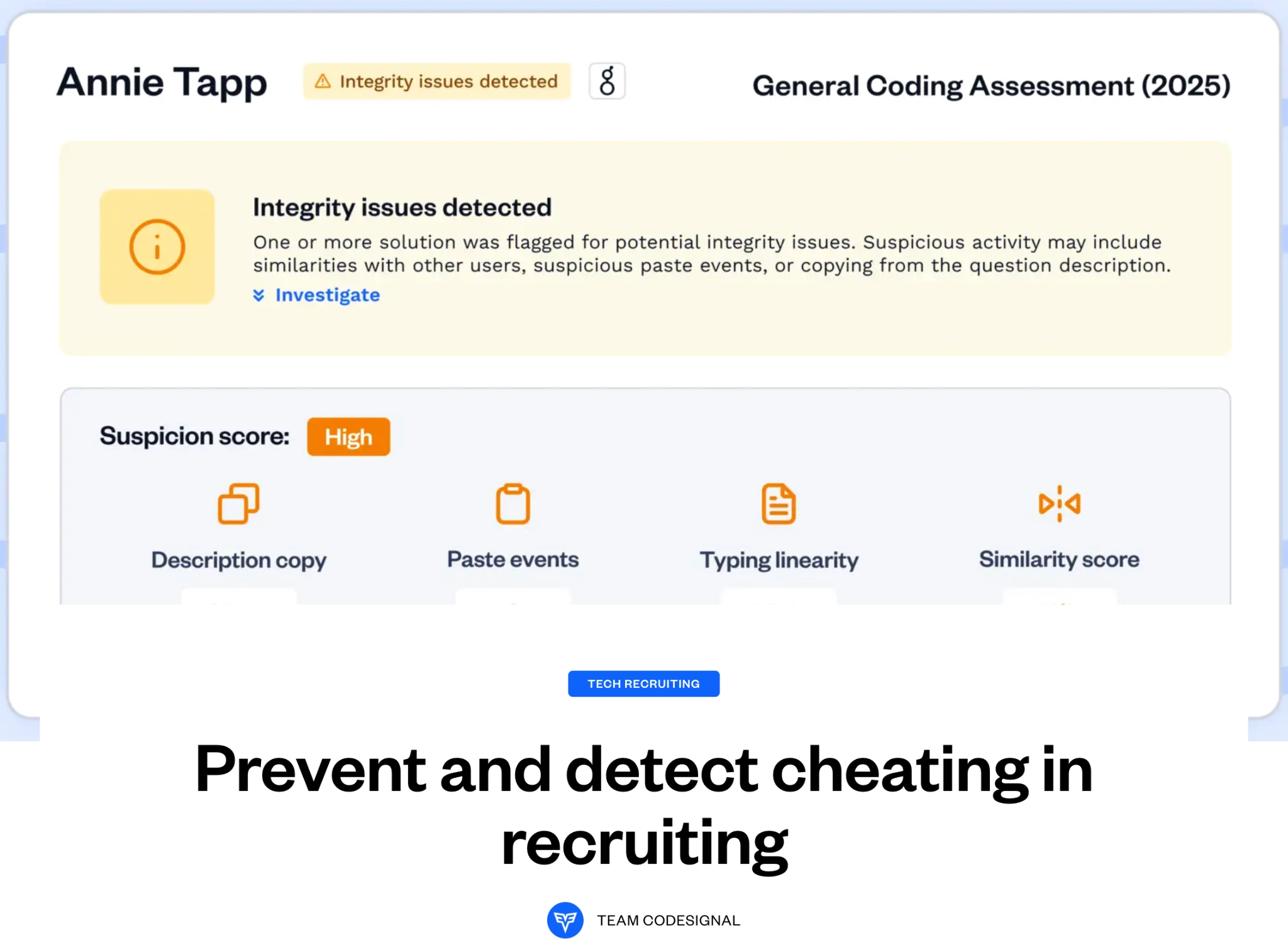
CodeSignal is an AI-native skills validation platform that enables fair, cheating-free candidate screening via its built-in online proctoring feature. This feature is also what makes CodeSignal ideal for teams filling engineering and data roles, as it helps recruiters administer hands-on, job-relevant test projects.
The tool boasts a selection of partners and integrations, including major ATS systems (Greenhouse, Jobvite, SmartRecruiters, etc.), making it easy to integrate with your current hiring processes.
Pros
- Streamlines technical hiring workflows through robust ATS integrations with platforms like Greenhouse and Lever.
- Links technical assessment data to your candidate records, ensuring each profile is well-rounded and ready for a comprehensive evaluation.
- AI interviews aid in volume recruitment and reduce bias without increasing the hiring team's headcount or breaking ATS connections.
Cons
- Narrowly focuses on technical assessments, making it unsuitable for filling non-technical roles or assessing soft skills.
- Occasional slow load times and platform glitches, which can disrupt screening processes or discourage candidates from completing assessments.
- Pricing information is not live on the website, so prospects need to book demos to get an idea of the total cost of ownership.
Pricing
Contact the CodeSignal team for a custom cost breakdown.
5. Hirevue
Best for: AI assessments and skill validation
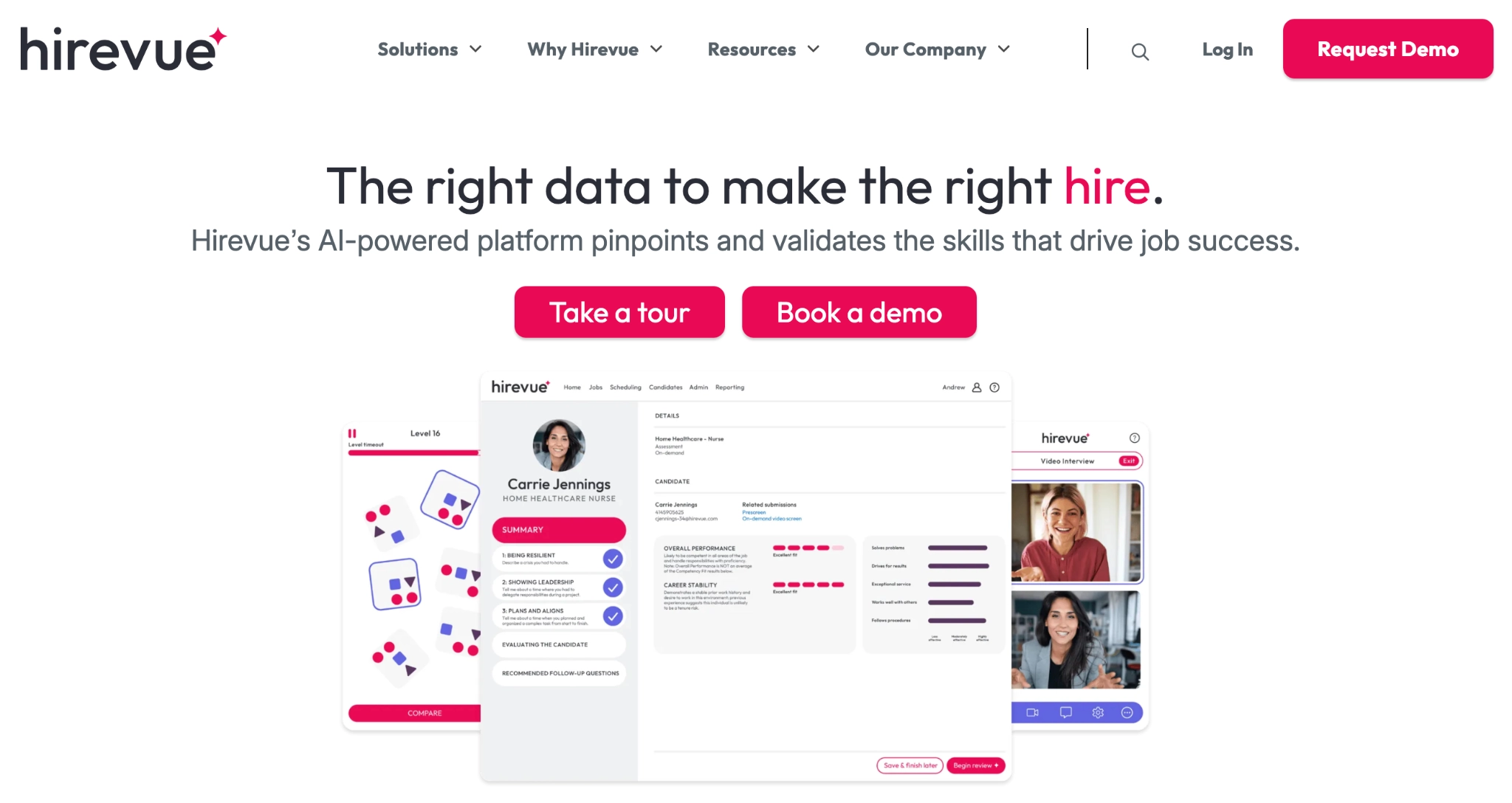
Hirevue is an AI-powered recruiting tool with role-specific skills validation features like virtual job tryouts and smart assessments that enable candidate screening. It helps recruiters engage candidates and supports hiring workflow automation from sourcing to final offer.
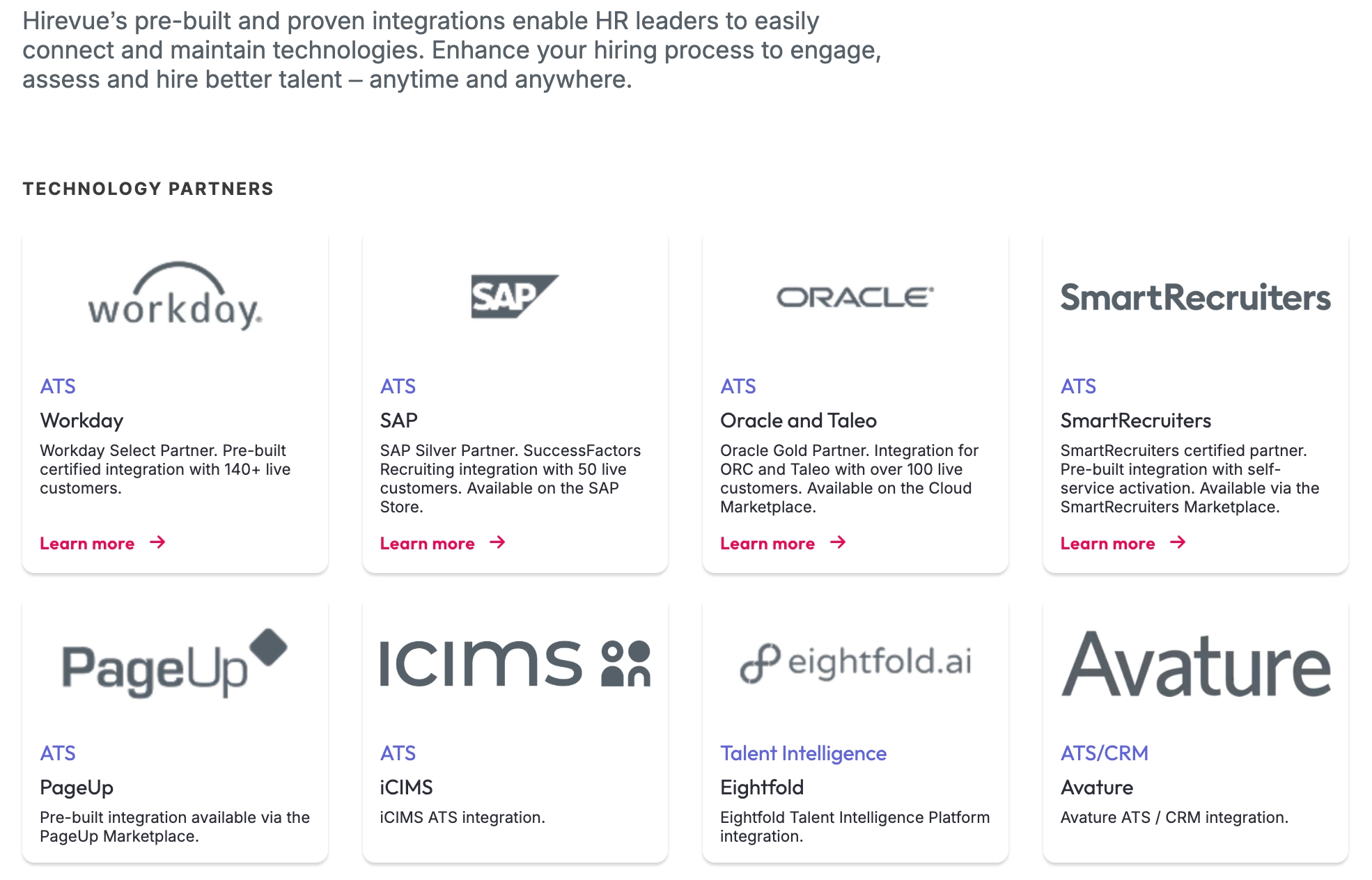
The app integrates smoothly with enterprise ATS platforms such as Workday, Oracle, and Greenhouse. And for organizations seeking third-party support to implement custom HR solutions with Hirevue, official consulting partners like Cornerstone, Deloitte, and AMS can help.
Pros
- Enables video interviewing and automatic candidate data flow from screening software (Hirevue) to your ATS of choice.
- Offers in-depth candidate analytics dashboards and predictive insights on potential job performance before making any hire.
- Beyond ATS technology integrations, certified partners like Deloitte support platform implementation.
Cons
- Sales-led pricing that typically runs into thousands of dollars, especially as team size and hiring volume increase.
- Setting up the platform can be complex and time-consuming, hence why users sometimes require initial training or turn to implementation partners like Cornerstone.
- Lists only 11 ATS integrations publicly, and if the platform you use isn’t one of them, you may have to build a custom connection or settle for manual back and forth.
Pricing
Request a Hirevue demo or contact the team directly for pricing information.
6. Workable
Best for: ATS-based screening
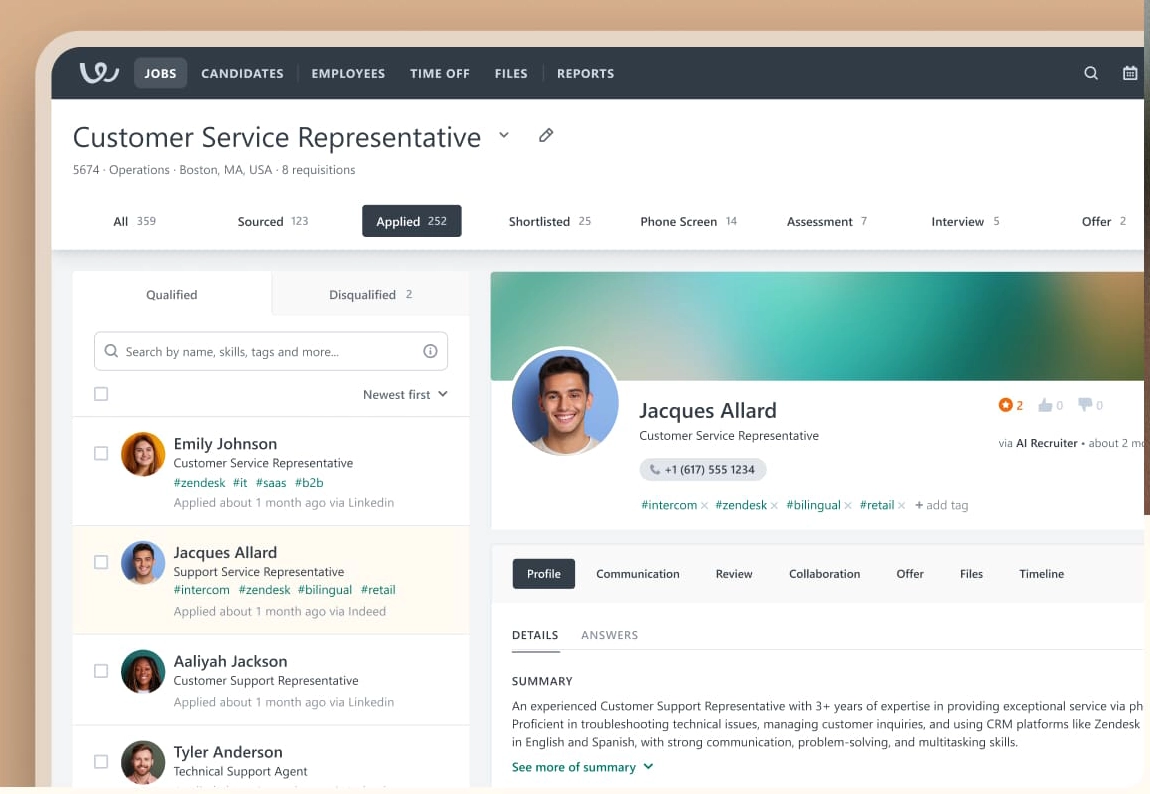
Workable is a widely used all-in-one HR tool that enables candidate sourcing, screening, and auto-scoring in a single centralized space. Beyond hiring, Workable offers employee data management, time tracking, and payroll processing features.
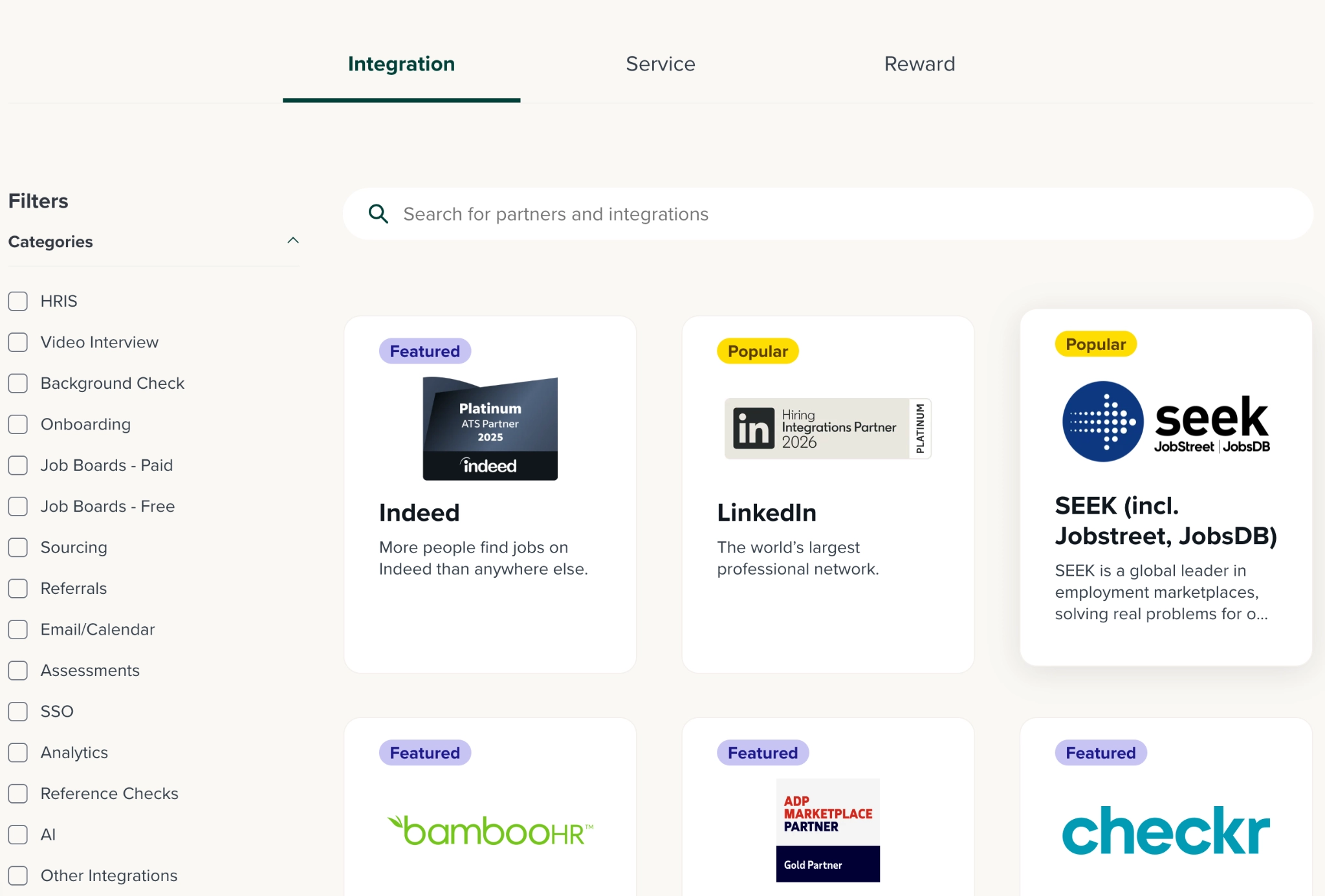
While the platform also has a built-in applicant tracking system, it integrates with over 200 other ATS platforms and recruiting tools, including Willo.
Pros
- Since it already offers an ATS, you don’t necessarily need to sync it with another. Simply focus on connecting to tools that add elements the platform doesn’t offer, such as async video/audio interviews.
- Combines multiple structured hiring functions (one of which is a native ATS) with hundreds of integrations (including to other ATS systems and recruitment tools) to create a streamlined talent acquisition process.
- SMBs and mid-market teams that want recruiting and HR in one system will enjoy Workable’s AI screening features.
Cons
- The platform’s extensive AI feature set can get overwhelming, distracting, or friction-ridden when combined with external ATS tools or custom APIs.
- Custom reports are only available on Workable’s highest-priced tier (which costs more as team size grows), so you’ll need a big budget to access deep hiring data syncing with your external ATS.
- If any connected third-party ATS updates its underlying talent data infrastructure, linked Workable dashboards and workflows may break, requiring manual reconciliation.
Pricing
Workable pricing starts at $299/month billed annually and $360/month billed monthly for teams of 1 to 20 employees. However, the subscription fee increases with headcount, reaching $4,749/month (total yearly bill paid upfront) for 801 to 1000 employees, while custom quotes are available for larger organizations.
7. Paradox (Olivia)
Best for: Conversational screening
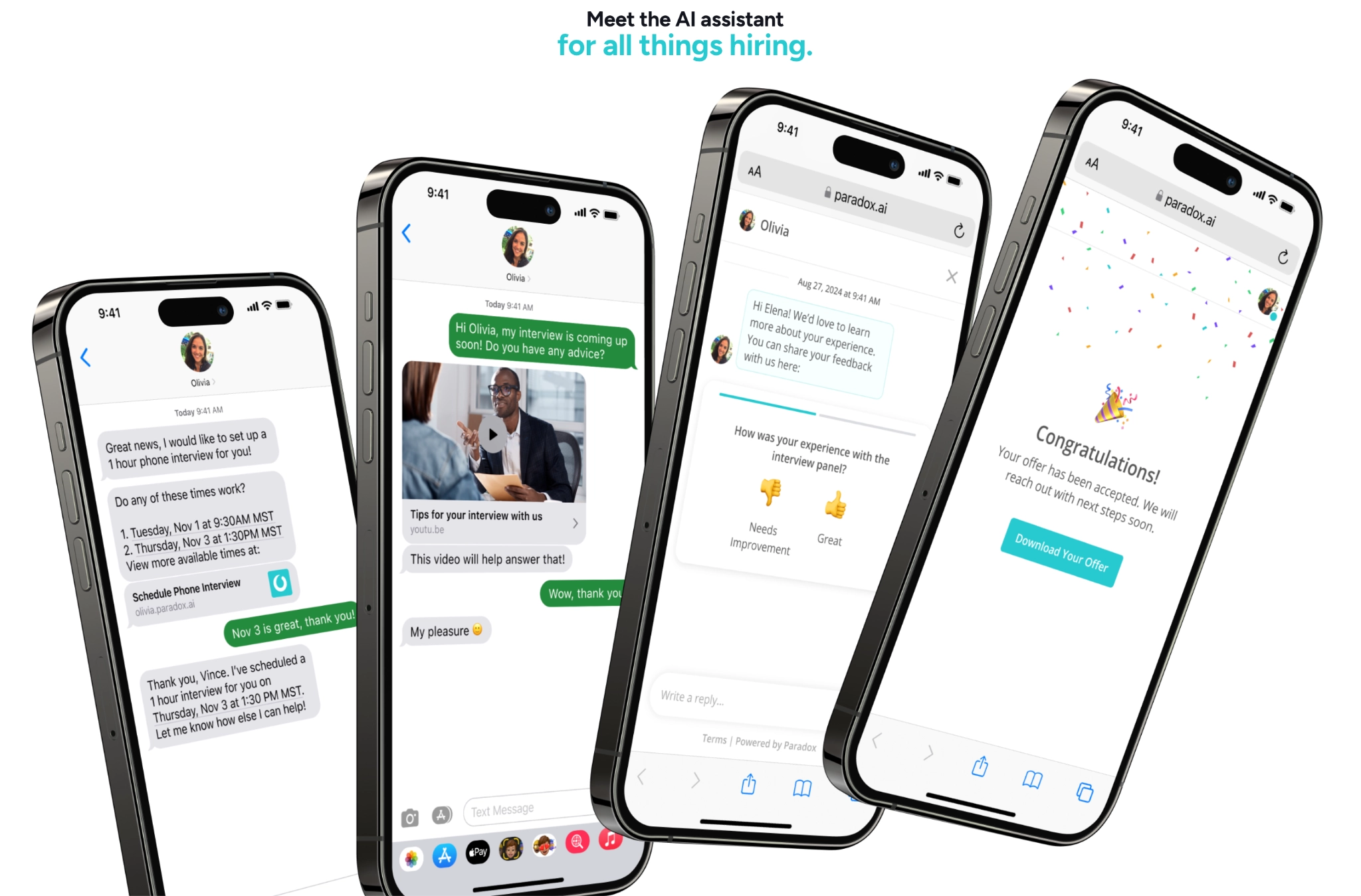
Owned by Workday, Paradox is a conversational AI platform for streamlining candidate evaluation. It offers an AI assistant, Olivia, that validates relevant qualifications upfront via web chat or text messaging and fast-tracks qualified candidates to the next stage accordingly.
By integrating Paradox with Workday (or any of its other 15+ native ATS integrations), you enjoy the convenience of conversation-based screening and a seamless flow of shortlisted candidate data across connected systems.
Pros
- Provides customer success managers to help teams implement the platform and any ATS or other relevant software integration.
- Improves recruitment efficiency by keeping early job screening async and updating the app’s own ATS or an external one with shortlisted candidates.
- Ensures your team isn’t stretched too thin scheduling meeting times while handling multiple requisitions, since only shortlisted candidates get to the live interview stage.
Cons
- If your ATS of choice isn’t natively supported, you’ll need to either switch platforms or invest resources (time, money, and manpower) into building a custom solution.
- Async screening happens via chat or text, so there’s no audio or visual context to assess body language, tone, or communication skills.
- No public pricing information, so prospects can only get quotes by contacting the team.
Pricing
If you request a Paradox demo, the team will schedule it and create custom pricing tailored to your hiring needs.
Use an AI tool that adapts to your existing workflow and never leaves you lost
With a resume screener like EightFold, you can evaluate work experience in-depth, but still can’t fully assess communication skills or culture fit. A phone screener like Qualifi screens candidates at scale but won’t get any visual signals since it’s audio-based.
Willo replaces basic resume parsing and phone-based screening with async audio and video assessments. It includes subtle anti-cheating mechanisms that aren’t as stifling as typical online proctoring tools. And, it plugs smoothly into multiple ATS tools, adapting to your normal hiring flow while offering 24/7 support so you’re never stuck.
Willo helps teams like WillowTree screen over 17,000 candidates yearly, integrating seamlessly and securely with the company’s enterprise ATS and eliminating manual copy-pasting headaches. Try the free 7-day trial or book a demo today to see how Willo can transform your AI candidate screening with seamless ATS integration.