Lots of very talented people are bad at reporting their skills, experience, and potential. Some feel pressure to exaggerate, others feel awkward praising themselves, and both scenarios mean you’re not getting an accurate picture of how a person will perform in the job.
This is one of the reasons 76.9% of hiring teams have encountered AI-generated or AI-assisted applications. But while AI can make any candidate look perfect on paper, that perfection may not carry into practical scenarios.
Talent assessment tools provide a systematic way for organizations to solve this problem, providing valuable insights into the personalities and skill sets of potential hires. But most hiring teams don’t know where to begin, how to design their assessment tools, or the best practices.
In this Willo guide, we’ll cover:
- The different types of talent assessment tools,
- Outstanding software solutions to consider, and
- How to choose the best option for your candidate screening needs.
The Types Of Talent Assessment Tools (And What Shapes Your Choice)
Talent assessment is broadly classified into technical and soft skills assessments. But this category can cover a range of important and more specific areas, including aptitude, personality, communication, and teamwork. Here are the six main buckets of talent assessment tools you need to know.
Structured Interviews
Structured interviews measure role fit by asking every candidate the same screening questions, in the same order. Once responses come in, hiring teams score applicants against a standardized rubric to ensure consistent comparisons, reduce bias, and cut time-to-hire.
Research by Sackett et al ranks structured interviews among the strongest selection methods, and that matters even more today as recruiters contend with high application volumes and AI-assisted applications. In our 2026 Hiring Trends Report, 69.6% of hiring teams said they use structured interviews as a fairness practice, while 76.9% have encountered AI-assisted applications.
This method only measures what candidates can share during an interview, though, so they're often most valuable when paired with work samples, technical assessments, or job simulations.
Skills and Technical Tests
Skills and technical assessments measure a candidate's ability to deliver if they get hired. Depending on the role, these tests take different forms, e.g., coding challenges for software engineers, writing samples for content marketers, spreadsheet exercises for finance roles, or design briefs for creatives.
Skills and technical tests require candidates to prove their claims, so AI-polished applications can’t easily mask significant proficiency gaps, and employers can save on hiring and training costs over time. This explains why 40% of teams are moving away from resume-first hiring, while 54.8% prefer hands-on skills demonstrations.
Despite their huge benefits, these tests take time to design and evaluate, and may overlook qualities and soft skills such as communication, collaboration, or learning potential. However, teams that take the time to create and use them alongside structured interviews or behavioral tests gain richer candidate context.
Cognitive and Aptitude Tests
Cognitive and aptitude tests evaluate a candidate's general mental ability, from logical and numerical reasoning to problem-solving, verbal comprehension, and learning agility. Instead of assessing existing job knowledge, they evaluate how quickly applicants process information and adapt to new challenges.
These assessments are quite useful for graduate hiring and scenarios where candidates have limited professional experience, as they help predict a person's ability to learn on the job.
However, Berry et al. recently found that removing general cognitive ability tests from selection processes has little impact on predictive validity while substantially reducing adverse impacts, such as unintended bias against certain demographics.
Cognitive and aptitude tests also don't measure job-specific skills, motivation, or interpersonal abilities, making them most effective when used as part of a broader assessment strategy.
Personality and Behavioral Tests
Personality and behavioral assessments check workplace traits that technical tests can't, e.g., communication style, emotional intelligence, resilience, teamwork, leadership potential, and stress management. They explore how candidates will likely work with others, handle challenges, and keep up with a role’s day-to-day demands.
Some platforms now deliver these assessments through game-based experiences. And while applicants generally find them fairer and more satisfying, a 2022 systematic review concluded that there still isn't enough evidence to recommend game-based assessments over traditional psychometric tests.
Rather than as a standalone method, use personality assessments to check if a shortlisted candidate’s behavioral profile aligns with the abilities they claimed and demonstrated in earlier structured interviews and skills-based assessments.
For general hiring, stick to psychologist-approved tests like the Hogan Personality Inventory (HPI). But for roles in law enforcement, public safety, or healthcare, where psychological fitness is a genuine job requirement, a tool like the Minnesota Multiphasic Personality Inventory (MMPI) is more fitting.
Job Simulations and Work Samples
Job simulations help hiring teams observe how candidates think and solve work-related problems by creating realistic scenarios and take-home assignments for them to complete, or relying on existing role-relevant portfolios.
As traditional credentials become less reliable, job simulations and work samples are taking a more prominent role, with more teams shifting towards skills-based hiring over resume screening. Job simulations and work samples fit right into this gap, as they help organizations more accurately evaluate real-world abilities and identify top-quality candidates to advance.
Within this type of assessment, there are several subtypes that support data-driven, low-bias decisions, including:
- Role-play simulations, where candidates act out workplace scenarios with team members to show communication, problem-solving, and customer service skills.
- Work sample assessments that involve applicants submitting job-related projects that hiring teams review against predefined criteria.
- In-basket exercises, which ask candidates to prioritize and address simulated workplace emails, memos, requests, or other competing tasks to evaluate organization, prioritization, and decision-making.
- AR and VR simulations that place candidates in realistic, complex, or high-risk workplace scenarios to observe their performance, particularly popular in industries such as healthcare, aviation, and manufacturing.
Note: If candidates have to do real work (e.g., write a blog you intend to publish) or complete an activity that takes significant time, offer compensation for their effort, regardless of hiring outcome.
Situational Judgment Tests
Situational judgment tests (SJTs) give candidates realistic workplace scenarios and ask them to choose or rank their most likely response. SJTs show how candidates navigate interpersonal, ethical, and work-related decisions, providing employers with more hiring signals to assess them.
Since every applicant responds to the same scenarios, SJTs also provide a structured way to compare judgment at scale and are quite valuable when filling early-career or customer-facing roles where real-world experience may be limited. A meta-analysis by Christian et al. found SJTs to be valid predictors of job performance, especially when delivered via video vs paper or text-based formats.
The catch with SJTs is that they capture intended (not actual) behavior, so a candidate may choose the right answer in theory but act differently in practice. Teams can fix this by using SJTs as part of an overall screening flow, not in isolation.
Delivering and Scoring Talent Assessments
While talent assessment types define what you're measuring, the way you administer or score them can differ. For example, you can administer the same structured interview in person, live over video, or asynchronously through recorded responses.
Meanwhile, another team might review work samples manually or use AI to summarize responses and match evidence against predefined hiring criteria. Some AI-assisted screening platforms with multiple-choice question functionality can even deliver situational judgment tests seamlessly.
In each of these scenarios, the assessment tool itself doesn’t change, only the delivery or scoring layer. Another reason this distinction matters is that 78.7% of employers still prefer human-led final hiring decisions, with AI and automation software simply improving consistency and efficiency.
But there’s still the challenge of verifying authenticity and preventing cheating. Any unproctored online assessments, whether coding tests, written exercises, or one-way interviews, can only serve as an initial screening step because there's no guarantee that the submitted work reflects the real candidate.
That’s why the best assessment platforms and tech stacks combine authenticity detection with identity verification and human review, helping recruiters verify evidence before advancing candidates.
Talent Assessment Software: The Best Tools for Every Assessment Type
Stronger assessment methods lead to better hiring outcomes and greater organizational value. But choosing the right talent assessment software comes down to the assessment methodologies you plan to use, how you want to deliver and score them, and your hiring volume.
To help you compare your options, we've grouped the best talent assessment software by the assessment methodologies they support. We evaluated each platform based on assessment quality, delivery and scoring capabilities, candidate experience, authenticity and verification features, integrations, scalability, and suitability for different hiring needs.
Best for Structured, Skill-Based Assessments at Scale
Willo
Willo is an intelligent candidate screening platform that helps hiring teams identify top talent through structured, skill-based assessments rather than relying on resumes alone.
It's well-suited to high-volume hiring and graduate recruitment, even if candidates have limited work experience but strong potential that doesn't fit neatly on a CV. By combining structured interviews, knowledge questions, work samples, and richer candidate responses into one consistent workflow, Willo helps recruiters evaluate evidence beyond traditional credentials.
With Willo, talent acquisition teams can deliver structured interviews asynchronously via video, along with objective knockout questions, knowledge checks, text responses, and file uploads. AI then prepares the evidence, including auto-generated transcripts, summaries, comparisons benchmarked against predefined hiring criteria, timestamped evidence, and candidate match scores. And finally, recruiters make final TA decisions.
EDF uses Willo to manage around 17,000 graduate applications each recruitment season, evaluating potential instead of limited experience among early-career candidates. Meanwhile, airBaltic expanded its review capacity from around 70 applicants a week to every applicant without compromising consistency or fairness.
Relevant Features
- Asynchronous interviewing: Willo helps you easily set up asynchronous video interviews and screen up to thousands of candidates. You can collect video, audio, text, or file responses, set time limits and deadlines, and review responses at your own pace.
- Question Generator: When you’re struggling to think of relevant interview questions to ask candidates for specific roles, Willo can automatically suggest them for you. This way, you can ensure better answers that are tailored to what you’re looking for.
- Showcase™: Willo Insights makes it easy to create shortlists and share promising interviews with any internal stakeholder. Use their feedback to add as much context as you need, and make sure every hiring decision is made with consensus.
- Identity verification: Willo’s ID verification features ensure that each of your interviewees is eligible to work for you. Integrate digital right-to-work and background checks into your assessment process, and you’ll receive a certified report supported by the UK Digital Identity and Attributes Trust Framework (UKDIATF).
Pricing
Willo offers a 14-day free trial. Meanwhile, paid plans include Willo Lite ($59/live role) and Willo Enterprise (starts at $3,799/year with discounts for longer contracts).
Pros
- Simple process of writing and organizing interviews
- Easily accessible to your candidates
- Over 50 native ATS integrations including Workday, Greenhouse, and Teamtailor
- 5000+ tool integrations via Zapier and API connectors
- Fully browser-based and works on any device
- Customizable to your brand
- Designed to be scalable enough to handle growth
Cons
- Best suited to structured candidate screening and async interviews; may need complementary assessment platforms for technical roles.
- Supports scheduling and handoffs to live interviews, but doesn't host native live video interviews.
Best Talent Assessment Software for Skills and Technical Tests
TestGorilla
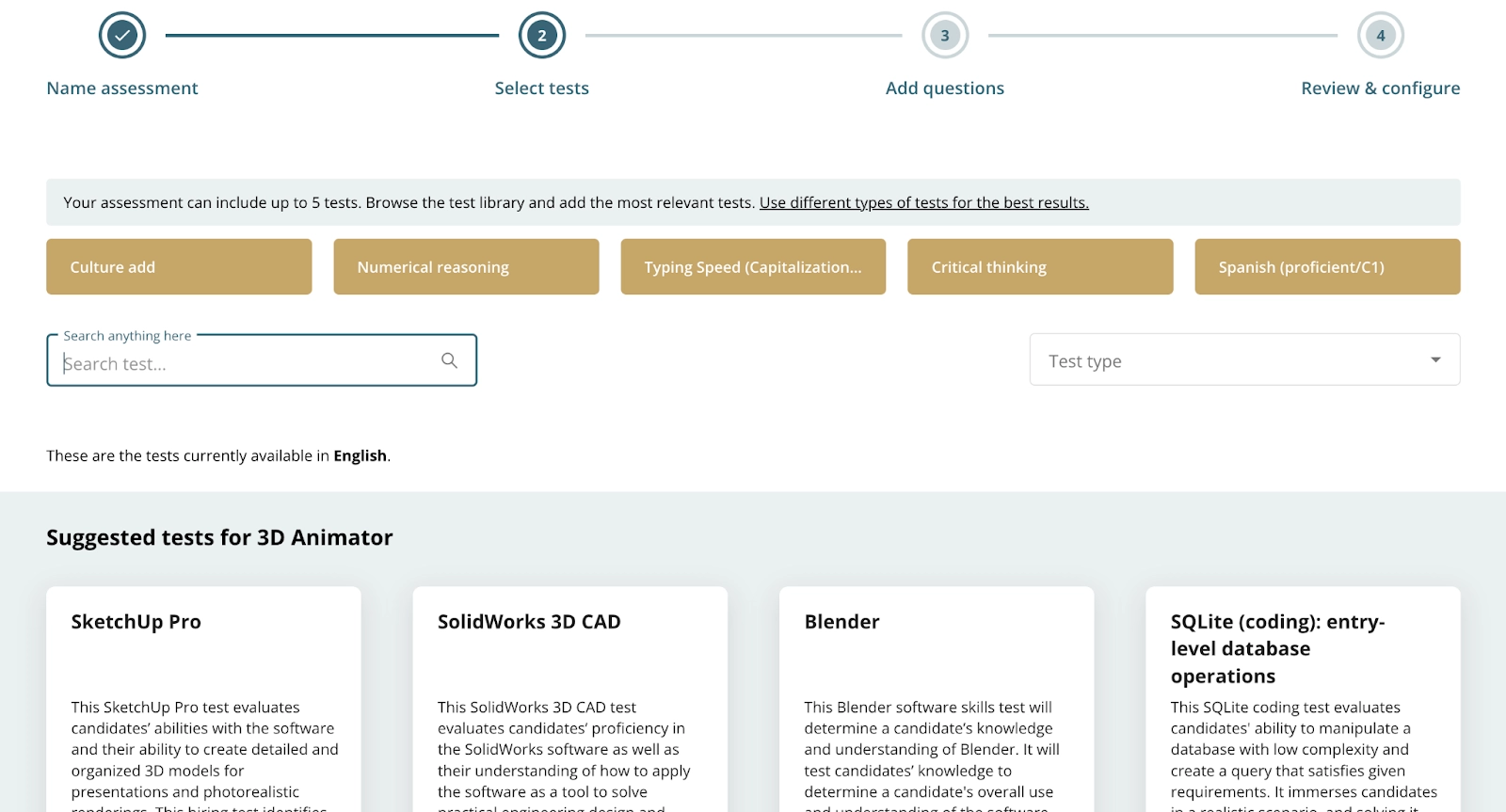
TestGorilla offers a range of pre-employment assessment tools to help organizations screen candidates for unique job requirements.
Relevant Features
- Large assessment library: TestGorilla provides over 300 scientifically validated tests for companies to choose from. Test types include cognitive ability, personality, programming skills, role-specific skills, and situational judgment.
- Video interviews: There’s the option to conduct video interviews to assess candidates’ personalities.
- Automated screening: The tool automatically grades and ranks qualified candidates according to their test scores to streamline your selection process.
- Cheating prevention: The tool provides automatic snapshots of candidates as they take your specified test. You’ll also be notified if a candidate exists in full-screen mode.
Pricing
TestGorilla provides transparent pricing on their website. There’s a free plan, with paid plans starting at $135/month that require annual commitments and offer limited usage credits.
Pros
- Fully customizable
- Easily accessible to candidates through shareable links
- Candidates are automatically ranked
- Mobile friendly
Cons
- Customer support could be improved
- Intermediate-level questions are more difficult than expected
Codility
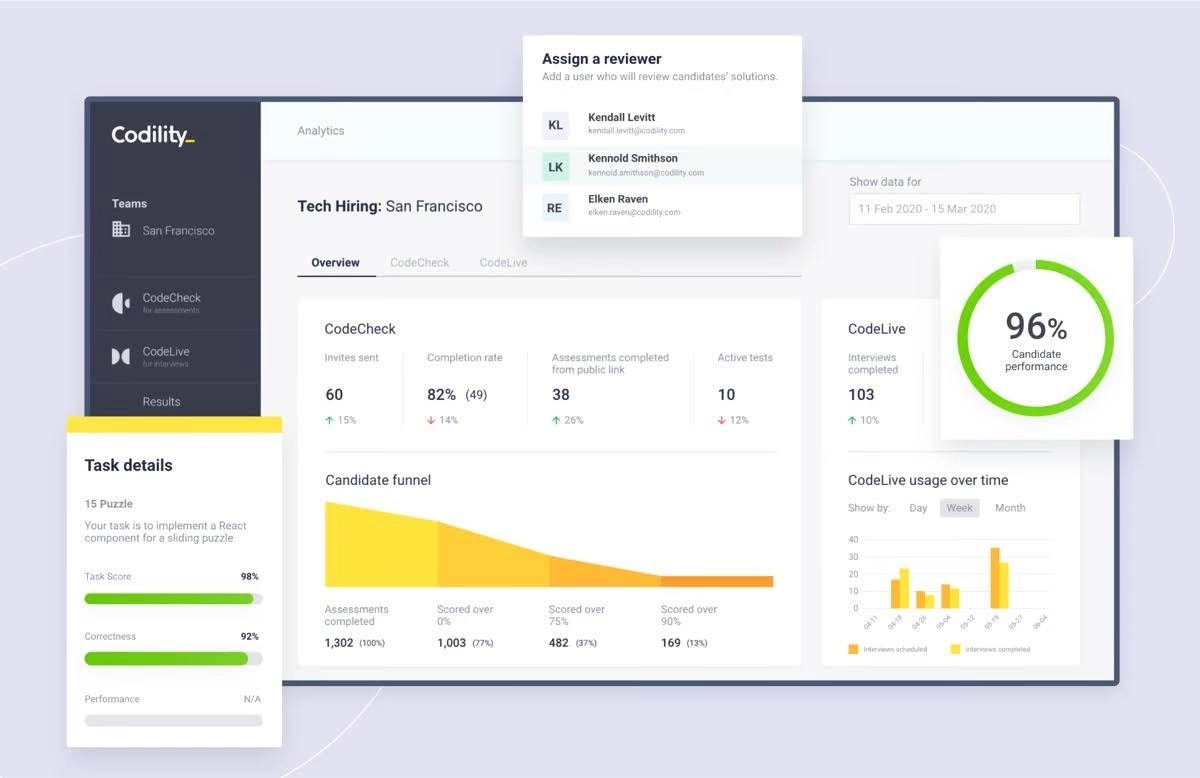
Codility is an online talent assessment platform that evaluates developers’ coding proficiency across more than 20 programming languages.
Relevant Features
- CodeLive: A real-time coding interview tool that allows interviewers to conduct live coding interviews with candidates.
- CodeCheck: An automated coding assessment feature that evaluates candidates' code for correctness, performance, and edge cases.
- Plagiarism Detection: Algorithms to detect similarities and potential plagiarism in candidates' code submissions, ensuring the integrity of the assessment.
- Task Library: A library of pre-built coding tasks across various difficulty levels and programming languages.
Pricing
Interested users need to contact Codility for a quote.
Pros
- Quick and easy to use
- Great test catalog
- Nice UI with clear questions
Cons
- No questions to assess vanilla JavaScript proficiency
- Strict time limits and automated evaluation can affect candidate experience and employer brand
HackerRank
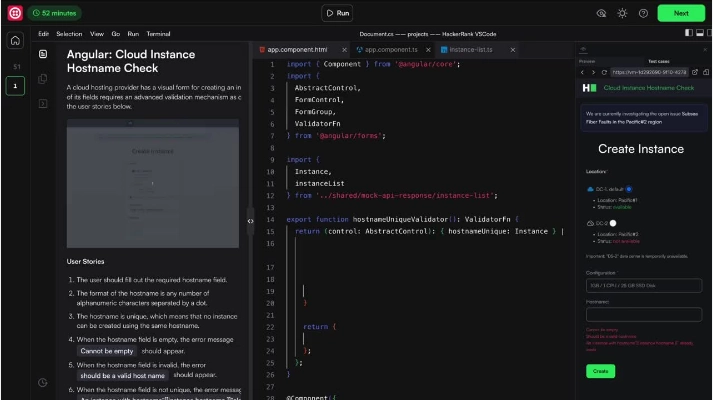
HackerRank is a developer hiring platform that helps organizations evaluate software engineers through coding assessments and technical interviews.
Relevant Features
- Coding assessments: Evaluate candidates using customizable coding challenges across more than 20 programming languages and technical domains.
- Live coding interviews: Interviewers and candidates can collaborate in a shared coding environment, making it easier to assess problem-solving skills in real time.
- Question library: Hundreds of pre-built coding challenges and role-specific tests reduce the time needed to create assessments from scratch.
- Plagiarism detection: Automated checks flag suspicious similarities in code submissions to help maintain the integrity of your hiring process.
Pricing
HackerRank lists its pricing on its website. Paid plans start at $82/month when billed annually, with monthly billing available for added flexibility.
Pros
- Extensive question library
- Highly customizable assessments
- Effective live coding and interview tools
Cons
- Custom assessments can take time to create
- AI detection and proctoring could be improved
CodeSignal
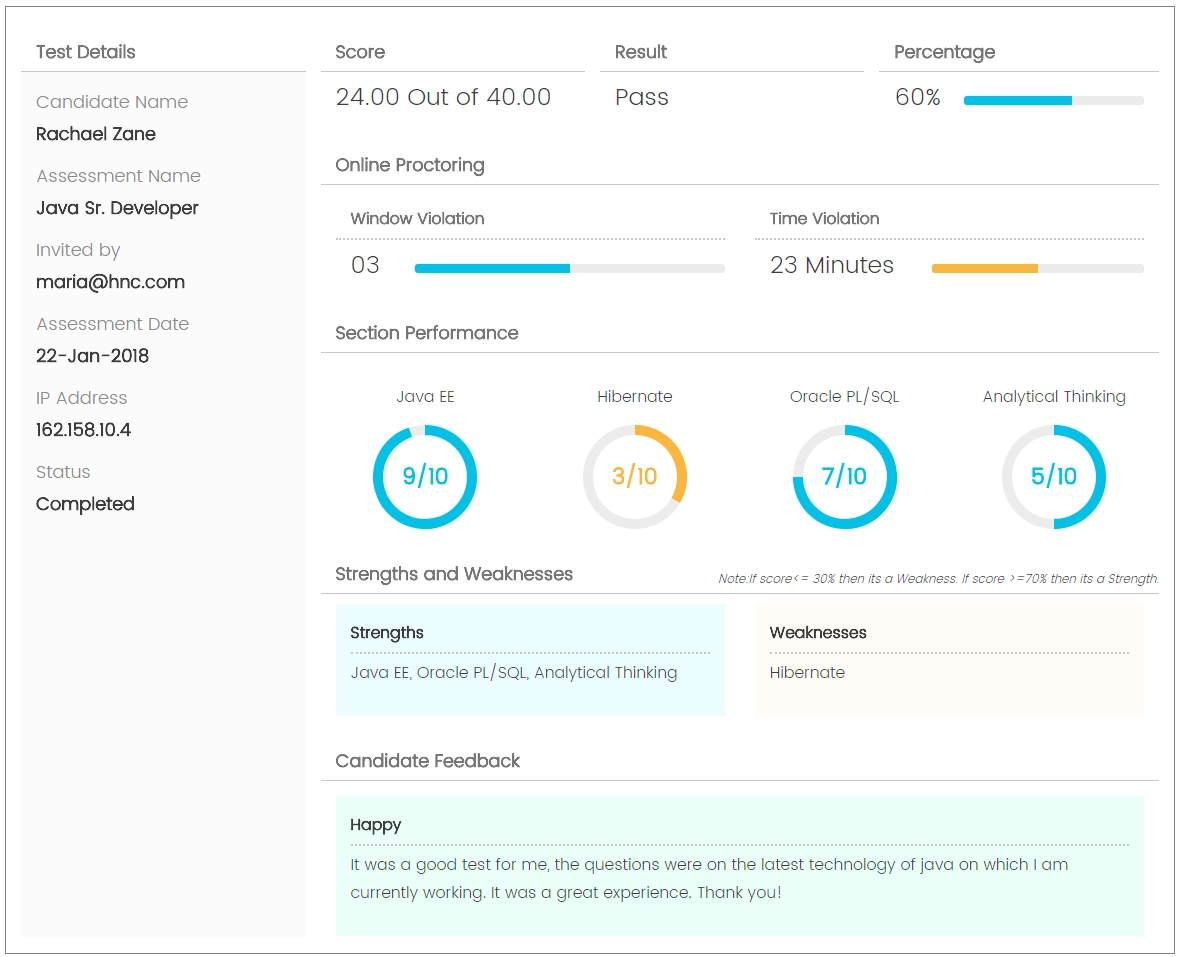
CodeSignal is a skills assessment platform that measures technical talent using standardized coding tests and AI-powered evaluations.
Relevant Features
- Skill gap analysis: iMocha’s platform can help you identify candidates' skill gaps for your specific job roles.
- Live interviews: The platform allows you to conduct live interviews with top-scoring candidates and up to three interviewers.
- Qualitative insights: The tool benchmarks skill proficiency and gives you actionable insights to enhance your employees’ career profiles.
Pricing
You need to request a quote from iMocha’s website.
Pros
- Tailored to remote-based companies
- Cheating prevention for assessments
- Supports hiring team collaboration
- Reports on candidate engagement
Cons
- Could be more user-friendly
- Not enough flexibility to customize tests
Best for Cognitive and Aptitude Tests
Criteria Corp
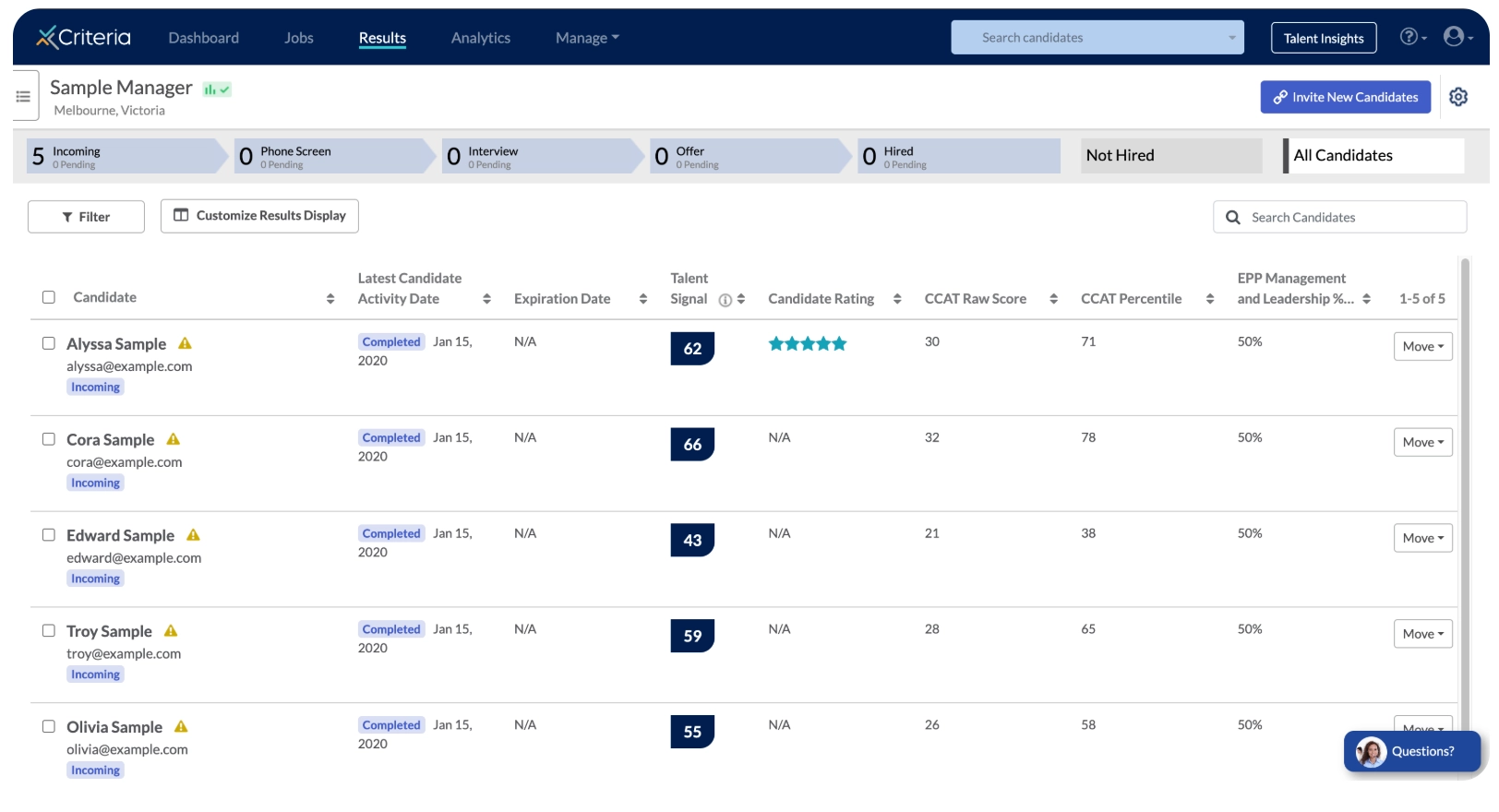
Criteria Corp is a pre-employment testing software designed to help organizations predict job performance through scientifically validated assessments of cognitive abilities, personality, emotional intelligence, and skills. It also includes structured interviewing tools to support more objective hiring decisions.
Relevant Features
- Scientifically validated assessments: Access a library of aptitude, personality, emotional intelligence, risk, and job-specific tests designed to predict candidate success.
- Structured interviewing: Build consistent interview processes with customizable interview guides, scorecards, and standardized evaluation criteria.
- Candidate insights: Detailed reports summarize assessment results, highlight strengths and development areas, and provide job-fit recommendations.
- Benchmarking: Users can compare candidates against role-specific benchmarks to identify top performers more consistently.
- ATS integrations: Integrates with leading applicant tracking systems to streamline assessment workflows and candidate management.
- Compliance support: Assessments are developed to support fair hiring practices and help organizations reduce bias in the selection process.
Pricing
Criteria Corp offers customized pricing based on your organization's hiring needs. A 14-day free trial is available.
Pros
- Comprehensive assessment library
- Detailed and actionable reports
- Responsive customer support
- Smooth ATS integrations
Cons
- Some assessments have limited customization
- Reporting could be more flexible
PMaps
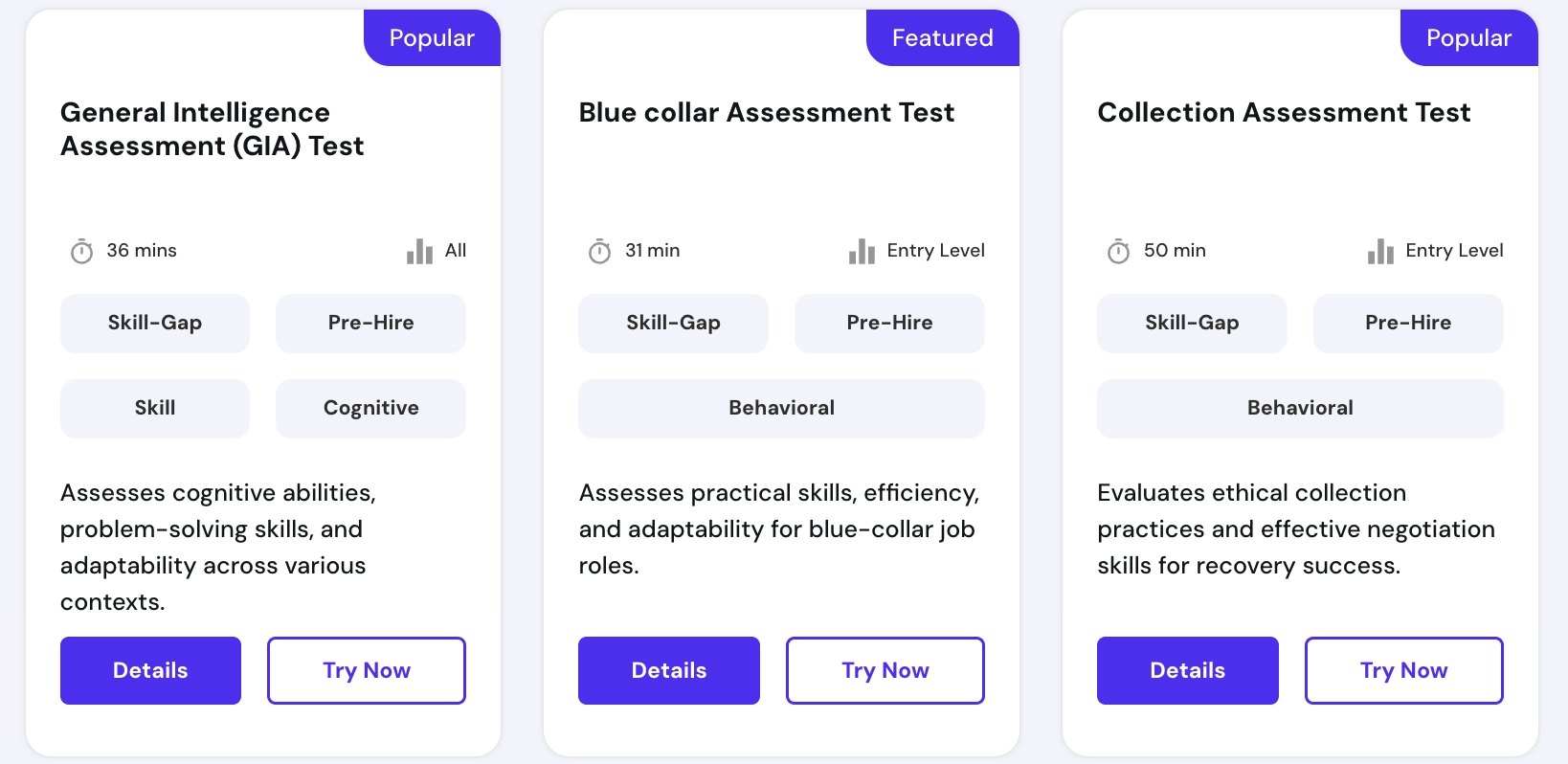
PMaps is an AI-driven talent assessment platform that helps organizations evaluate candidates on cognitive ability, behavior, communication, technical skills, and job fit. Its visual-based, low-text assessments reduce language bias and improve engagement across diverse talent pools.
Relevant Features
- Comprehensive test library: Includes psychometric, cognitive, technical, communication, and industry-specific assessments validated across 3 million candidates. Suitable for both entry-level, leadership, and senior roles.
- AI interview tools: Users can run scalable voice and video interviews with AI-powered scoring, standardized questions, and instant candidate summaries.
- Expanded interview capabilities: Automated insights highlight communication clarity, tone, and response structure to support deeper evaluation.
- People analytics: Dashboards provide fit scores, benchmarks, risk indicators, and concise reports for hiring, promotion, and development decisions.
- Enhanced reporting: Instant summaries convert assessment data into actionable recommendations for HR teams.
- Cheating prevention: AI-enabled proctoring monitors identity, behavioral anomalies, and suspicious activity to maintain assessment integrity.
- Platform security: Enterprise-grade data protection and global compliance standards ensure secure assessment environments.
Pricing
PMaps offers customized pricing based on test volume, assessment bundles, and platform modules. Plans vary by hiring scale and organizational requirements. It also includes a 7-day free trial.
Pros
Visual assessments reduce language bias
- Strong predictive accuracy across roles
- Unified platform for tests, interviews, and analytics
- Wide industry-specific assessment libraries
- Instant reporting and clear decision insights
Cons
- Advanced analytics may require higher subscription tiers
- Higher proctoring may cost an additional amount.
The Predictive Index
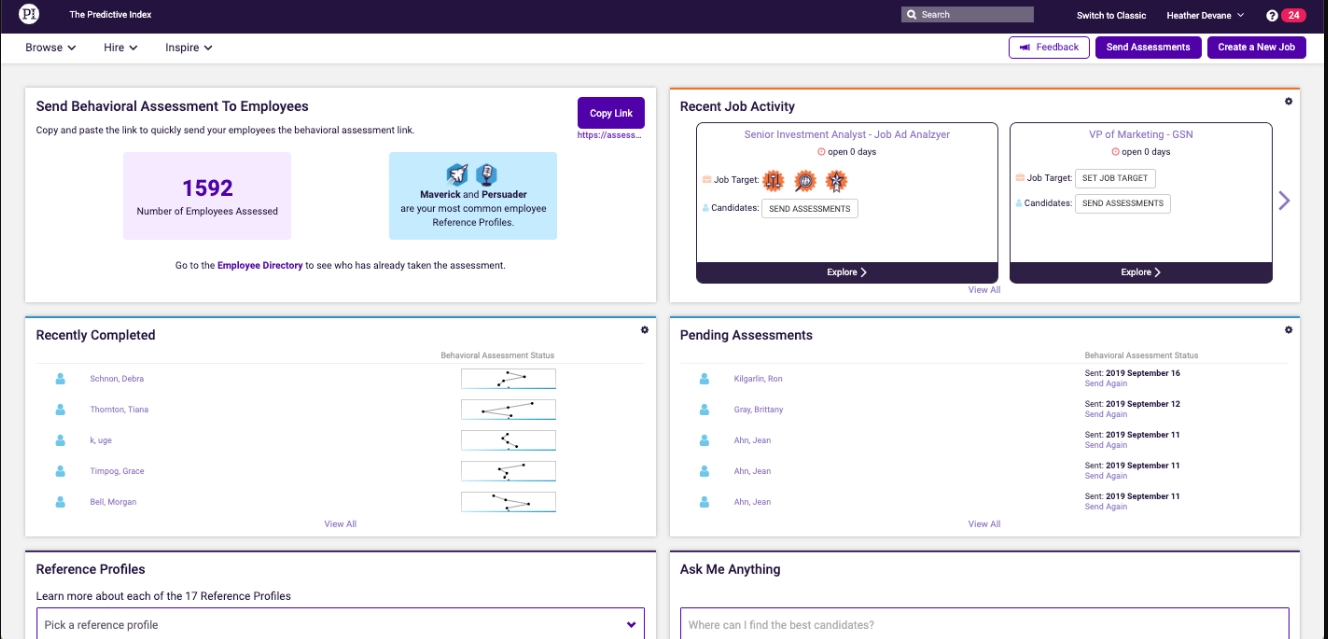
The Predictive Index is a talent optimization platform that uses behavioral and cognitive assessments to help organizations identify candidates who are the best fit for a role. It also provides workforce analytics and interview tools to improve hiring accuracy and long-term employee success.
Relevant Features
- Behavioral assessment: Uncovers candidates' workplace behaviors, communication styles, and motivational drives to determine their fit for a role and team.
- Cognitive assessment: Scientifically validated aptitude tests measure learning ability, critical thinking, and problem-solving skills.
- Job Targeting: Hiring teams can build role benchmarks and compare candidates against the behavioral and cognitive traits needed for success.
- Structured interview guides: Personalized interview questions are automatically generated from assessment results, making interviews more consistent and objective.
- People analytics: Interactive dashboards surface trends in team dynamics, employee engagement, and workforce performance to support talent decisions.
- ATS integrations: Compatible with leading applicant tracking systems, allowing recruiters to manage assessments without leaving their existing hiring workflow.
Pricing
The Predictive Index offers transparent pricing, with plans starting at $10,000/year. Pricing is customized based on your company's size, and every plan includes unlimited assessments with no per-seat fees.
Pros
- Valuable behavioral and cognitive insights
- Makes hiring decisions more objective
- Clear, easy-to-read assessment reports
- Helpful interview recommendations
Cons
- Limited integrations with some HR systems
- Can be expensive for smaller organizations
Best for Personality and Behavioral Tests
Arctic Shores
Arctic Shores is a tool that offers interactive assessments to help recruiters get an in-depth understanding of candidate behaviors.
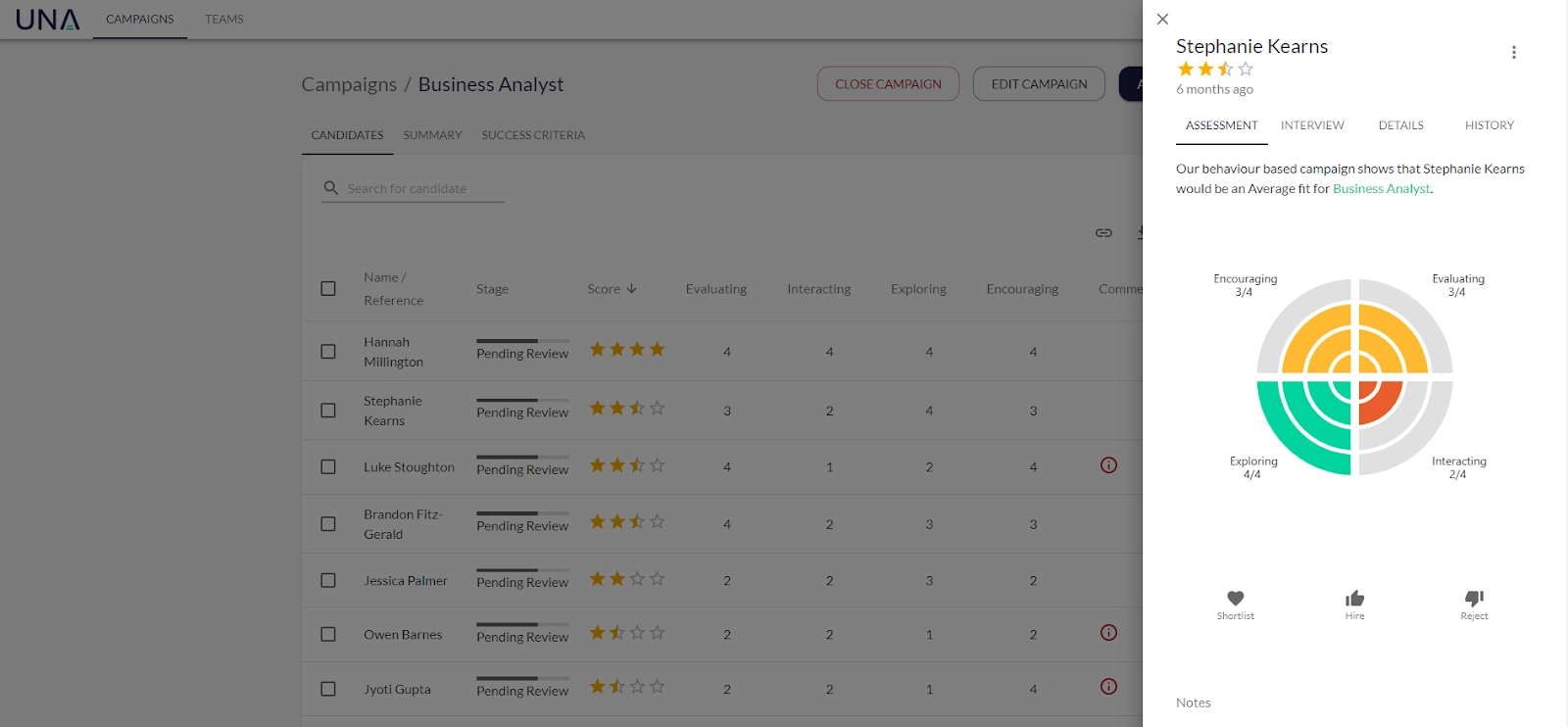
Recruiters start by defining the key performance indicators for the role, then candidates complete gamified tasks to showcase their proficiency.
Relevant Features
- AI-proof evaluation: Assessments are designed to prevent the use of generative AI tools like ChatGPT.
- In-depth scoring: Candidates are not just scored on their output, but also on every step they take to reach their result.
- Candidate feedback reports: Collect insights into the candidate experience after the completion of assessment tasks.
- Insightful psychometric analysis: Candidates are assessed against 12,000 data points, and you’ll have access to comprehensive reports, metrics, and scores to compare performances.
Pricing
Contact Arctic Shores for pricing information.
Pros
- Engaging candidate experience
- Scoring is standardized to help reduce hiring bias
- Insightful analytics
- Assesses both personality and workplace intelligence
Cons
- Pricing isn’t published publicly
- The use of AI faces for assessments on emotion recognition can be confusing for candidates
WizeHire
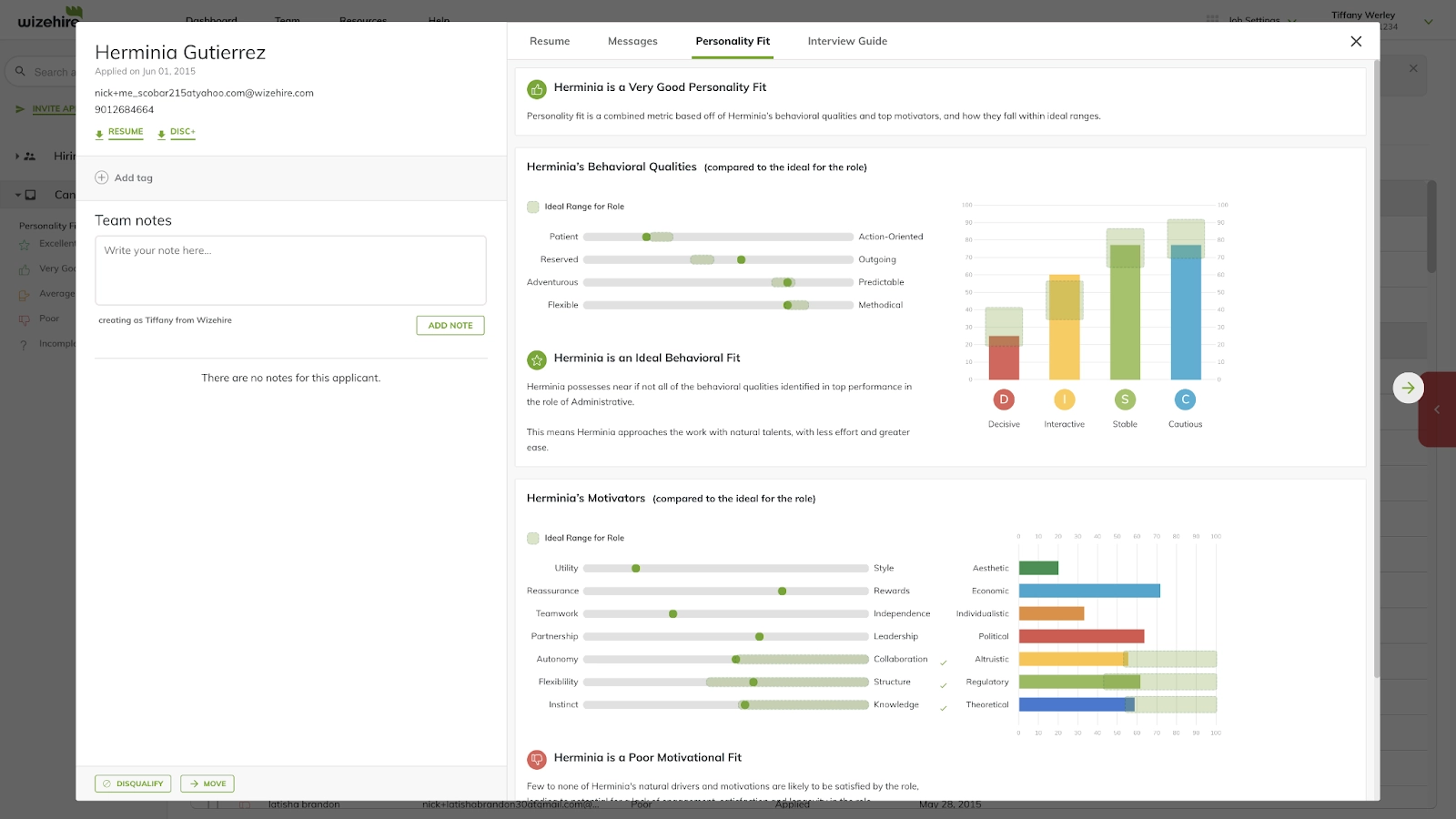
WizeHire is a hiring platform that provides research-driven evaluation tools to help companies hire the best candidates.
Relevant Features
- WizeHire coaches: The platform provides coaches who help match and customize interview questions tailored to your company’s needs.
- Interview guides: WizeHire lets you customize or create your own interview guides, ensuring a fair interview process for candidates.
- DISC+ personality assessment: This assessment allows recruiters to uncover candidates’ personal strengths, motivators, and work styles.
Pricing
WizeHire has a fixed Quickstart plan ($249/month) designed for teams planning on hiring 1 to 2 new employees. Higher-volume plans are customized to your needs and require annual contracts.
Pros
- Evaluation tools are customizable
- Integrates with prominent job boards
- Reliable support
- Scalable for a wide range of industries
Cons
- Could be better at sifting out unqualified candidates
- Lacks the capability to directly invite candidates to apply
Pymetrics
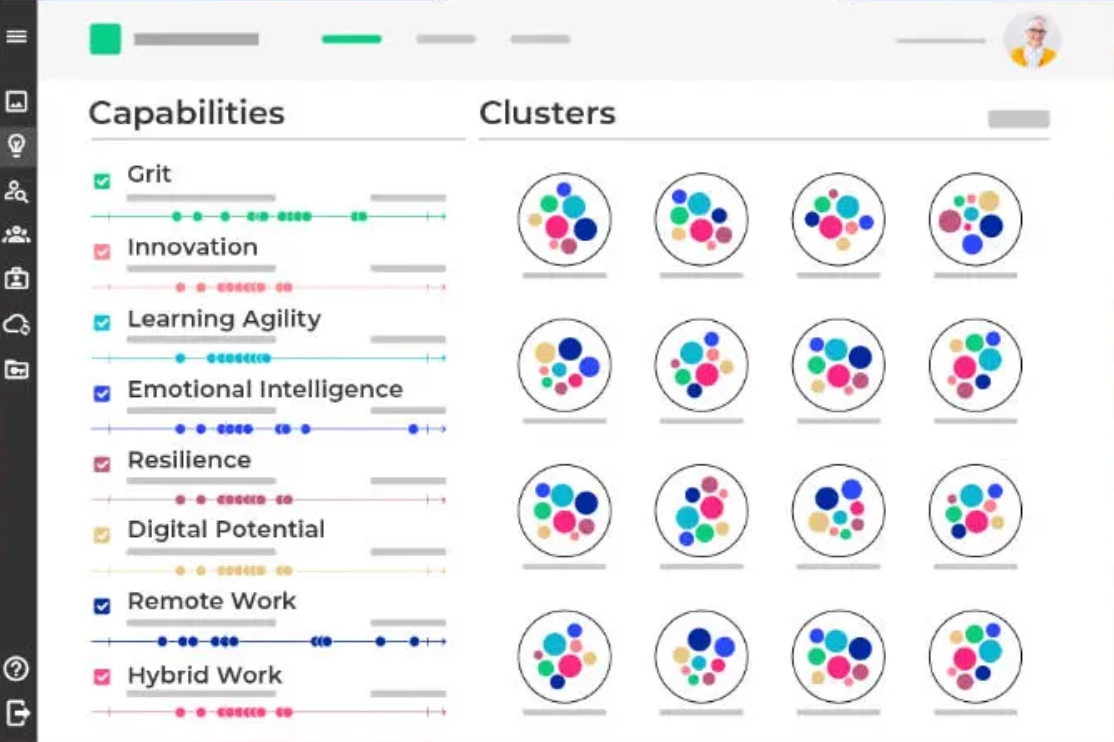
Pymetrics is a neuroscience-based talent assessment platform that uses gamified assessments and ethical AI to evaluate candidates based on their cognitive and behavioral traits rather than resumes.
Relevant Features
- Neuroscience-based games: A series of interactive games measures cognitive, emotional, and behavioral traits linked to workplace performance.
- Bias-aware AI matching: Candidates are matched to roles based on their behavioral profiles, helping organizations make more objective hiring decisions.
- Custom success profiles: Organizations can benchmark top performers and compare applicants against the traits associated with success in specific roles.
- Candidate insights: Detailed reports summarize each candidate's strengths, work style, and behavioral tendencies to support hiring decisions.
Pricing
Pymetrics does not publish its pricing. Interested users need to contact the company for a customized quote.
Pros
- Fun and engaging assessment experience
- Clear, easy-to-follow instructions
- Helps reduce bias in candidate screening
- Candidate results can be reused across participating employers
Cons
- Limited insight into how assessment results are calculated
- Some users question the accuracy of candidate matching
Best for Job simulation and Work Samples
Vervoe
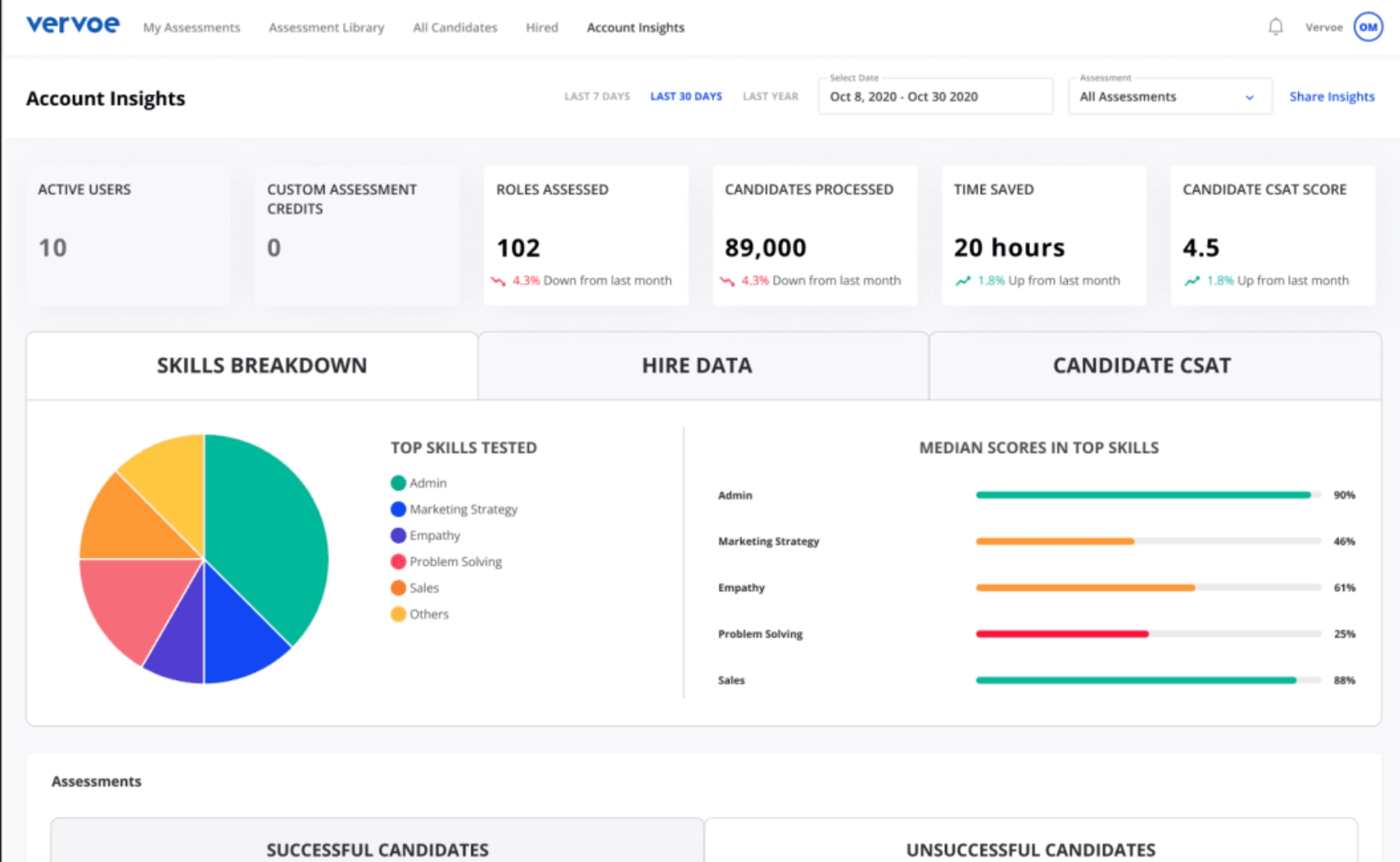
Vervoe is a skills assessment platform built around job simulations. It lets employers evaluate candidates by having them complete tasks that mirror the work they'll do on the job.
Relevant Features
- Customizable assessments: Users can build role-specific assessments using written, video, audio, file upload, and multiple-choice questions to evaluate real job skills.
- AI scoring: Candidate responses are automatically scored and ranked using AI, helping recruiters identify top performers more quickly.
- Assessment library: Ready-made assessment templates for a wide range of industries and job roles reduce the time needed to create evaluations from scratch.
- Video responses: Candidates can submit recorded video answers alongside written responses to provide additional insight into communication and interpersonal skills.
Pricing
Vervoe offers custom pricing for its plans. Interested organizations need to book a demo to discuss their hiring needs and receive a tailored quote.
Pros
- Highly customizable assessments
- AI scoring speeds up candidate screening
- Intuitive interface with a positive candidate experience
- Integrates well with existing hiring tools
Cons
- AI scoring could be more accurate
- Some job templates are missing
ThriveMap
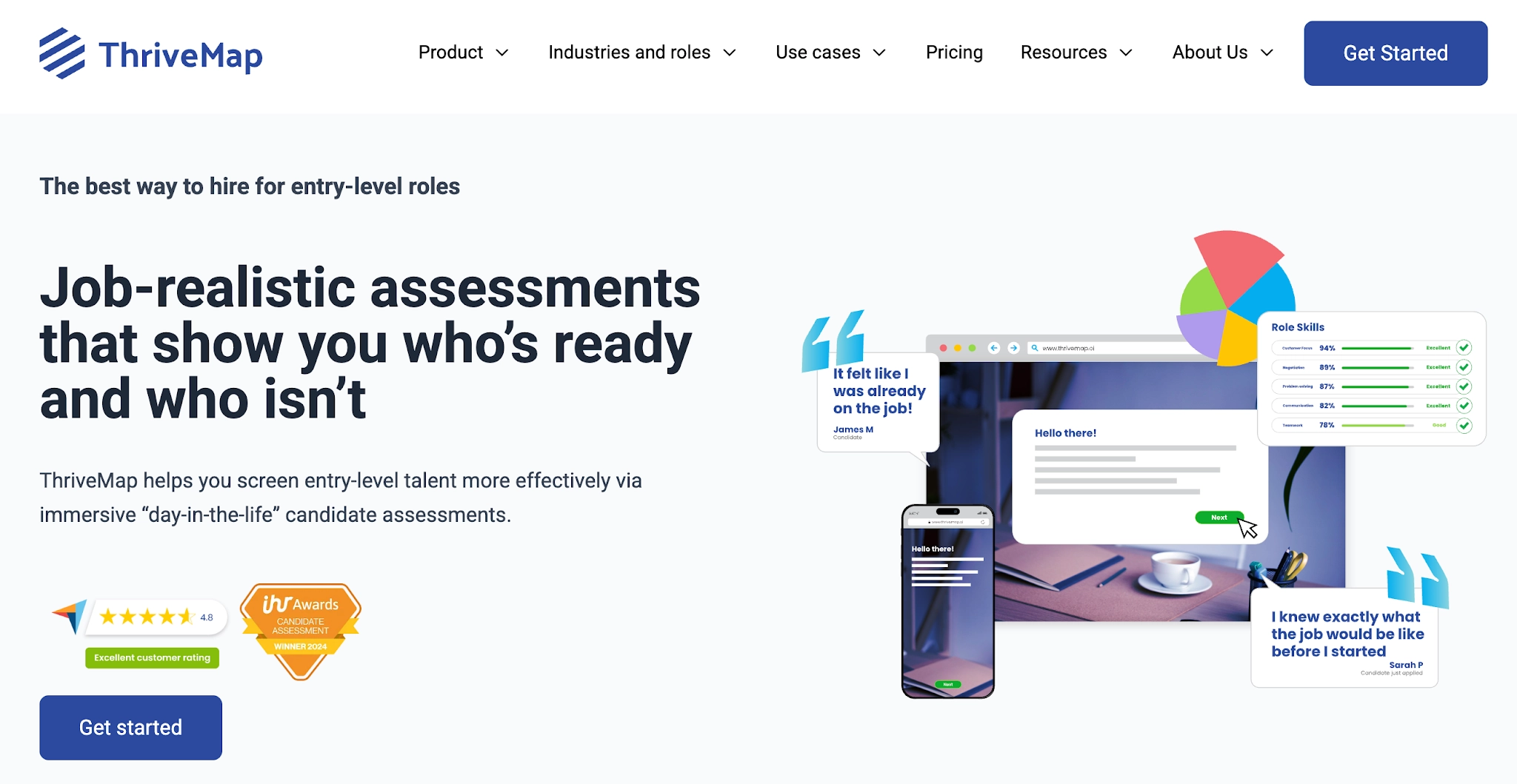
ThriveMap is a hiring platform that creates bespoke, job-realistic pre-hire assessments for high-volume, entry-level roles. It helps organizations replace CV screening with task-based assessments that reflect real role demands.
Relevant Features
- Job-Realistic Assessments: ThriveMap designs immersive assessments tailored to the specific role and company, simulating a "day-in-the-life" of the job to help candidates self-select and demonstrate fit.
- Collaborative Design Process: Combines employee surveys and workshops with hiring managers to define the most critical skills, behaviors, and scenarios to assess.
- Insights & Reporting: Provides clear candidate scores and results to guide hiring decisions and support structured interviews.
- Smart Assessment Builder: Users can leverage AI to create tailored assessments in minutes with their new Smart Assessment Builder tool
- ATS Integration: Works with all popular applicant tracking systems to streamline workflows.
Pricing
Contact ThriveMap for a quote based on hiring volume and assessment scope
Pros
- Highly customisable and role-specific assessments
- Engaging candidate experience improves self-selection
- Helps reduce bias by focusing on criteria with the most job-relevance
- Good support and consulting during setup
Cons
- Bespoke product involves longer setup time compared to off-the-shelf tests
- No built-in post-hire performance tracking
Best for Situational Judgment Tests
Mercer Mettl
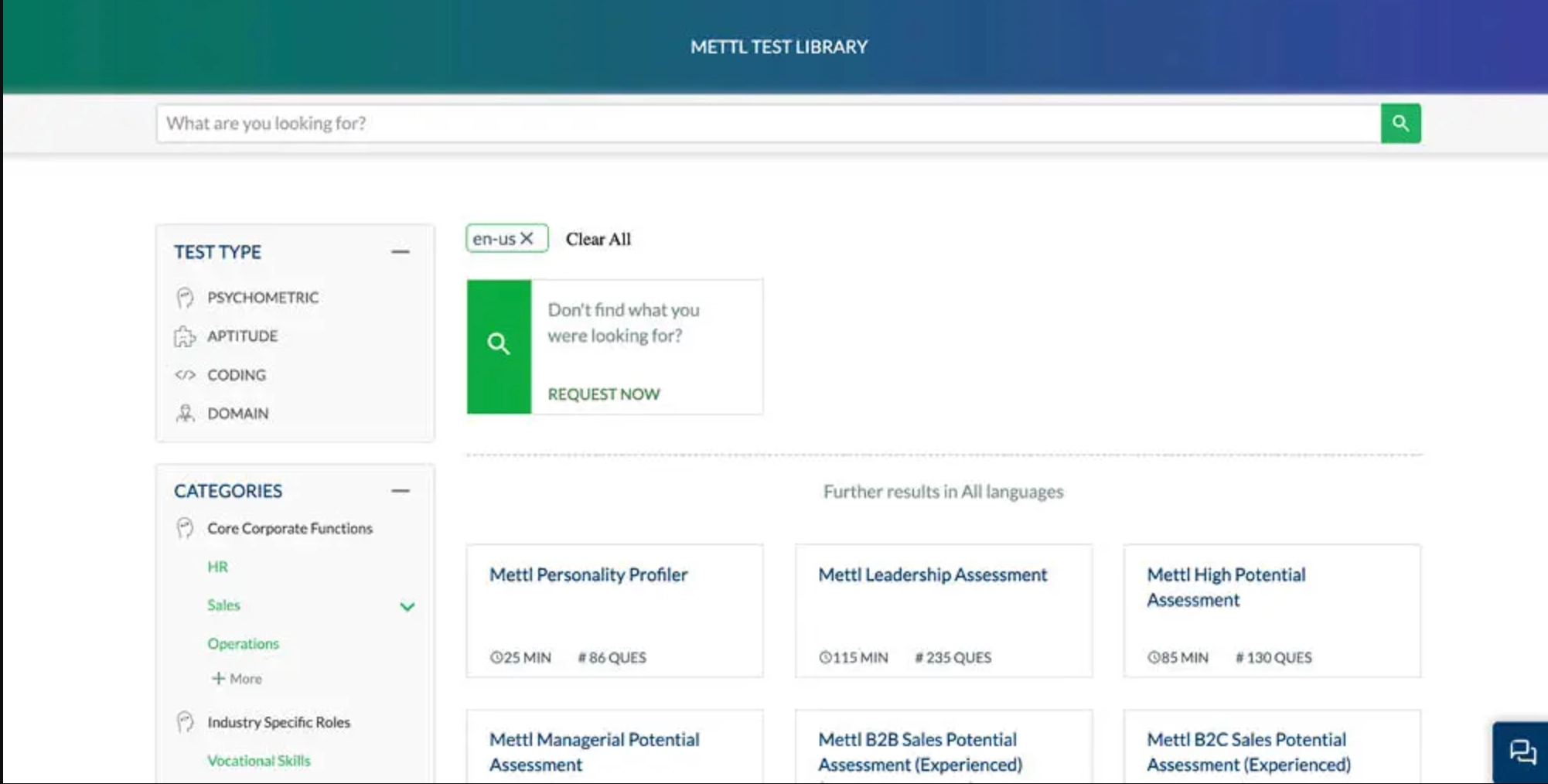
Mercer Mettl is a talent assessment platform known for its situational judgment tests (SJTs), which evaluate how candidates respond to realistic workplace scenarios. Alongside SJTs, it offers cognitive, behavioral, technical, and role-specific assessments to support more informed hiring decisions.
Relevant Features
- Comprehensive assessment library: Choose from a large collection of cognitive, behavioral, technical, coding, language, and domain-specific assessments for a wide range of job roles.
- AI-powered proctoring: Identity verification, browser monitoring, and behavioral analysis work together to detect suspicious activity and preserve assessment integrity.
- Coding assessments: Developers can be evaluated through automated coding tests that support multiple programming languages and provide detailed performance analytics.
- Video interviews: Recruiters can conduct live or asynchronous video interviews with structured questions and standardized evaluation criteria.
- Custom assessment builder: Flexible authoring tools enable hiring teams to create role-specific tests with a variety of question formats and standardized scoring methods.
Pricing
Mercer Mettl offers personalized pricing based on your assessment requirements and usage. A free trial is available.
Pros
- Comprehensive assessment library
- Strong AI-powered proctoring
- Flexible assessment creation
- Responsive customer support
Cons
- Some advanced features require a learning curve
- Report customization could be more flexible
Putting Talent Assessment to Work
Talent assessment tools help recruiters look beyond sugar-coated or AI-generated resumes and cover letters to identify candidates’ real qualities through tests, surveys, interviews, and more. For example, InHealth saved 1,000+ screening hours over 12 months using Willo’s async structured interviews, where candidates record themselves answering questions at their convenience.

Here’s how top talent assessment leaders put assessment tools to work:
1. Define Your Perfect Candidate
Before jumping right into talent assessments, take a moment to define your ideal candidate for the role—consider their skills, experience, and qualities. This step helps you understand exactly what you’re looking for and manage your expectations.
How can you do this?
Start by conducting a thorough job analysis. In simple terms, break down the role into specific duties, responsibilities, and required skills. Gather insights from managers or external employees if there aren’t any current employees you can interview.
From your job analysis, you might gather a lot of skills and experience data that might be unrealistic to expect in one person. So, we recommend categorizing them further into:
- Essential (must-have)
- Desirable (nice-to-have)
This will help you prioritize during the evaluation stage. While candidates might not possess every "nice-to-have" trait, they should have the core "must-have" skills and experience. The latter are typically (but not always) the focus of assessments.
2. Choose an Assessment Type
Having defined your ideal candidate profile, you can now choose the most effective assessment methodology (and the software to deliver it).
Start by thinking about what you need evidence of. If you're hiring for a technical role, skills tests or work samples will usually provide the clearest picture of candidate ability. If you're evaluating communication, judgment, or team fit, structured interviews, situational judgment tests, or behavioral assessments may be more appropriate. Most hiring processes benefit from combining two or more assessment methodologies rather than relying on a single one.
Once you've decided on the assessment methodology, choose software that supports it, along with your preferred delivery and scoring approach.
For example, if you're assessing both hard and soft skills, you might use a tool that collects work samples along with async video interviews. But if you're hiring for a highly technical role, a dedicated coding assessment platform may be the better fit.
3. Communicate with Your Candidates
Research shows that 54% of candidates have bailed on an application process due to poor communication. To ensure that most candidates complete the assessment, you need to communicate effectively upfront.
That means:
- Explain the entire assessment process: Let them know about the types of assessments they can expect and why they're being used. Explain how assessments fit into the larger process and what they can expect moving forward.
- Explain the assessment timeframe: Explain how long the assessment will take and how long you expect it to take to review their assessment. Be sure to mention whether you’ll be providing feedback to set expectations early.
- Offer additional resources (optional): To ensure candidates have a great experience, provide resources to help them prepare for the assessment or access support if needed. This might mean having an example assessment on-hand or a quick link to access support.
4. Administer the Assessments and Evaluate
Finally, administer your assessments.
Here are some tips to help you with this:
- Standardized administration: Ensure consistent administration and scoring across all candidates for in-person assessments or simulations.
- Technical support: Provide technical support if candidates encounter any difficulties during online assessments.
- Proctoring (optional): Consider proctored testing for high-stakes assessments. This is unnecessary for most hiring scenarios but may be useful for certain roles or organizations (e.g., finance or security).
After candidates complete the assessment, send a quick thank-you email acknowledging their participation and telling them what to expect next. This small gesture can significantly enhance the candidate experience.
Screen Faster and Shortlist With Confidence
Choosing the right assessment methodology is only half the equation. The software you use to deliver, review, and verify those assessments plays just as important a role in hiring the right people quickly and fairly.
If you're looking for a platform that helps you assess candidates faster and make more confident hiring decisions, Willo combines structured interviews, AI-assisted review, and candidate verification into one scalable screening workflow.
LaunchCode increased the number of qualified candidates by 54% after standardizing its screening process with Willo, demonstrating how structured assessments can improve candidate quality while enhancing hiring efficiency.