By 2028, 1 in every 4 candidate profiles will be fabricated in some form. And while applicant volumes are at an all-time high, so is the use of AI-generated applications, scripted answers, real-time coaching, and fake identities.
In today’s reality, the ability to detect cheating in candidate screening is more important than ever. However, the right approach for your high-volume hiring needs comes down to three key factors:
- Which recruiting stage or scenario you’re optimizing for,
- What cheating methods you're trying to detect, and
- How much candidate friction you're willing to introduce.
The heaviest detection methods, like proctoring, lockdown, and webcam behavior monitoring, cost the most in terms of candidate experience. However, they’re a stronger fit for high-stakes timed tests and technical assessment integrity.
Meanwhile, lighter-touch safeguards like ID verification and controls that prevent browser tab switching, screen sharing, or copy-pasting help catch dishonest candidates and AI-generated applications without turning screening into surveillance.
Whether you prioritize stronger fraud prevention or a less-invasive experience, we've analyzed four common cheating detection approaches across hiring scenarios and candidate friction levels. Here’s how each compares at a glance before we cover them in more detail.
1. Catch AI-Generated and Scripted Answers Using Response Authentication
We doubt there’s any recruiter who hasn’t had a candidate that seemed too good to be true, especially with 77% of employers today saying they’ve encountered AI-assisted applications.
As generative AI tools, proxy interviews, and even wearable technology become more accessible, it's difficult to tell what candidates know from what they're being helped to say. It’s even harder when you're hiring at scale.
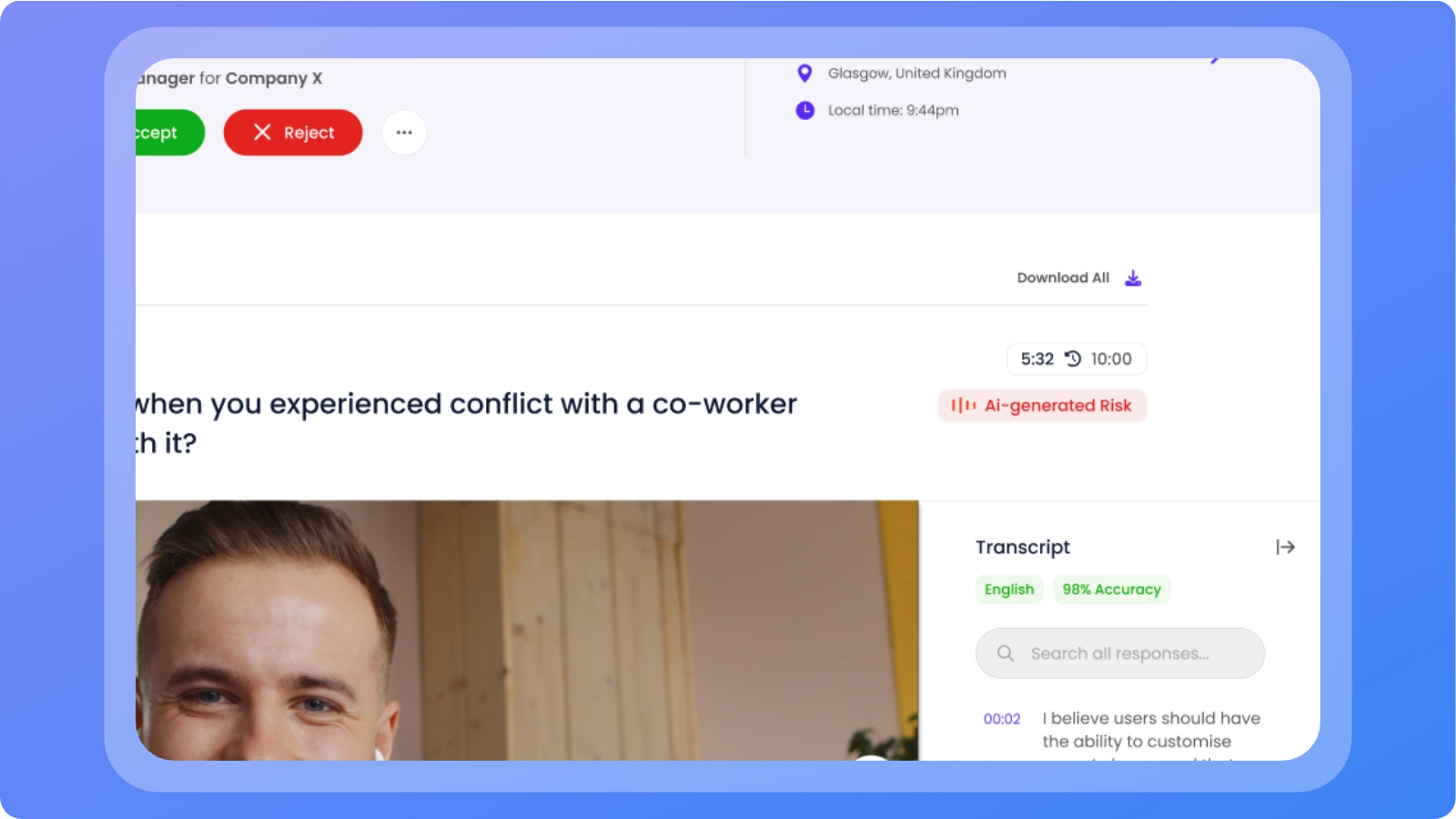
Response authentication can help you detect cheating in candidate screening by identifying answers that appear inconsistent with the way people naturally speak. But instead of simply concluding that someone cheated, Willo Real Talk highlights interviews that deserve a second look.
Similarly, HireVue evaluates speech patterns and response similarities across candidates, flagging potentially scripted or copied answers for recruiter review.
On a different, stricter note, Talview authenticates interview responses by analyzing the timing and rhythm of recorded answers and checking for subtle on-screen overlays. If the system detects suspicious behavior, it automatically locks down the device, preventing unauthorized apps and real-time AI assistants from running in the background.
If your biggest concern is detecting candidate cheating in async video interviews, this is the best place to start. For example, Toyota Great Britain replaced resume screening with video interviews powered by Willo. This switch allows them to better assess the depth and legitimacy of candidate responses without slowing down the hiring process.
Not only did the automobile company save 161 hours, but it also created a fairer hiring process for disadvantaged groups, including neurodivergent individuals.
Best For
- High-volume hiring: When you're reviewing thousands of interviews, this cheating detection method helps you prioritize responses worth reviewing and find top candidates faster.
- Early-stage video screening: If video interviews are your first screening step, response authentication helps ensure you're not wasting time on live interviews.
- Communication-heavy roles: In roles where communication is a key part of the job (sales, customer success, marketing), how candidates express themselves matters just as much as the content of their answers.
What It Detects
- When candidates' answers appear heavily AI-generated.
- Replies that are highly scripted.
- Responses that don't seem to align with the candidate's experience.
Candidate Experience
Response authentication is great for candidates as it is one of the least intrusive approaches. When job seekers aren’t under heavy monitoring that creates discomfort, they can answer interview questions more naturally.
Teams choose response authentication when they care more about understanding how candidates think than policing every aspect of the interview environment. When you need to confirm identity or control assessment conditions, pair it with digital ID verification or light proctoring.
Learn exactly how Willo’s Real Talk flags responses worth reviewing, while keeping interviews natural and candidate-friendly.

Every Candidate Sounds Great on Paper. Now What?
Get 20+ AI-proof interview questions - with follow-ups that spot the difference between real experience and a rehearsed answer.
2. Detect Fake Candidates With Digital Identity Verification
Digital identity verification answers one simple but important question: Are you interviewing the person who actually applied for the role?
Remote hiring has opened up incredible access to talent, but it's also introduced a challenge: You can't always be certain who's actually behind the screen. Many candidates are genuine, but it only takes one case of impersonation to make you doubt the integrity of your entire hiring process.
Depending on the platform and recruitment stage, identity verification can involve comparing government-issued IDs with facial recognition, voice biometrics, or other background checks completed with the candidate's consent.
For example, Talview spots fake candidates and proxy test-takers through ID scans, face photo matching, and liveness detection. Meanwhile, VidCruiter takes things up a notch by cross-matching live selfie landmarks with uploaded IDs and reverifying facial biometrics across async interviews, live panels, and onboarding sessions.
When your priority is knowing who's behind the screen before investing more time in interviews or fully assimilating a new hire, identity verification helps by confirming you're speaking to the right person.
And if you’re worried about AI deepfakes or are part of the 30% of enterprises that find ID verification unreliable in isolation, it makes sense to combine it with another practice, such as proctoring.
Best For
- Compliance and regulated industries: When hiring in sectors such as healthcare, finance, or government, verifying a candidate's identity is often required to meet regulatory requirements.
- High-trust roles: For positions like law enforcement involving sensitive information, confirming identity early reduces unnecessary risk later in the recruitment journey.
- Remote & global hiring: Hiring internationally or remotely makes face-to-face verification difficult; digital identity verification is crucial for confirming who you’re speaking to.
What It Detects
- Candidates who may be impersonating the original applicant.
- Differences between identity documents and the person completing the interview or assessment.
- Repeated identity submissions across applications.
- Potential deepfake or face-spoofing attempts, depending on the verification technology being used.
Candidate Experience
Digital identity verification protects real candidates seeking dream jobs from competing against individuals using false identities.
However, asking candidates to upload key documents before they've even spoken to an interviewer can feel like a big ask, especially for early-stage applications. It's also worth considering that candidates with tech issues may experience more friction.
That's why some teams build identity verification into the interview process after initial screening. Florence screens and verifies around 1,400 candidates through Willo each month, giving candidates flexibility while increasing recruiter confidence.

3. Prevent Technical Assessment Gaming via Code Plagiarism Checks and Copy-Paste Blocks
Identity isn't the only place candidates can misrepresent themselves. Technical assessments introduce a different challenge altogether. A coding assessment is only valuable if you're confident the work was produced by the candidate who submitted it, so understanding how they arrived at their answers is critical.
Code plagiarism detectors on technical test platforms like Codility and HackerRank compare submitted code against existing sources to identify work that may not have been written independently. Though not exclusively a technical assessment tool, TestGorilla does the same for teams filling software or engineering roles.
However, code plagiarism detection is not fully reliable on its own, as programmers follow similar coding standards. Some teams also conduct pre-screening interviews before administering full-blown coding tests. Here’s where light copy-paste safeguards can come in handy.
Copy-paste restrictions on platforms like Willo add a layer of protection by preventing candidates from importing code or responses they didn't write. In later stages, live coding and pair programming can also better reveal candidates' processes.
Together, these features help detect cheating in candidate screening by highlighting technical submissions that may not reflect a candidate's own work.
Best For
- Technical hiring at scale: Plagiarism detection helps surface coding assessments that require closer attention.
- Take-home coding assessments: Candidates complete these in their own time, so it’s important to know if their work is original.
What It Detects
- Code that appears to have been copied from online sources.
- Submissions with unusually high similarity to work completed by other candidates.
- Patterns that suggest AI-assisted code generation.
Candidate Experience
Code plagiarism checks can encourage richer technical interview conversations if you notice something unusual and ask candidates to explain their thought process and approach, rather than immediately concluding that they cheated.
But things aren’t always black-and-white, and developers work within widely accepted coding practices for specific roles. So, any flagged submission should be reviewed alongside the candidate's overall performance.
4. Flag Outside Assistance During Remote Assessments With Proctoring
Remote assessments raise questions every recruiter has likely asked at some point, especially now that real-time AI tools like ChatGPT can listen and transcribe interview questions. Is the candidate getting help? Are they using another device? Is someone else in the room?
Digital proctoring monitors the assessment environment for activity that could compromise its integrity, including browser activity, blind spots, multiple faces on camera, and lip syncing. It also leverages session recording to detect other suspicious behavior, like eyes consistently looking off-screen in the same direction or candidates using additional devices.
Its purpose isn't to judge the quality of a candidate's answers. It's to ensure everyone completes the assessment under the same conditions, making results more reliable. If maintaining strict assessment conditions is your priority, remote proctoring gives you the highest level of oversight.
Unsure what tools to explore? Talview, VidCruiter, TestGorilla, and HireVue all offer proctoring features. That said, it's worth thinking about what you're asking candidates to put up with.
More intensive real-time monitoring can make some candidates feel uncomfortable, which may not align with your employer brand. This explains why some high-volume hiring teams take a lighter-touch approach instead.
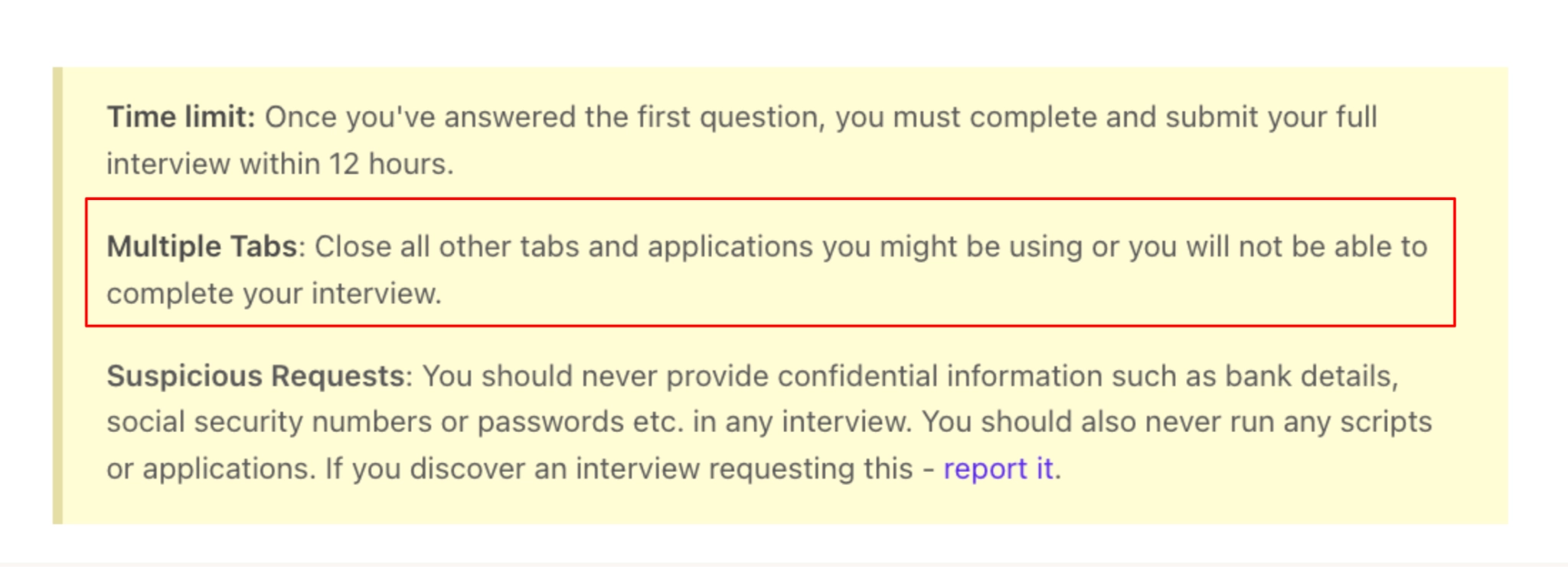
They use safeguards such as tab-switch detection and copy-and-paste blocking to discourage dishonest behavior while keeping the assessment straightforward for candidates. These limits won't eliminate fraudulent candidates on their own, but for many teams that value the candidate experience, they strike a better balance.
Best For
- Professional certification and licensing exams: Where assessment integrity is essential, and candidates are expected to complete exams by themselves.
- High-stakes or timed assessments: When assessment outcomes directly influence decisions, organizations want assurance every candidate completed the same test under comparable conditions.
- Aptitude and cognitive assessments: Since these assessments measure how candidates think under specific conditions, remote proctoring helps preserve those conditions without requiring in-person supervision.
What It Detects
- Candidates accessing unauthorized tabs during an assessment.
- Multiple people appearing within the assessment environment.
- Suspicious browser activity.
Candidate Experience
Online proctoring allows organizations to hire candidates without requiring them to travel to assessment centers, making recruitment more accessible across regions.
Despite this upside, remote proctoring is one of the more invasive methods for protecting the integrity of an assessment, so it's important to use it thoughtfully. It also relies heavily on stable technology, meaning poor internet connection, camera issues, or other technical hiccups can interrupt the assessment without reflecting a candidate's actual ability.
Choosing the Right Cheating Detection Solution for Your High-Volume Hiring Team
There's no single best way to detect cheating in candidate screening because every hiring team is solving a different problem.
Some companies need to verify identity. Others need confidence that coding assessments reflect a candidate's own work. For teams running structured interviews, maintaining consistent testing conditions is non-negotiable. You can also combine different interview cheating detection approaches as needed, rather than relying on just one.
When you're reviewing hundreds or thousands of interviews, you can't investigate every candidate. The priority is having enough confidence that interview responses reflect a candidate's own thinking.
That's why more than 5,000 hiring teams use Willo to stay ahead. Our technology doesn't automate hiring decisions or automatically reject candidates. Instead, it gives recruiters and hiring managers stronger evidence and data points while leaving final round decisions to them.
This approach is best for high-growth teams. For instance, EDF uses Willo to review over 17,000 applications each hiring season, surfacing genuinely qualified talent and cutting recruiter admin time by 50%.