If you’re seeking AI resume screening software, it’s likely because your ATS native filtering still leaves you reviewing too many CVs, missing relevant candidates, or making shortlist decisions with too little evidence behind them.
The problem is becoming harder as written applications become easier to produce. Willo's 2026 Hiring Trends Report found that 76.6% of employers now encounter AI-assisted applications. A polished CV can still pass a filter without proving that the applicant can meet the requirements of the role.
For warning signs a recruiter can check in an individual application, see our guide to spotting AI-generated resumes.
AI resume screening software helps solve this problem but each platform takes a genuinely different approach.
- Some tools score resumes against role criteria.
- Others supplement the resume with structured candidate responses, skills assessments, conversational qualification, or external profile data.
- Several combine more than one approach.
The right choice depends on what your ATS screening process currently fails to provide.
This guide compares eight options, explains where each one fits, and shows when another screening tool is unlikely to solve the underlying problem.
If you need to compare resume screening with video, phone, and assessment workflows, read our AI candidate screening tools comparison.
The table below gives you a quick overview of the top AI resume screening software, and where each one actually fits:
Jump to the full comparison table below if you just want the specs side by side.
What should AI resume screening software add to your ATS?
ATS platforms such as Greenhouse, Ashby, Workday, and Lever already offer combinations of CV parsing, filtering, criteria matching, fit scores, and screening rationale. For many teams, those capabilities may be enough.
A dedicated screening tool becomes relevant when the resulting shortlist still lacks coverage, clear reasoning, or evidence beyond what candidates provide in their applications.
If that describes your current process, look for:
- Consistent assessment of the full applicant pool. Every eligible applicant should be assessed against the same role-specific criteria, including candidates recruiters may not have had time to review manually.
- Recognition of relevant experience beyond exact keyword matches. Qualified applicants should not be missed simply because they describe their experience differently from the job posting.
- A clear explanation for each screening result. A resume screening tool should give your team enough evidence or rationale to understand a score and explain why a candidate should progress.
- Evidence that helps recruiters examine resume claims. Depending on the role, this could include structured candidate responses, practical assessments, or other information that the CV cannot provide on its own.
- Human control over who goes to the next stage. Recruiters should be able to review the evidence and make the final progression decision rather than relying on an unexplained result.
- A practical connection to your existing ATS workflow. Check how applications enter the screening tool, what information returns to the ATS, and whether the connection prevents duplicate work.
- Better screening coverage alongside greater speed. The software should help the team assess more of the eligible applicant pool consistently, rather than only processing the same limited pool faster.
2026 AI resume screening software comparison table
The products below support the screening decision in different ways. Some analyze resumes directly, while others add structured conversations, skills assessments, candidate enrichment, or qualification workflows. Several combine more than one approach.
1. Willo: Best for assessing the CV alongside structured candidate responses
Willo is a candidate screening platform that provides richer candidate information by assessing uploaded CV information alongside structured video and audio responses. It scores this evidence against the employer's Blueprint and returns useful information for human review before the live interview.
That way every applicant is evaluated the same way: one assessment that reads the CV and captures everything else it doesn’t show, so the resulting shortlist is strong and defensible.
.webp)
Willo supports the review by transcribing and summarizing responses, scoring against the Blueprint, and flagging information that may require attention. The hiring team reviews the evidence and decides who progresses.
Key Features
Assess the CV alongside structured candidate responses
Written applications are useful evidence of experience and qualifications, but they cannot demonstrate everything a role requires. Willo combines the uploaded CV with structured video and audio responses, allowing recruiters to examine relevant experience, communication, judgment, and motivation within the same assessment
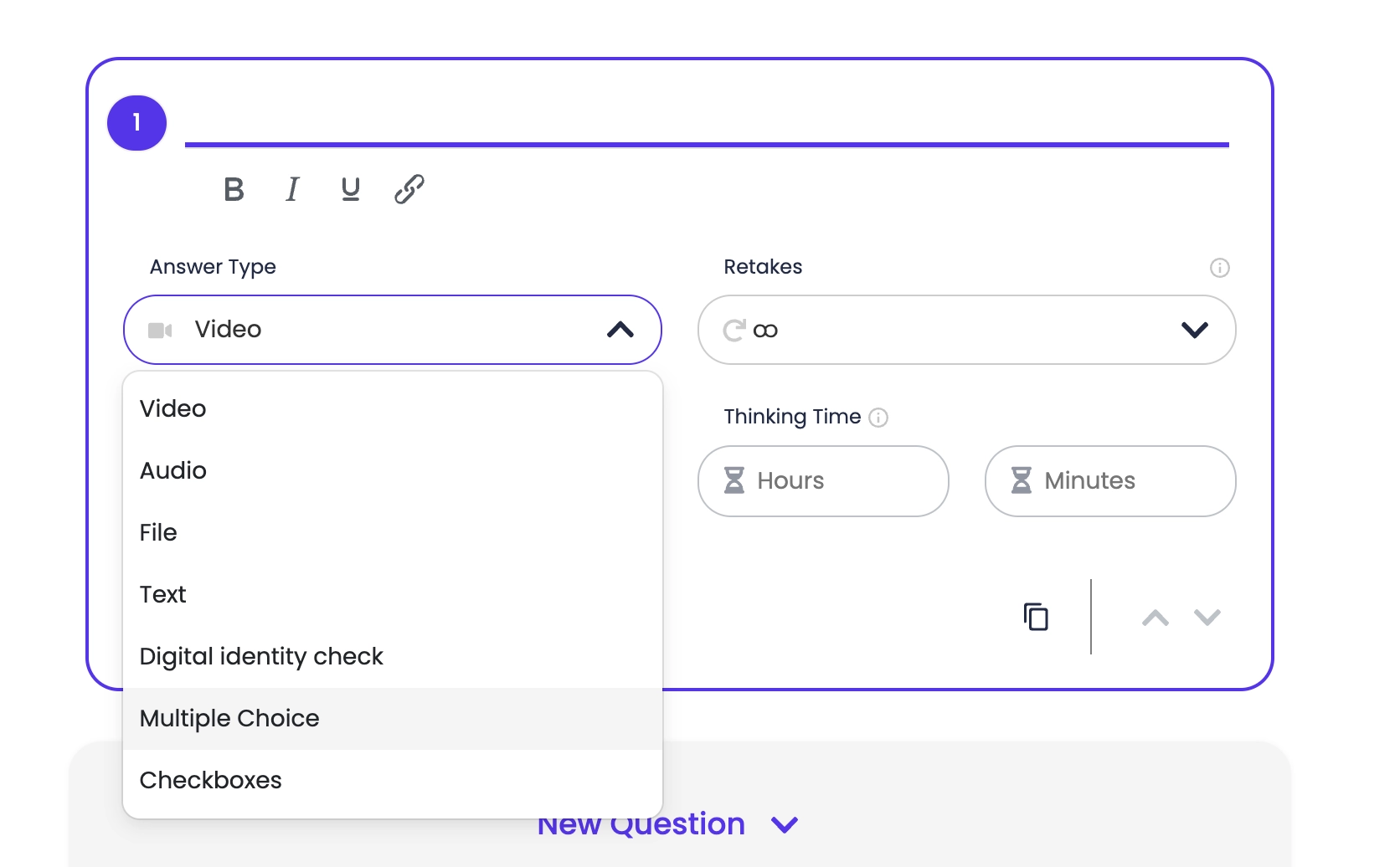
This also gives recruiters more context when a candidate refers to something from a previous role. The CV and recorded response can be reviewed together rather than as separate pieces of information.
Compare applicants against the same Blueprint
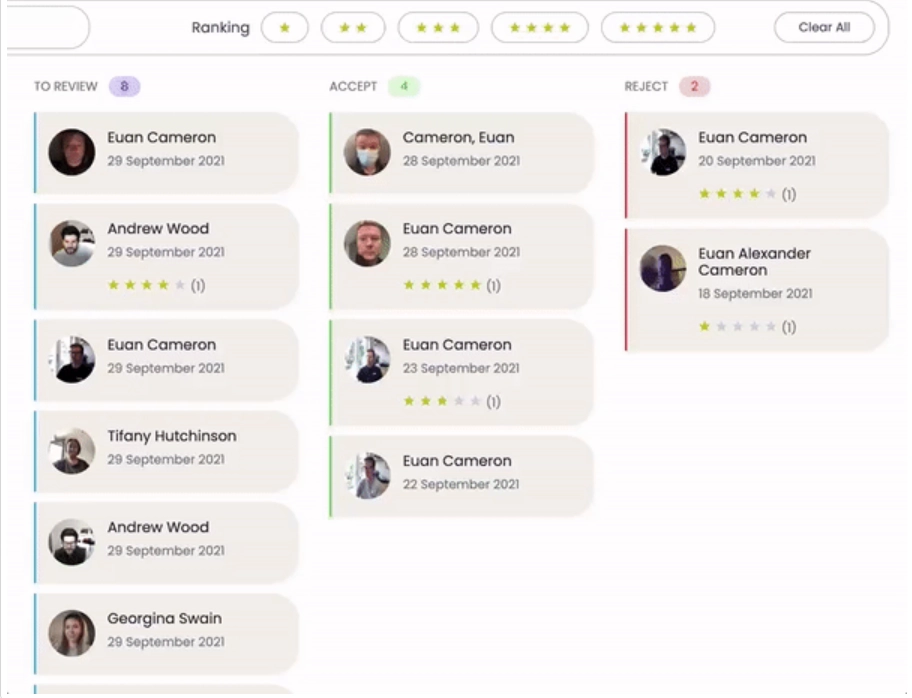
Willo assesses each applicant against the employer's own role-specific Blueprint. Recruiters can review the resulting evidence and scorecard rather than receiving an unexplained fit score with no context behind it.

Willo also supports employer-configured knockout rules for objective requirements such as location or right to work. That way, judgment-based progression decisions remain with the hiring team.
Toyota saved 161 recruiter hours while making its screening process more accessible to neurodivergent applicants and candidates with caregiving responsibilities.
Review more of the applicant pool consistently
Recruiter capacity often determines how many applications receive careful review. Willo gives every eligible applicant the same structured assessment, helping teams compare a larger share of the pool without changing the criteria from one candidate to the next.
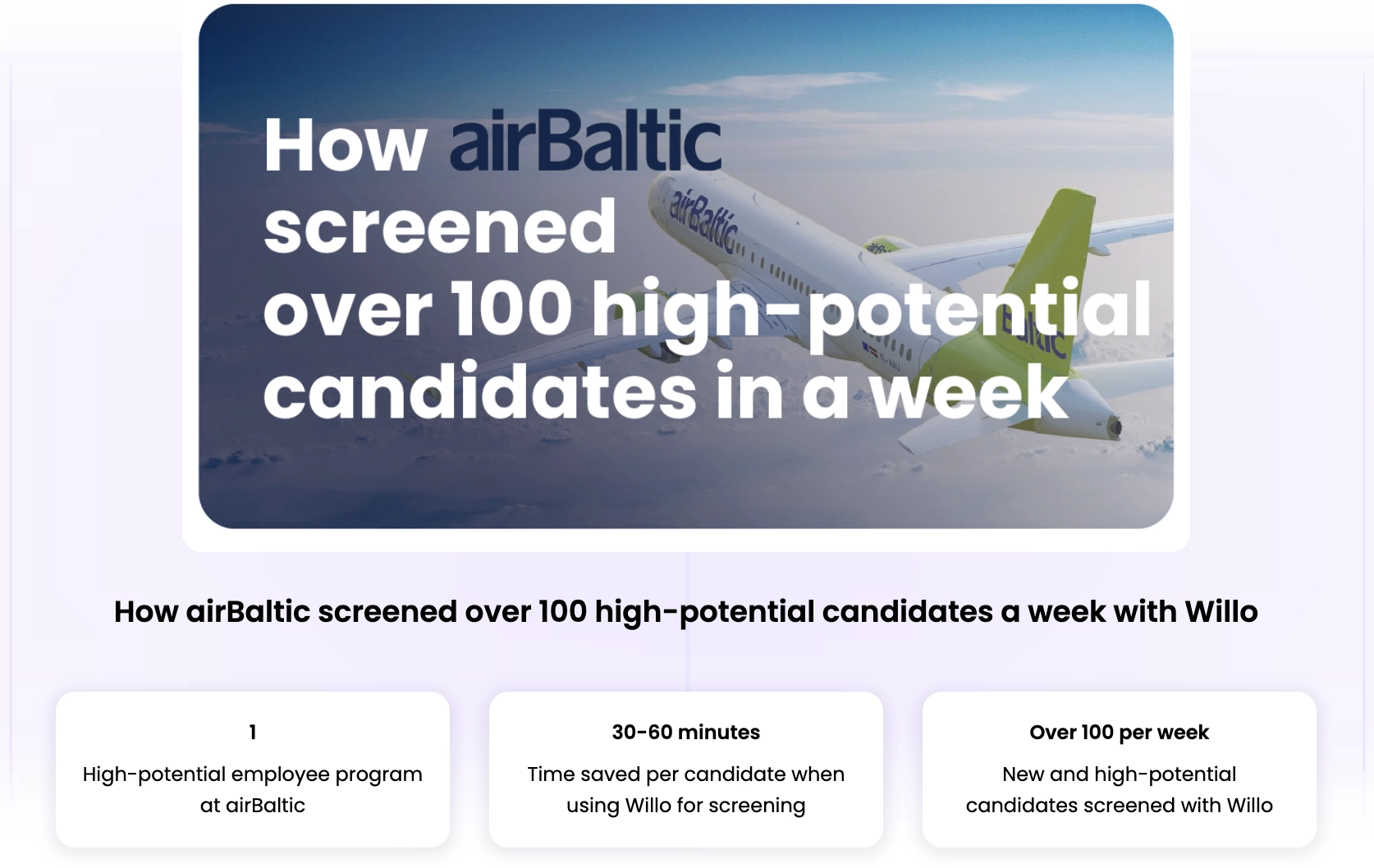
For example, before using Willo, airBaltic could screen only 70 of the 100 to 200 applications it received each week. Since adopting it, the airline screens 100% of candidates fully, assessing the full scope of their capabilities early instead of spending time interviewing unqualified applicants. This result reflects Willo's wider structured screening workflow and predates the addition of CV assessment.
Examine authenticity before the live interview
A polished application does not confirm that the candidate can support every claim it contains. Structured recorded responses give recruiters another source of evidence, collected with employer-defined timing and attempt settings.
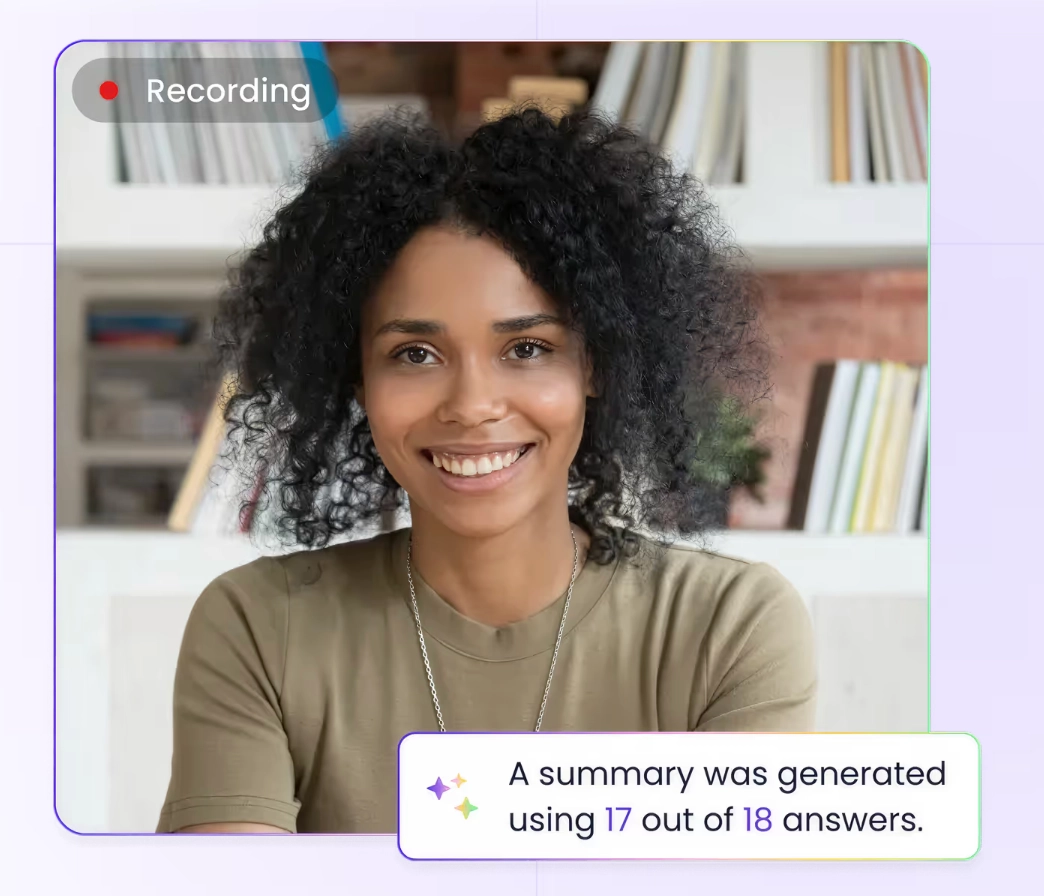
RealTalk flags response patterns that may require closer review, while Willo Verified™ supports candidate identity checks. These signals inform the review and do not make the progression decision for the recruiter.Read our guide to AI candidate screening tools to learn more about using AI in hiring.
A bidirectional connection to the existing ATS workflow
Willo enables bidirectional ATS sync, meaning it can read from your system, write back into it, and vice versa. It offers 50+ native ATS integrations, including Ashby, Greenhouse, Workday, Lever, and SuccessFactors, plus thousands of Zapier connections and direct API access for anything not natively covered.
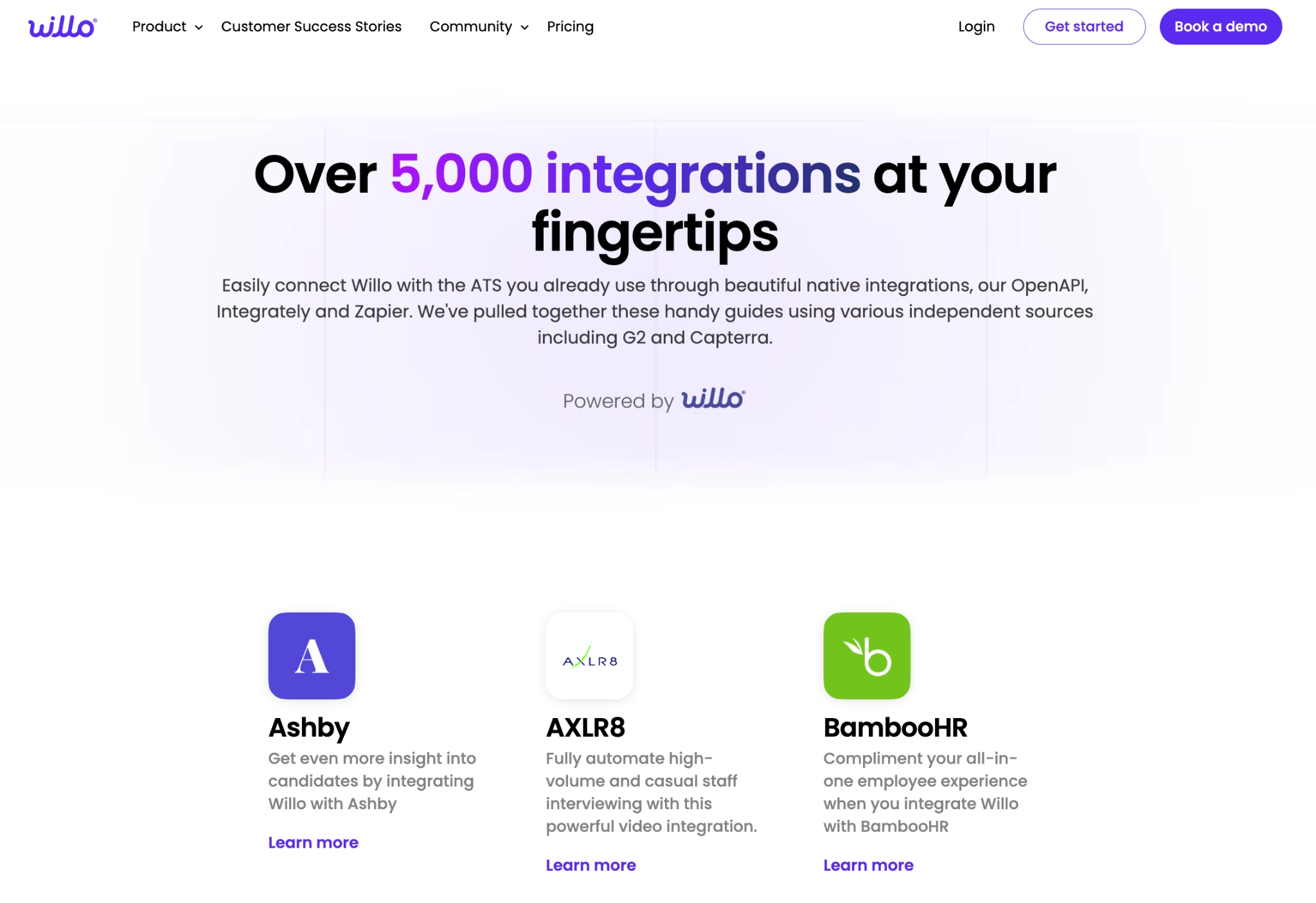
Willo also offers hands-on migration or implementation support, so your IT or procurement team doesn’t need to clear a million and one hoops alone to connect it to your ATS.
Pros
- Assesses the CV and structured candidate responses against the same Blueprint.
- Gives recruiters transcripts, summaries, scorecards, and recorded evidence to review.
- Supports consistent screening across a larger applicant pool.
- Keeps judgment-based progression decisions with the hiring team.
- Connects with 50+ ATS platforms through native integrations.
Cons
- Willo leans on video and audio responses as core evidence alongside the resume, so it's a weaker fit for candidate pools who find async video uncomfortable.
Pricing
- 14-day free trial
- Willo Lite for occasional hiring, priced per live role per month; allows up to 5 roles and 5 users.
- Willo Enterprise for teams that are always hiring; offers monthly, quarterly, yearly or multi-year contracts as required. See for yourself.
Why teams choose Willo: It brings the CV and structured candidate responses into one assessment, giving recruiters comparable evidence for deciding who should progress.
“The platform is straightforward to use, and the pre-recorded video format makes the process efficient while still allowing candidates to communicate their personality and experience beyond a written application.” - Ekta G.
“I also enjoy working with their customer service team because they solve issues quickly. Additionally, the initial setup was very easy, and their team helped a lot.” - David K.
2. Brainner: Best for combining resume screening with candidate fraud detection
Brainner is an AI resume screening platform for employers, staffing firms, and recruitment process outsourcing teams. It extracts screening criteria from a job description, lets recruiters adjust the requirements, and evaluates incoming CVs against the final criteria.
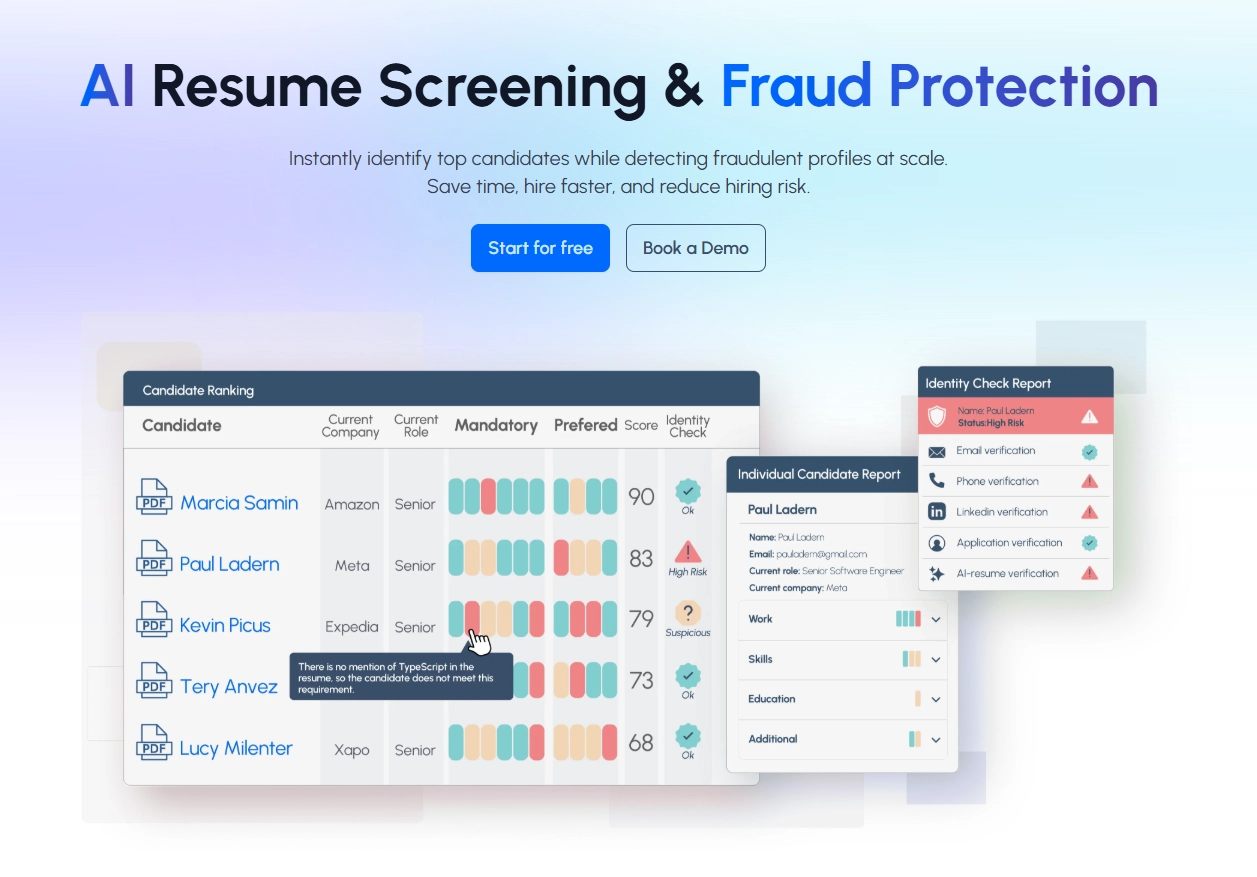
Candidates are ranked by their alignment with the role, with a breakdown showing why each criterion was met or missed. Brainner also adds identity and fraud signals to the same workflow, making it particularly relevant for teams dealing with high application volume and concerns about fabricated profiles.
Key features
- Job-description criteria extraction and recruiter customization.
- Real-time resume analysis and candidate ranking.
- Criterion-level explanations for each candidate result.
- Candidate identity and fraud-risk signals.
- Native ATS connections and candidate-status synchronization.
- Bulk progression, hold, and archive controls.
User reviews
Brainner has a limited independent review base, with only two customer reviews on G2 at the time of review. Those reviews praise its resume-screening speed, fraud detection, ease of use, and Lever integration, although one raises a concern about scoring.
“Brainner solves the bottleneck of reviewing thousands of resumes manually.”
Thayná R., Support Manager, G2
“It seems a bit too optimistic about candidates’ scores.”
Jaime F., Global Head of Human Resources, G2
Pros
- Combines resume matching and candidate fraud signals in one workflow.
- Explains candidate alignment at the individual-criterion level.
- Writes screening actions back to supported ATS platforms.
Cons
- The small number of independent reviews makes it difficult to assess performance across different hiring environments.
- Brainner supports configurable automation, including status changes based on screening or identity results, so teams should review those controls carefully before launch.
Pricing
Brainner does not publish standard subscription prices. You can start through its free entry point or contact the company for a tailored quote based on your screening and integration requirements.
Why teams choose Brainner: It brings resume ranking, criterion-level explanations, and candidate fraud signals into one ATS-connected workflow.
3. Whippy: When high-volume qualification and candidate follow-up are the bottlenecks
If you handle staffing or frontline placement at scale, Whippy is worth a look. It's built for high-volume, fast-moving hiring, from light industrial to healthcare staffing and hundreds of placements a month.
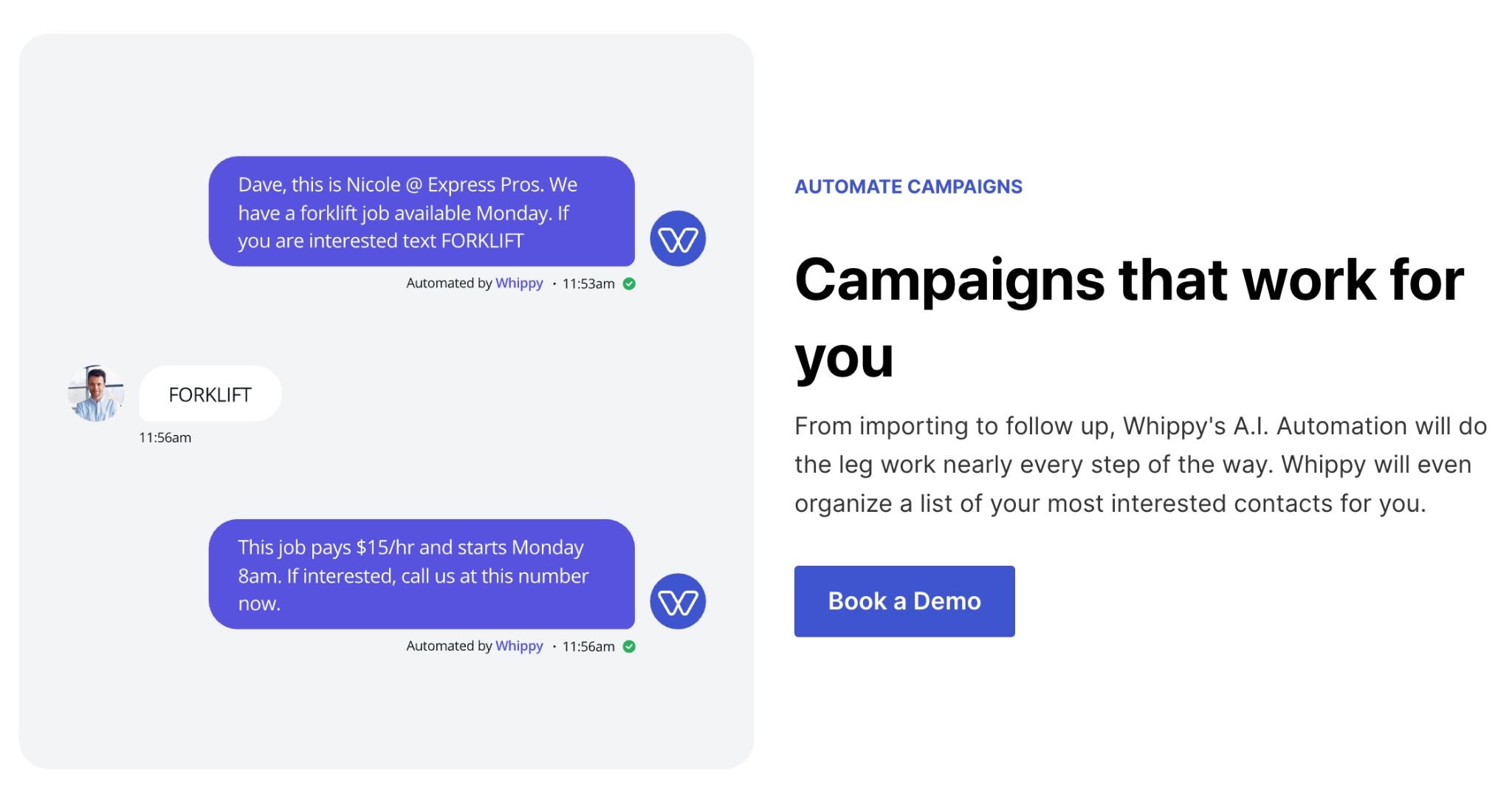
The software combines resume parsing with conversational hiring and a short, structured Q&A covering certifications, shift preferences, and pay expectations to quickly screen and qualify candidates. It also integrates with staffing-specific ATS tools like Bullhorn and Avionté rather than the in-house TA defaults like Ashby, Greenhouse, or Workday.
Key features
- Resume parsing and job-relative candidate scoring.
- Structured qualification through SMS, email, and voice.
- Automated applicant outreach and follow-up.
- Candidate availability, certification, and pay checks.
- ATS write-back for scores, transcripts, notes, and tags.
- Candidate search and matching across existing databases.
- Interview scheduling and workflow automation.
User reviews
G2 reviewers frequently praise Whippy's communication tools, staffing workflows, and responsive support. Reported limitations relate mainly to messaging and configuration.
“Applicants receive immediate responses instead of waiting to hear from a potential employer.”
Matt V., G2
“The team's responsiveness and support... have made staffing outreach seamless and efficient.”
Chasity C., Operations Manager, G2
“The only negative is the limitations when texting international numbers.”
Diane M., Marketing Manager, G2
Pros
- Saves employers real time on repetitive follow-up and outreach.
- Handles a high volume of candidate communication without adding headcount.
Cons
- Built for frontline and staffing-specific use cases and ATS platforms (Bullhorn, Avionté), not generic TA.
- The more advanced features (sequences, automations, campaigns) take real setup time to configure well.
Pricing
Book a demo for a custom quote that’ll include a base subscription cost, plus any applicable add-on fees and one-time costs like HIPAA compliance, API access, and data import.
Why teams choose Whippy: It connects resume screening with immediate candidate qualification, follow-up, and staffing ATS updates.
4. Paradox: When candidate qualification must connect with scheduling and recruitment workflows
Built around its chatbot Olivia, Paradox handles candidate resume screening, interview scheduling, and applicant tracking through natural conversation. Like Sapia, it doesn’t include conventional CV reviews.
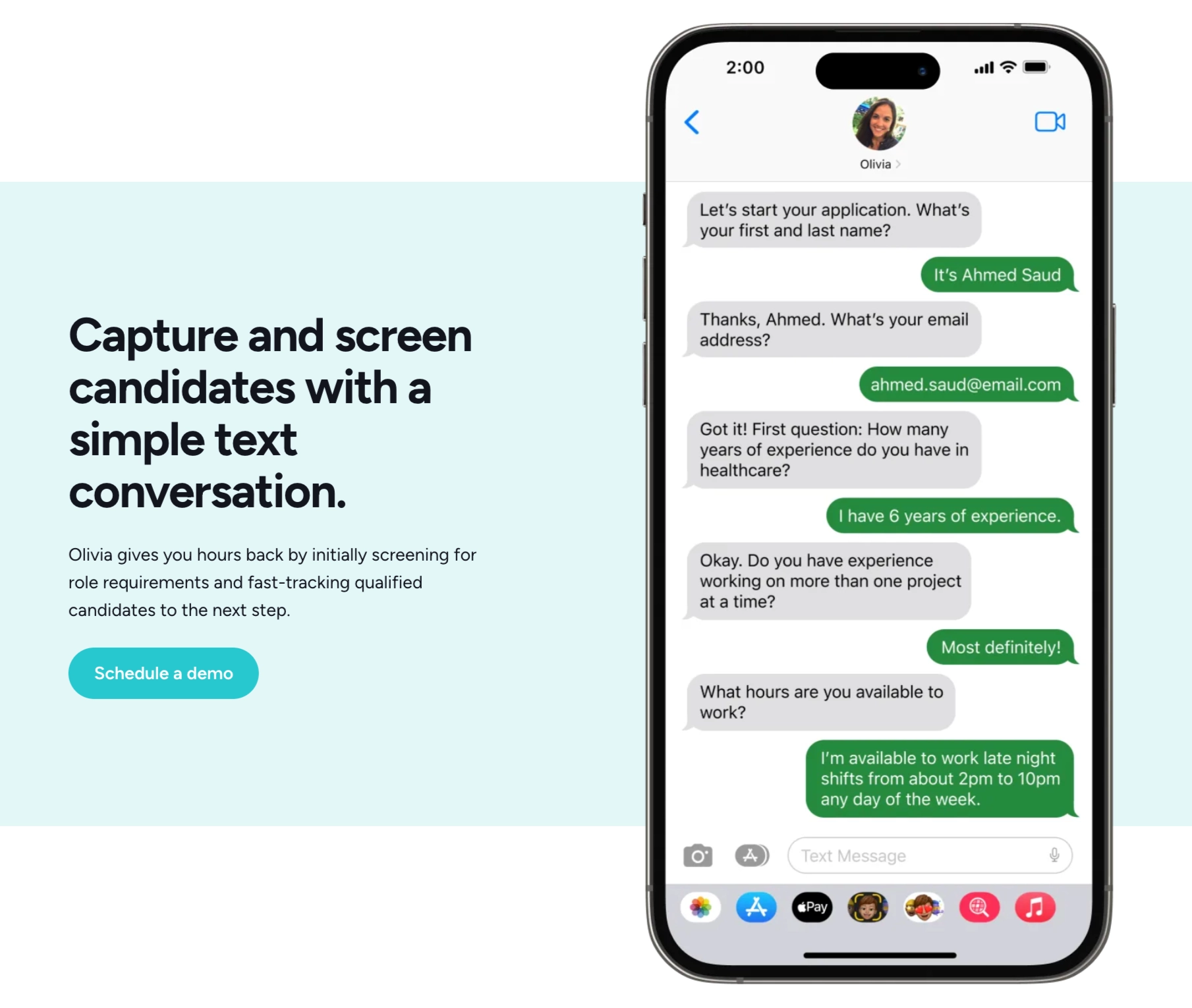
Candidates text or chat via SMS, WhatsApp, or web chat, answer a few screening questions, and get scheduled against a recruiter's live calendar 24/7. No human recruiter touches the hiring process until the interview itself. And for that, Paradox supports native live interviews plus third-party integrations with Zoom and Microsoft Teams.
Key features
- Olivia, a conversational AI assistant built for recruiting
- Knockout-question screening
- Sub-minute, 24/7 response times.
- Direct calendar scheduling
- Seamless Workday sync
User review
At the time of review, Paradox had 40 reviews and a 4.6 out of 5 rating on G2. Reviewers frequently praise its scheduling, candidate communication, and HR-system integrations. One reviewer also describes how conversational misunderstandings can affect application answers.
“Before this (Paradox), my team was spending hours every day screening applications, chasing candidates for basic details, and playing calendar tennis just to set up interviews.”
Tulu P., G2
“The chatbot interface is intuitive [and] provides a great candidate experience.”
Subhashree S., G2
“It’s not very intuitive in conversations. Confuses candidates.”
Audrey K., Talent Acquisition Partner, G2
Pros
- Delivers a quick, low-friction candidate experience
- Speeds up live interview scheduling and keeps it within the same platform as initial screening
Cons
- Knockout screening confirms basic qualifications but doesn't produce a validated, structured competency assessment.
- Better suited to high-volume frontline and hourly roles than complex, professional, or executive hiring; those still need human judgment a screening chatbot can't replace.
Pricing
Contact the team for tailored billing; often involves monthly or annual subscription fees along with one-off implementation costs.
Why teams chose Paradox: It connects resume matching with conversational qualification and interview scheduling in one workflow.
5. TestGorilla: When you need evidence of practical skills beyond the resume
TestGorilla evaluates every CV against criteria generated from your job description. You can review and edit those criteria before screening begins, then see a 0–5 score with reasoning for each resume and override the result where necessary.
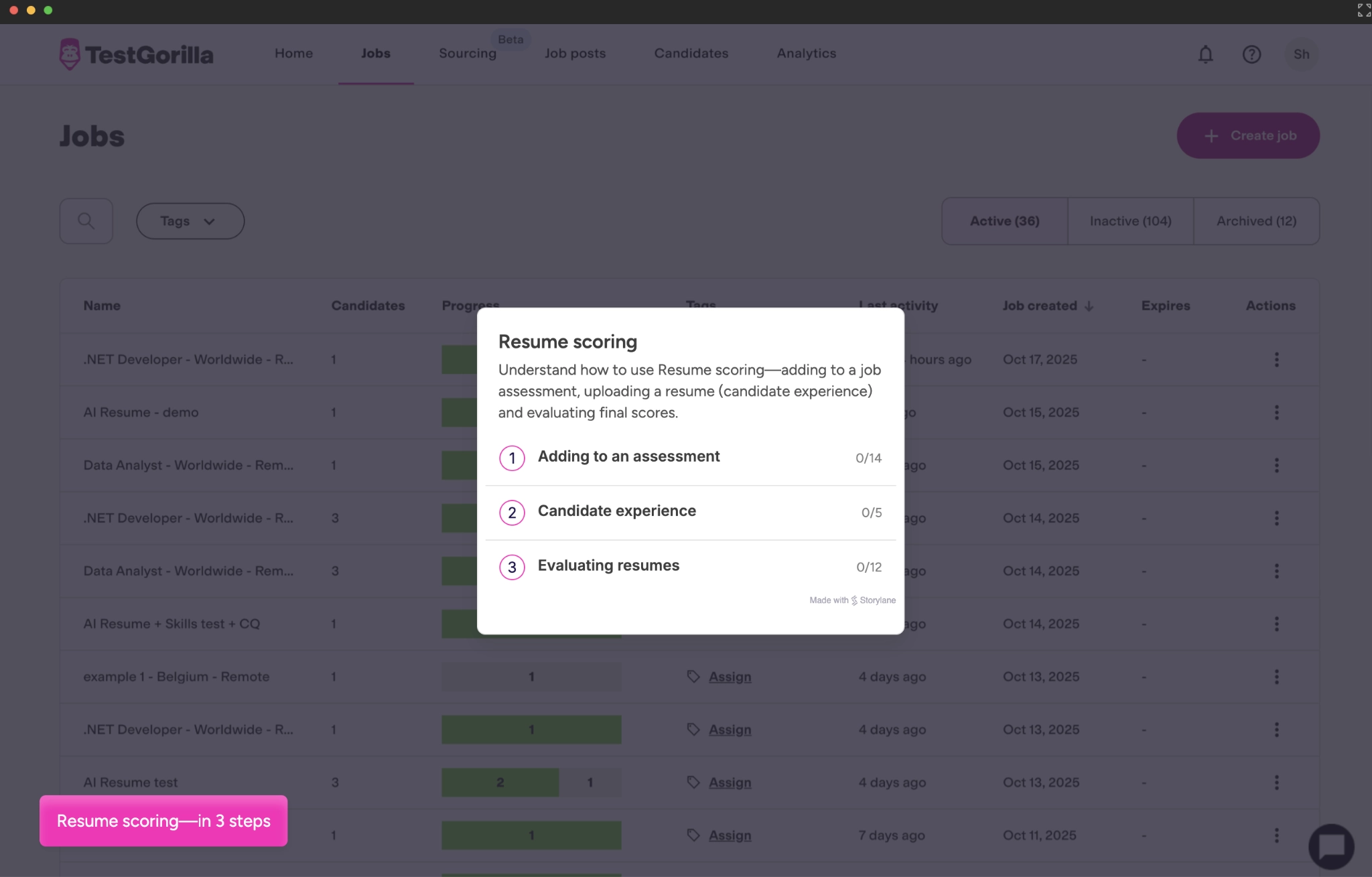
Resume scoring is only one part of the product. TestGorilla can also assess candidates through skills tests, qualifying questions, job simulations, custom questions, and AI interviews. This makes it most relevant when you want resume evidence to inform the shortlist alongside evidence of what candidates can do.
Key features
- AI resume scoring on every applicant
- 350+ validated skills tests
- AI Job Builder
- Layered anti-cheating measures
- Human override on every AI score
User reviews
G2 reviewers frequently praise TestGorilla's assessment range, structured pre-screening, and ease of use. Reported limitations include lengthy assessments and limited customization for specialized roles.
“This platform allowed us to conduct pre-screenings for a large international interview event.”
Kelsi R., G2
“One of the most effective tools for streamlining pre-assessments and early hiring workflows.”
Lalit A., G2
“Some tests can feel a bit generic.”
Anbuselvam S., G2
Pros
- Evaluates candidates on demonstrated skills not just resume claims
- Anti-cheating features like webcam snapshots and tab-switching/paste detection make results more defensible
Cons
- Resume screening works okay, but talent assessment tests can sometimes run long and pile on pressure, leading to candidate drop-off
- Customization and reporting flexibility are more limited for teams with specialized or unusual hiring requirements, e.g., advanced coding assessments for engineering roles.
Pricing
- Free plan with 10 free credits per month to test run the platform.
- Paid tiers with annual billing lock-in: Core for small companies with limited hiring (450 credits/year) and Plus for large businesses with ongoing recruitment needs.
Why teams chose TestGorilla: It connects AI resume scoring with practical skills evidence in the same candidate assessment workflow.
If standardized testing is not your main requirement, compare these TestGorilla alternatives and the screening problems each one is designed to solve.
6. CVViZ: Best for contextual resume matching with recruiter-controlled ranking
CVViZ is an AI recruiting platform and applicant tracking system with dedicated resume-screening software. It evaluates each resume in the context of the job description and configurable screening criteria, then organizes candidates by their relevance to the role.
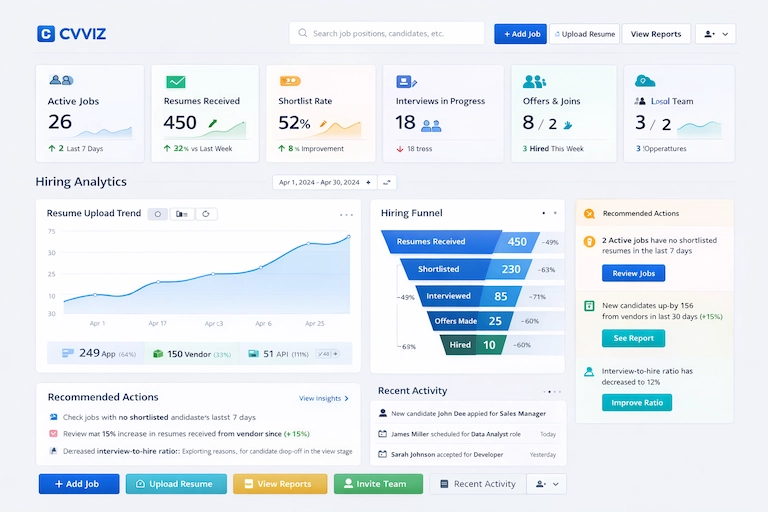
Recruiters can inspect the resume, screening answers, and supporting relevance signals before changing a candidate's status. CVViZ can therefore replace a basic ATS workflow or add contextual matching to an existing recruitment process, depending on the integration required.
Key features
- Contextual job-to-resume matching.
- Role-specific screening criteria and knockout conditions.
- Candidate ranking with supporting resume evidence.
- Resume parsing and structured candidate profiles.
- Candidate rediscovery from the existing database.
- Job posting, applicant tracking, outreach, and interview scheduling.
- Recruiter-controlled shortlisting and candidate status changes.
User reviews
At the time of review, CVViZ had a 4.5 out of 5 rating from 47 G2 reviews. Reviewers frequently praise its ease of use, resume ranking, and ability to manage recruitment in one place. Reported limitations include occasional manual corrections to parsed profiles and performance issues.
“The AI-powered resume screening quickly surfaces high-fit candidates and ranks them in context.”
Mridula S., Head of Operations, Capterra
“Certain candidate profiles still require manual adjustments after being imported.”
Sridhar T., Manager HR, G2
Pros
- Provides meaningful candidate insights without becoming a time drain
- Scientifically-validated assessments give standardized, comparable data along with resume context
Cons
- Sales-led pricing can be discouraging for smaller teams with no enterprise budget
- Assessment reports are built for HR to interpret and can be difficult to decipher by non-HR hiring managers
Pricing
Quote-based annual subscription plans upgrades and add-ons you can layer in later:
- Criteria Assess for talent assessment and tests
- Criteria Interview for async and real-time video interviewing for candidate screening
- Criteria Hire, full product suite with everything in Assess and Interview
Why teams choose CVViZ: It combines contextual resume ranking with visible supporting evidence and recruiter control over the shortlist.
7. Peoplebox: When you want to enrich candidate profiles using external information
Peoplebox's AI recruiter, Nova, reads and scores resumes you upload directly. However, its real differentiator is layering in data pulled from LinkedIn and public sources, plus AI-conducted phone and video screens.
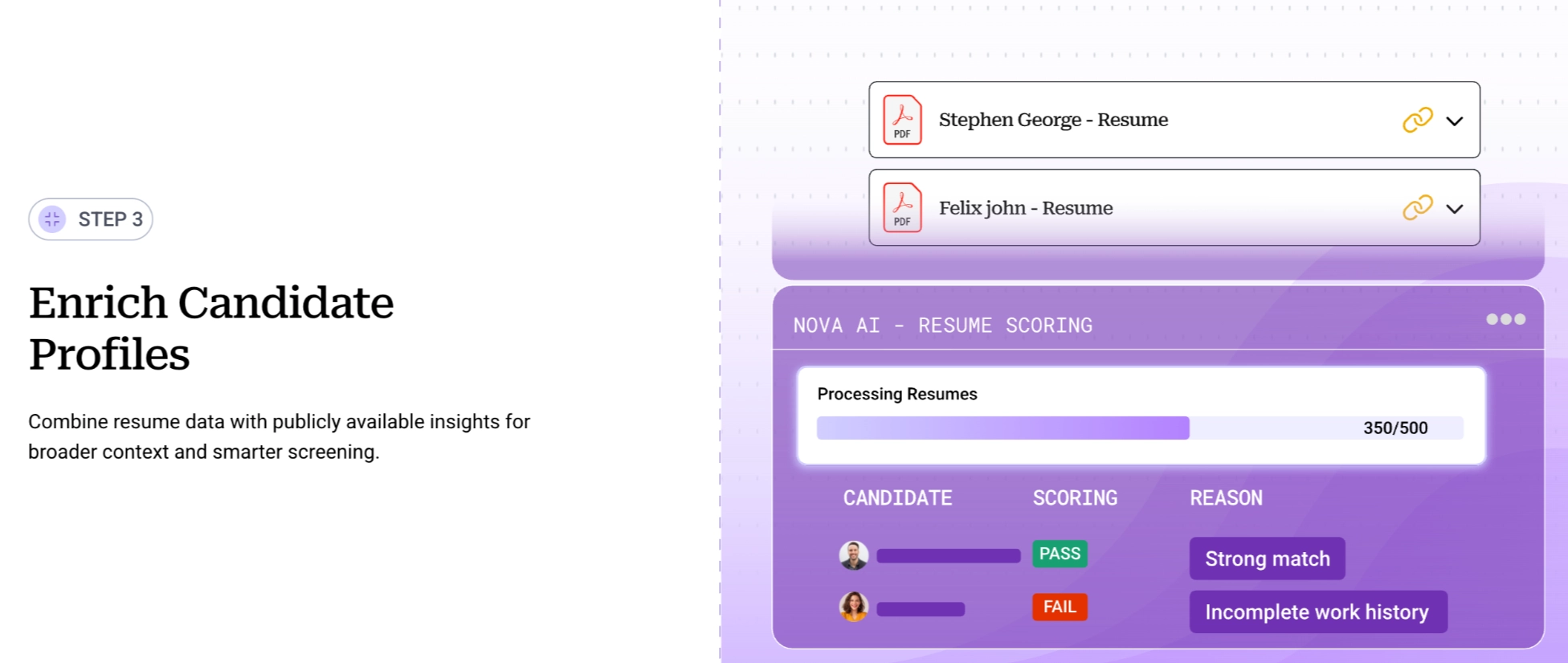
This workflow provides rich candidate context, but the evidence comes from different third-party sources for each person, not the same conditions applied to everyone, which a defensible, uniformly assessed shortlist requires.
Key features
- Nova, an AI recruiter that screens and enriches profiles
- Candidate enrichment using ATS and public profile data.
- Voice and video pre-screening interviews.
- Structured, scored interviews
- Candidate authenticity checks
- Synchronization with 50+ ATS platforms
- Multi-role matching
User reviews
At the time of review, Peoplebox had a 4.5 out of 5 rating on G2. However, much of its review base covers performance management rather than Nova's hiring capabilities. The available Nova feedback praises the candidate experience while identifying some setup work.
“Follow-up questions adapt well... Initial calibration takes some trial and error.”
Utkarsh S., Content and Growth Lead, G2
“The interface is super intuitive and clean, making it easy to navigate.”
Shivang S., G2
Pros
- Consolidates screening, enrichment, and interviewing into one workflow
- Candidate authenticity checks are a genuine differentiator most pure resume-parsing tools don't offer.
Cons
- Evidence comes from a mix of the resume, public data, and AI-conducted interviews, so conditions aren't identical for every candidate.
- Relatively small sourcing database for non-technical roles compared to competitors
Pricing
Two plans, each tailored to talent and hiring needs:
- Nova - AI teammate: Tailored quote based on hiring needs, resume, and interview volume
- Talent/performance management: Per-user pricing billed annually; covers OKRs/goals, performance reviews, and continuous feedback
Why teams chose Peoplebox: It combines resume screening with public profile enrichment and additional AI-led candidate evaluation stages.
8. Eightfold: When resume screening forms part of a wider enterprise intelligence requirement
Eightfold matches candidates on skills inferred from their CV and career trajectory, instead of just resume keywords. It also extends the same model to your existing workforce, surfacing internal mobility and skill-gap forecasting alongside external hiring.
.webp)
The tool sits alongside a core ATS like Workday, but it isn’t ideal for light screening as it’s priced and scoped for enterprise-scale transformation.
Key features
- Skills-based candidate matching and screening.
- Candidate match scores with supporting explanations.
- Talent rediscovery across previous applicants and alumni.
- Matching across external candidates and internal employees.
- Candidate profile enrichment and talent intelligence.
- AI-native recruiting workflows and ATS integrations.
- Internal mobility, workforce planning, and skills-gap analysis.
User reviews
At the time of review, Eightfold had a 4.2 out of 5 rating from 205 G2 reviews. Reviewers frequently value its candidate matching and talent-management coverage. Reported limitations include implementation complexity, limited customization, occasional data inaccuracies, and support response times.
“The AI tool that recommends matching positions is a great tool.”
Soby A., Account Executive, Capterra
“It occasionally fails to capture the correct details in the AI-generated output.”
Mohd Z., Talent Acquisition Recruiter, G2
Pros
- Surfaces qualified candidates that keyword-based tools miss, cutting real time off narrowing a large pool down to a shortlist.
- Combines screening for external hiring and internal mobility in a single system, giving the best of both worlds
Cons
- Implementation can feel complex and take weeks to months sometimes
- Sometimes slow customer support
Pricing
Standard quote-based subscription plans and standalone products, plus software licensing and setup costs. Visit the website for more details.
Why teams chose Eightfold
“I was happy to use Eightfold in my organization. The AI tool that recommends matching positions is great.” - Soby A.
“Overall Eightfold has been great for our team and continues to help us hire faster and more efficiently.” - Max B.
When will another screening tool fail to solve the problem?
Another screening tool will only help when it addresses the part of your hiring process that is actually failing. Before choosing a vendor, check that your team can define the decision, connect the software to its existing workflow, and use the evidence it produces.
Your team has not agreed on what a qualified candidate looks like
No screening tool can manufacture that agreement. If three interviewers define “qualified” differently, a more sophisticated score only adds a confident-sounding number to the disagreement. Set the must-have and preferred criteria first, then test each vendor against the same role.
Resume review is not causing the hiring delay
If the bottleneck is scheduling, offer approval, candidate drop-off, or a lack of suitable applicants, a smarter resume screen will have limited impact. Identify where candidates and recruiter time accumulate before buying another screening layer.
The tool does not fit your existing ATS workflow
A strong screening result still creates extra work when recruiters must export resumes, rebuild records, or update two systems. Ask how applications enter the tool, which results return to your ATS, and what triggers the next action.
Recruiters will not review or use the screening evidence
An AI-generated score has little value if recruiters do not trust it. Check whether reviewers can see the criteria, reasoning, and candidate evidence behind each result. They need enough context to make and explain the final progression decision without repeating the entire review.
The best choice is therefore the product that fits the specific screening failure in your process and produces evidence your hiring team will actually use.
Improve ATS filtering with richer candidate evidence
Your ATS can organize applications and filter resumes. When the resulting shortlist still lacks coverage, explanation, or evidence, Willo adds a structured screening layer before the live interview.
Willo assesses the CV alongside structured video and audio responses using the criteria in your Blueprint. Insights transcribes, summarizes, and scores that evidence against your Blueprint for human review. Your hiring team can compare candidates consistently, examine the evidence behind each result, and decide who should progress.
With 50+ native ATS integrations, Willo can connect this evidence to the recruitment workflow your team already uses. You can screen more of the applicant pool and build a shortlist your reviewers understand and trust.
Book a demo to see how Willo can improve your screening workflow.