- A scorecard alone won’t make scoring consistent. Choose an interview method and questions that give candidates a comparable opportunity to demonstrate the skills the role requires.
- Agree how you’ll judge answers before interviewing. Define the evidence required for each rating, any question weights, and the rules for progression.
- Record the evidence and score independently before discussing candidates. Check for rating errors, then resolve disagreements by comparing the answers with the agreed anchors.
- Set clear criteria for AI-assisted candidate scoring. AI can help you examine the evidence, but your team remains responsible for the decision.
After an interview or pre-screening, you have a score in front of you. But what earned the candidate that rating? And if another reviewer looked at the same answers, would they give the candidate the same score? If not, how do you close that interview scoring gap?
Job seekers wonder about this too. In Reddit discussions such as those on r/usajobs, applicants ask questions that reveal how unclear scoring can feel from the outside:
- Do hiring managers weigh some screening questions more than others?
- Do panelists score candidates right after each interview, or after they’ve interviewed everyone?
These questions reflect uncertainty about how hiring teams reach their decisions. Research on employment interviews shows why these concerns matter. For instance, a meta-analysis of employer interviews found that reviewers’ ratings were more consistent in panel interviews (.74) than in interviews conducted separately by different interviewers (.44).
That suggests your interview scoring format can affect how consistently reviewers assess candidates. Most teams turn to interview scorecards as a way to standardize scoring.
But using the same sheet doesn’t guarantee that reviewers interpret those criteria in the same way. It also won’t fix questions that fail to test the role’s requirements or answers that leave you without enough evidence to judge.
That’s why good interview scoring starts before interviews begin.
You need to settle how you’ll gather evidence, what each rating means, and how you’ll handle disagreements. This guide covers 8 steps to help you do that and how AI can help examine the evidence while your team makes final hires.
What is interview scoring, and what do a scorecard and rubric do?
Interview scoring means rating a candidate’s answers against the job-related criteria the team has agreed to assess. Instead of relying on a general impression, reviewers look at what the candidate actually said and match it to those criteria.
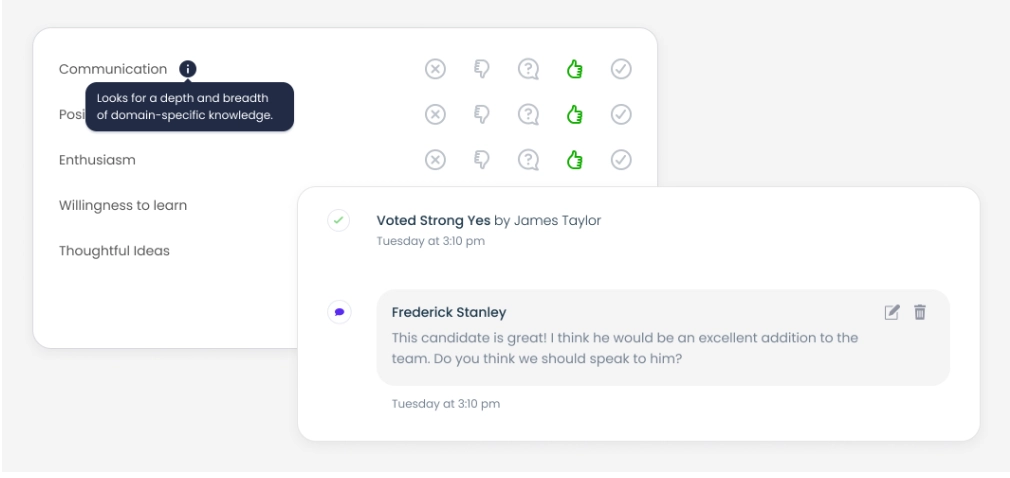
You’ll often see the terms rubric, scorecard, and interview scoring sheet used to describe the same setup because they don’t have to be separate documents. However, they each have a role to play.
Interview questions draw out the evidence of a particular behavior or skill. Then the:
- Rubric defines what each response rating means, so it’s clear why an answer earns a 4 rather than a 3, for example.
- Scorecard brings the criteria and rating scale together so everyone assesses candidates against the same standards.
- Scoring sheet records the rating and notes explaining why the answer earned it.
You can put everything in one document or split it across several. The most important thing is to treat candidates the same, from questions and comparable evidence to rating criteria. Ask questions that reflect job requirements and support candidate ratings with specific behavioral examples and notes.
If you’re concerned that reviewers might interpret those ratings differently, the U.S. Office of Personnel Management’s structured interview guide recommends establishing a common basis for assessment. It also emphasizes:
- Agreeing on what constitutes an acceptable answer,
- Evaluating interview responses against a common rating scale, and
- Supporting ratings with specific behavioral examples and notes.
This connects the criteria in your scorecard, the anchors in your rubric, and the evidence recorded on your scoring sheet.
To choose a scorecard for your role, explore our guide to 16 interview scorecard templates. It includes examples focused on technical skills, leadership, problem-solving, and other competencies you may need to assess.
8 steps to score candidate interviews fairly
Start with what the team needs to observe. What does someone need to demonstrate to succeed in the role? Once that’s clear, decide how to assess it. An async interview question may fit one requirement, while a work sample, written response, or objective check may provide better evidence for another.
The U.S. Office of Personnel Management recommends grounding assessment methods in the job's requirements. This is important for scoring. If the method produces little more than a general impression of the candidate, reviewers have very little to rate. So choose an assessment that gives them specific evidence to compare against the criteria.
The recruiter shouldn’t be the only person deciding what to ask. They may know how to run a structured process, but the hiring manager or someone who understands the work knows what a good answer looks like.
Work together to map each core question to a requirement for the role. If you need to test how someone handles customer complaints, for example, the question should give them room to describe a real situation and what they did. Behavioral and situational questions are more useful here than broad ones that invite candidates to say what they think you want to hear.
Keep the core questions the same for every candidate. Otherwise, you may end up comparing answers to different questions and wondering why the scores don’t align. Follow-up questions are fine for clarification, but the main evidence should come from a consistent set of questions.
Decide what a good answer looks like before you hear one. Otherwise, a reviewer can give a candidate a 4 because the answer sounded strong. Meanwhile, another gives the same answer a 3 because they were looking for something different.
Ensure your scorecard ties each job-related criterion to the question that assesses it. Add clear descriptions of what every rating means and a place for reviewers to write notes. Also include any weighting or progression rules the team has agreed on.
For example, a five-point scale works well, but only if reviewers can clearly distinguish between the scores. Agree on what separates a 3 from a 4, or a 4 from a 5, before starting interviews. Deciding these hiring criteria early, rather than on the fly, is critical because those same rules shape your candidate shortlist.
You don’t always need a transcript, especially when you’re pressed for time. Simply document the parts of a candidate’s interview responses that support your assessment. Specifically, note the situation the candidate described, the actions they took, and the resulting outcome.
For each rating, also link your notes to the relevant criterion and explain how the answer meets its rating anchor. These details give you something concrete to refer to if anyone asks you to explain the score.
The OPM recommends assigning the score soon after the interview, while the details are still fresh and your overall impression hasn’t blurred the evidence.
Have reviewers score the candidate independently using the same anchors. They should record their ratings before seeing anyone else’s. Otherwise, the first score on the page can influence the next one.
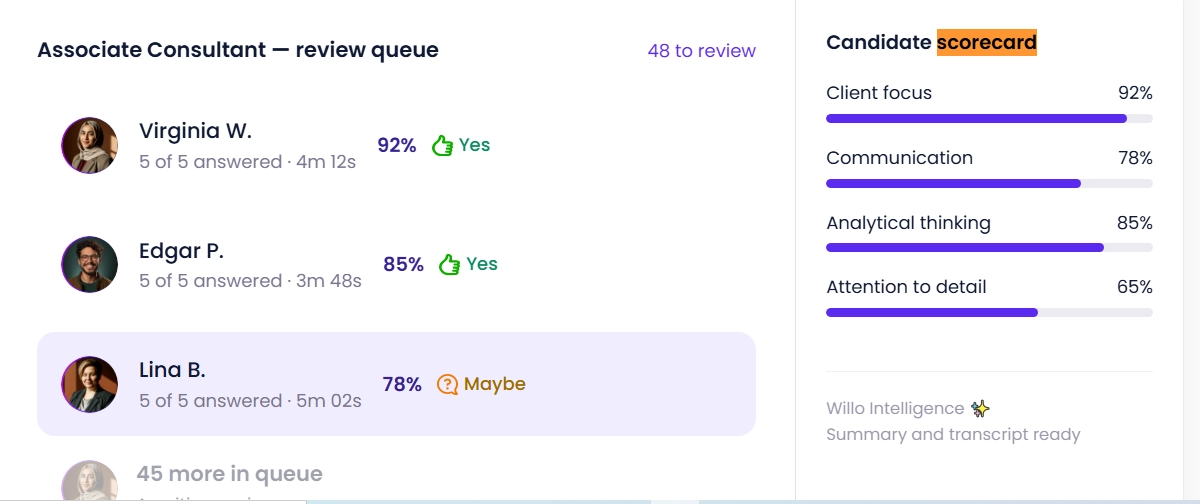
Blind scoring means keeping reviewers’ scores hidden from one another until each person submits their rating. It doesn’t mean hiding the candidate’s identity.
And while the meta-analysis we referenced earlier (comparing panel interviews with solo-interviewer sessions) suggests that interview format can affect rating reliability, it’s not a sign to gather panelists for every role.
Before finalizing a score, look at what may be shaping the rating. A halo effect can make one strong impression influence the whole assessment. Leniency or strictness can push a reviewer toward consistently high or low ratings.
Central-tendency scoring happens when a reviewer avoids the extremes and gives most candidates similar middle scores. A “similar to me” bias can also lead to more favorable ratings for candidates who share something with the reviewer.
The OPM structured interview guide identifies the above as common rating errors. So before settling on a score, ask: Can I point to the candidate’s answer and the rating anchor that support it? If not, take another look at the rating.
First impressions and comparisons with candidates you interviewed earlier can also affect your judgment. Keep those separate from the evidence you’re scoring.
When reviewers give different ratings, start by identifying the competency they disagree on. One reviewer might give a 4 for problem-solving while another gives it a 2. Ask each person to point to the specific part of the answer they used to reach that score.
Compare the evidence in their notes. Then check it against the rating anchors. Does the candidate’s answer meet the description for a 4, or does it fit the description for a 2? Each reviewer should explain how the evidence supports their rating.
If the discussion leads to an agreed rating, record the score and the reason for it. If the answer doesn’t provide enough evidence to settle the disagreement, record that gap instead of forcing consensus. The team can then decide whether more information is needed.
Reviewers should score independently before discussing their ratings. This gives everyone a chance to assess the evidence without being influenced by the group.
Apply the weighting or progression thresholds the team agreed on before the interviews. For candidates near the cutoff, compare their ratings against the criteria that matter most to the role. Check whether the evidence supports each rating and if any important criteria remain unassessed.
When recording a progression decision, include the candidate’s overall result, the relevant criteria, and the evidence that supports the decision. Note any weighting or threshold applied. And if a candidate doesn’t progress, explain which requirements their evidence fell short on. If evidence is missing, record that separately from a weak answer.
The overall score can summarize the ratings, but it shouldn’t replace the team’s judgment about what the candidate demonstrated.
Remember the r/usajobs thread, the subreddit from earlier where an applicant asked how panelists score candidates and when? The replies describe different approaches, including adding individual scores across questions and discussing candidates before ranking them.
While the thread isn’t evidence of how employers generally score interviews, it highlights why the rules need to be clear before the process starts. Once you agree on how to combine ratings and handle close cases, you can explain how the team reached its final decision with the evidence behind it.
Should AI score the interview for you?
AI can take some of the work out of interview scoring, especially when teams are reviewing a large number of candidates. It can apply the same rules repeatedly, transcribe responses, and summarize what candidates said.
The bigger concern is whether reviewers can see how the score was reached. An AI-generated rating is easier to trust when reviewers can inspect the candidate’s response, see which criteria were assessed, and understand how the evidence led to the rating. Without that, the score is difficult to question or explain.
Some recruitment tasks suit AI better than others. AI transcripts and summaries can reduce manual work, while knockout rules handle clear, objective requirements. Deciding whether a candidate has shown enough to move forward is different and still requires the hiring team’s judgment. For a deeper look at the tradeoffs, see Willo’s AI candidate scoring guide.
Willo combines structured candidate responses with predefined interview scoring criteria and AI-assisted review to help hiring teams hire more confidently.
Free tools to build and run your interview scoring sheet
A scoring sheet only needs a few things to be useful: the criterion, the question, the rating scale, and the evidence behind the score. Here’s a simple example:
The score tells you how the answer was rated. The evidence note tells you why. Keeping those separate makes it easier for another reviewer to understand where the rating came from.
A practical scoring sheet will usually include:
- Candidate name
- Criterion being assessed
- Interview question
- Rating scale and anchors
- Reviewer notes
- Score
- Evidence supporting the score
- Weighting, if applicable
- Final progression decision
- Reason for the decision
If you want to build one without starting from scratch, Willo’s free candidate shortlisting workbook provides space for criteria, evidence rules, candidate comparisons, and recorded decisions.
If you’re comparing software that uses AI for candidate scoring, see how Willo helps you score and build a stronger shortlist below, or read our AI candidate scoring software guide.
How Willo turns structured responses into evidence reviewers can score
Willo sits at the screening stage before the live interview. Candidates answer the same role-relevant questions, giving reviewers comparable responses to assess. That makes it easier to judge candidates against the same criteria rather than piecing together evidence from different conversations.
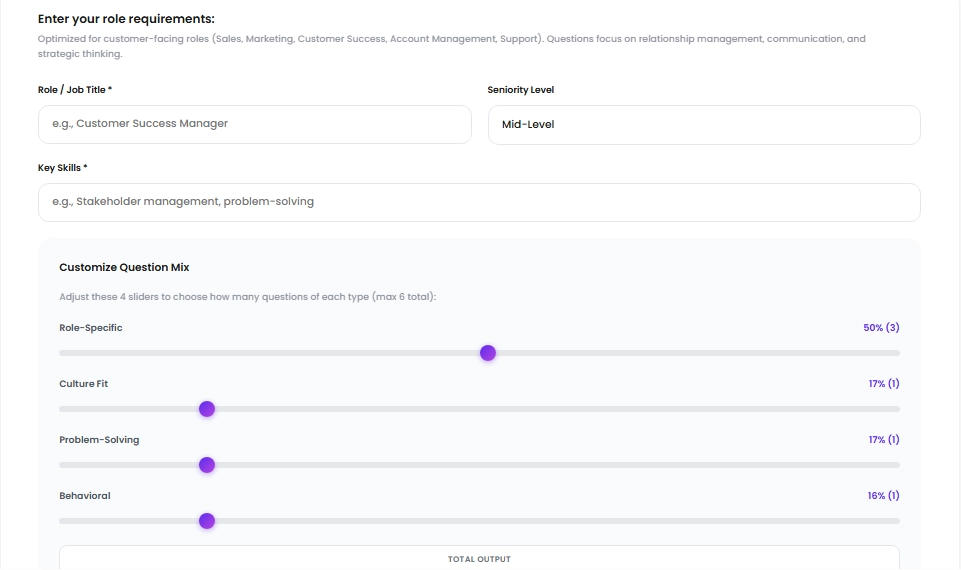
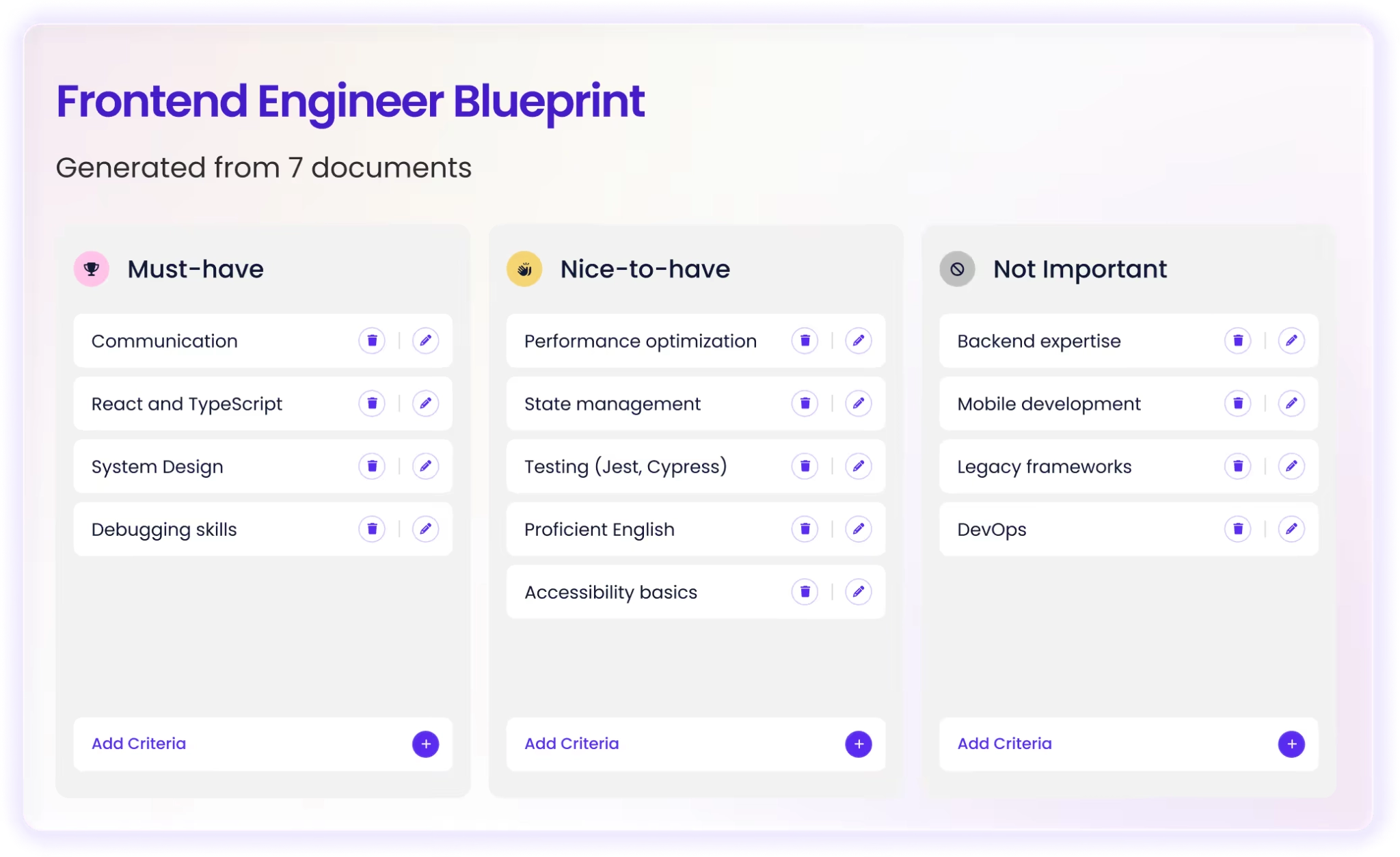
Reviewers use custom scorecards to rate responses against the criteria defined for the role. Willo Insights scores responses against the employer’s Blueprint, with human review built into the process.
Reviewers see the candidate’s response, a summary, and evidence tied to each criterion. This helps them confirm what supports the assessment and why a candidate might belong on the shortlist.
The final decision stays with the hiring team. The score organizes the evidence and makes candidates easier to compare, while the hiring team decides who moves forward. Explore Willo’s features to see how the screening and scoring process works.
This approach becomes particularly valuable when the number of applications makes manual review difficult. EDF handled more than 17,000 applications in one recruiting season and cut recruiter administration time by 50%. Recruiters could review candidate responses and take notes in under 20 minutes per candidate, breezing through the screening stage.

With structured responses and evidence tied to each criterion, reviewers have concrete material to review when deciding who progresses.


Make interview scores easier to trust
An interview score is as good as the questions asked, the evidence gathered, and the criteria used to rate each answer. A well-defined rubric helps reviewers tell when an answer meets the requirements and when it falls short.
- Start by asking questions that test the requirements of the role.
- Define what each rating means before interviews begin, and have reviewers assess answers independently.
- When scores differ, compare the evidence against the rating anchors.
- Then, record the reasons for the final decision.
This is where structured responses really show their value. With Willo, candidates answer the same role-relevant questions, while human-reviewed Insights help reviewers examine the evidence against the employer’s criteria. The team can see why a candidate made the shortlist, instead of relying on a score with no explanation.